
A security operations team currently relies on isolated alerts from separate firewall, identity, and endpoint consoles, forcing analysts to pivot manually during every investigation. Which multiproduct integration outcome most directly improves threat hunting speed and visibility?
Select an answer to reveal the explanation.
Short Explanation
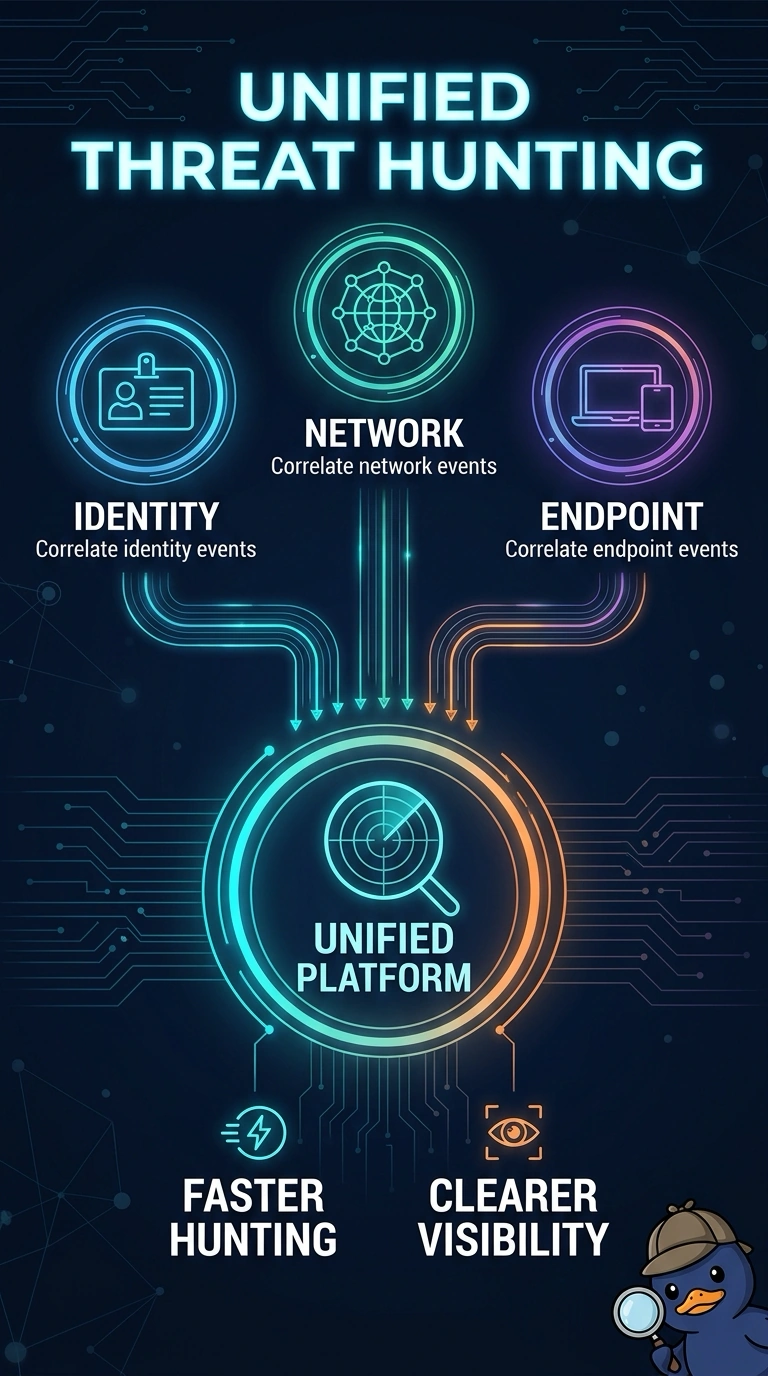
Watching three separate security monitors is like trying to follow a movie when the audio, video, and subtitles are in different rooms. Unifying your telemetry lets you connect the dots in seconds instead of pivoting manually.
Full Explanation
Modern intrusions span identity, network, and endpoint layers simultaneously, so isolated product consoles create investigative friction and blind spots. When you correlate identity, network, and endpoint events in a unified platform, hunters can trace a single compromised user session from initial authentication through process execution and outbound network connections in one query. Disable low-severity endpoint alerts to reduce analyst console clutter hides early reconnaissance and living-off-the-land signals rather than integrating telemetry. Route all internal east-west traffic through a single perimeter firewall is operationally impractical for internal switching and still lacks endpoint process and identity context. Assign separate analyst shifts to monitor each security product console reinforces organizational silos instead of automating cross-domain correlation. As a caveat, unified platforms require consistent field normalization and synchronized timestamps across all contributing sensors to link events accurately. Operational check: run a cross-domain test query in your SIEM or XDR platform that joins a single user logon ID to both endpoint process creation and firewall egress logs.