
After several SIEM rule edits accidentally broke existing lateral-movement detections during a schema update, a threat hunting lead wants to modernize how the team manages detection rules. Which methodology change best prevents future regressions?
Select an answer to reveal the explanation.
Short Explanation
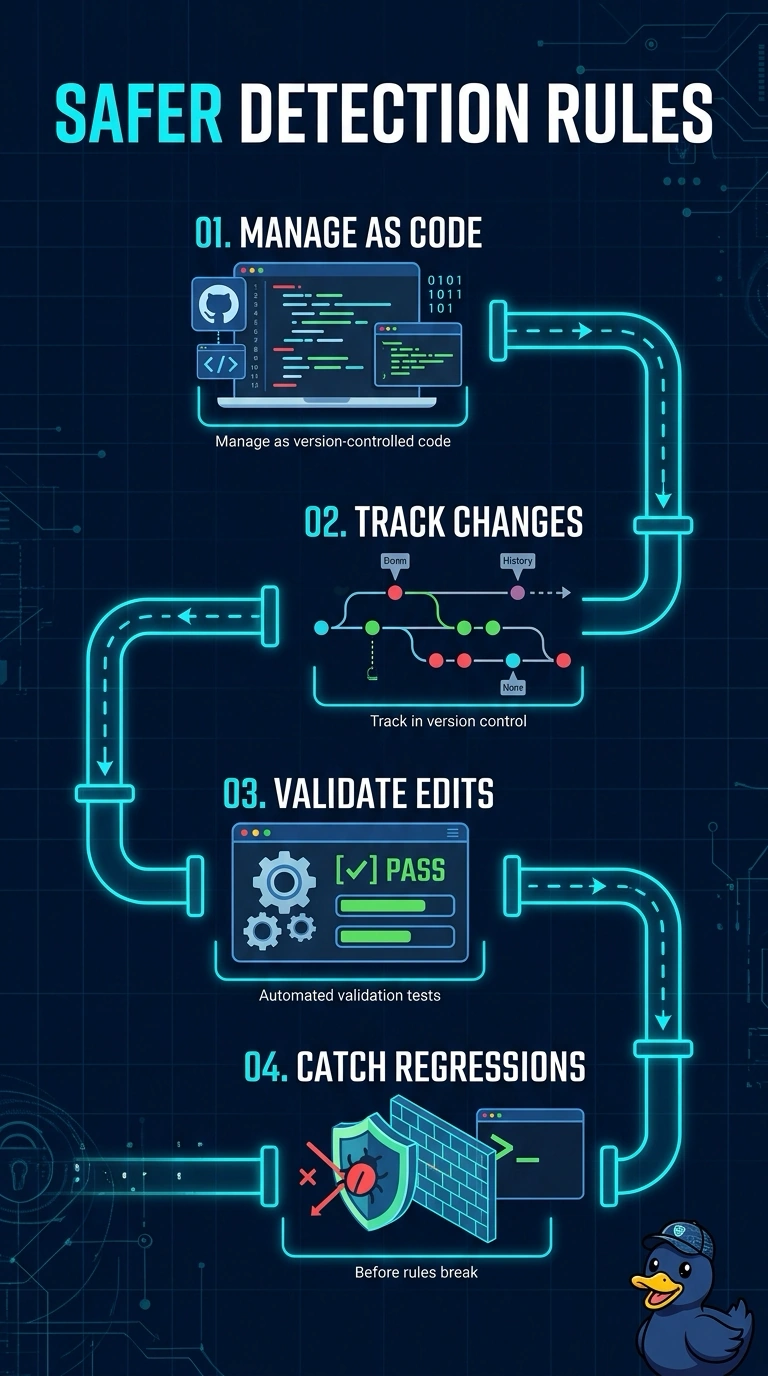
You can prevent these regressions by managing detection rules as version-controlled code and testing changes before deployment. That gives you a clear history and helps catch schema-related breakage before it reaches production.
Full Explanation
Managing detection rules as version-controlled code with automated validation tests brings software engineering discipline to threat hunting and SOC engineering. Changes are auditable and reversible, and tests can catch broken field mappings, syntax errors, and logic regressions before deployment when schemas or parsers change. Restricting all detection rule authoring to annual external penetration testing engagements leaves you dependent on infrequent reviews and unable to respond promptly to emerging threats or schema drift. Disabling custom behavioral correlation rules and relying solely on vendor firewall signatures sacrifices internal host and identity visibility, reducing detection coverage rather than preventing rule regressions. Storing detection queries in local analyst spreadsheets without peer review fragments version history and raises the risk of copy-paste errors and unreviewed changes. Exam caveat: automated tests catch only regressions covered by their test fixtures, so update sample log data as schemas and log sources change. Practical check: configure a continuous integration pipeline to run syntax checks and replay tests against sample attack logs before merging each rule change.