
A healthcare SOC finds that individual low-severity alerts for internal discovery, script execution, and outbound transfers each go unnoticed in daily queues, allowing a slow intrusion to persist for weeks. Which detection methodology change best addresses this outcome gap?
Select an answer to reveal the explanation.
Short Explanation
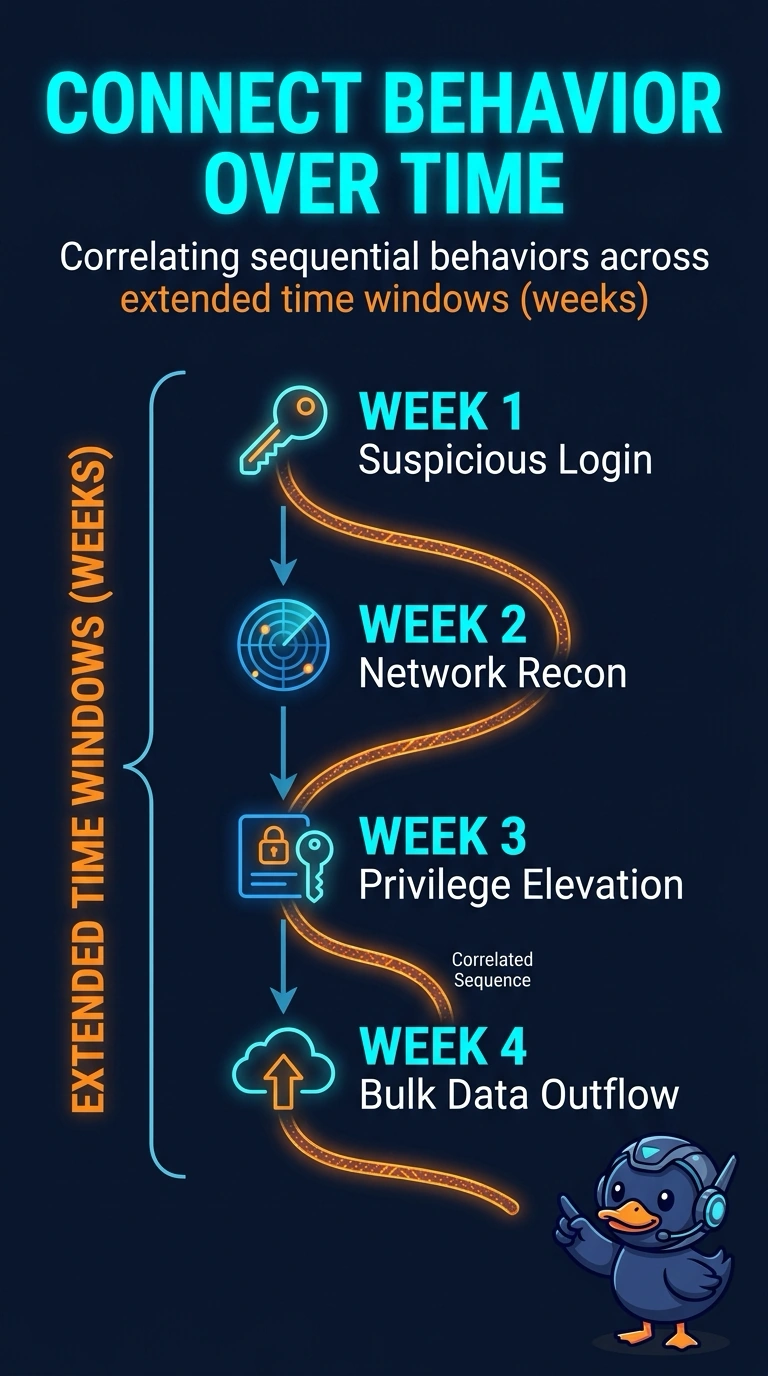
A single footprint in the snow is easy to ignore, but a trail leading straight to your back door tells a story. The trap is cranking up alert severity on noisy single events instead of linking stages together over time.
Full Explanation
Correlating sequential behaviors across extended time windows resolves this gap because slow-moving adversaries spread reconnaissance, execution, and staging across days or weeks to blend into daily noise. Stateful multi-event correlation connects those individually weak signals on the same host or identity into a single high-confidence detection. Increasing single-event alert severity without changing logic fails because it floods analysts with false positives from benign administrative commands that happen to look similar in isolation. Replacing all behavioral rules with daily file-hash blocklists fails because static hashes miss living-off-the-land scripts and recompiled payloads while ignoring multi-stage progression. Disabling low-priority informational logs at the SIEM collector fails because dropping telemetry blinds hunters and removes the very breadcrumbs needed to reconstruct a slow campaign. As a caveat, extended correlation windows increase SIEM memory and state-tracking demands, so scope rules to specific high-value entities or attack sequences. As an operational check, audit your SIEM correlation window settings and confirm that multi-day behavioral chains are retained long enough to link early discovery with later staging.