
After a threat hunt confirms that multiple internal endpoints are resolving newly discovered command-and-control domains, the security team wants a centralized network outcome that blocks future lookups across the enterprise without modifying individual host files. Which control best achieves this?
Select an answer to reveal the explanation.
Short Explanation
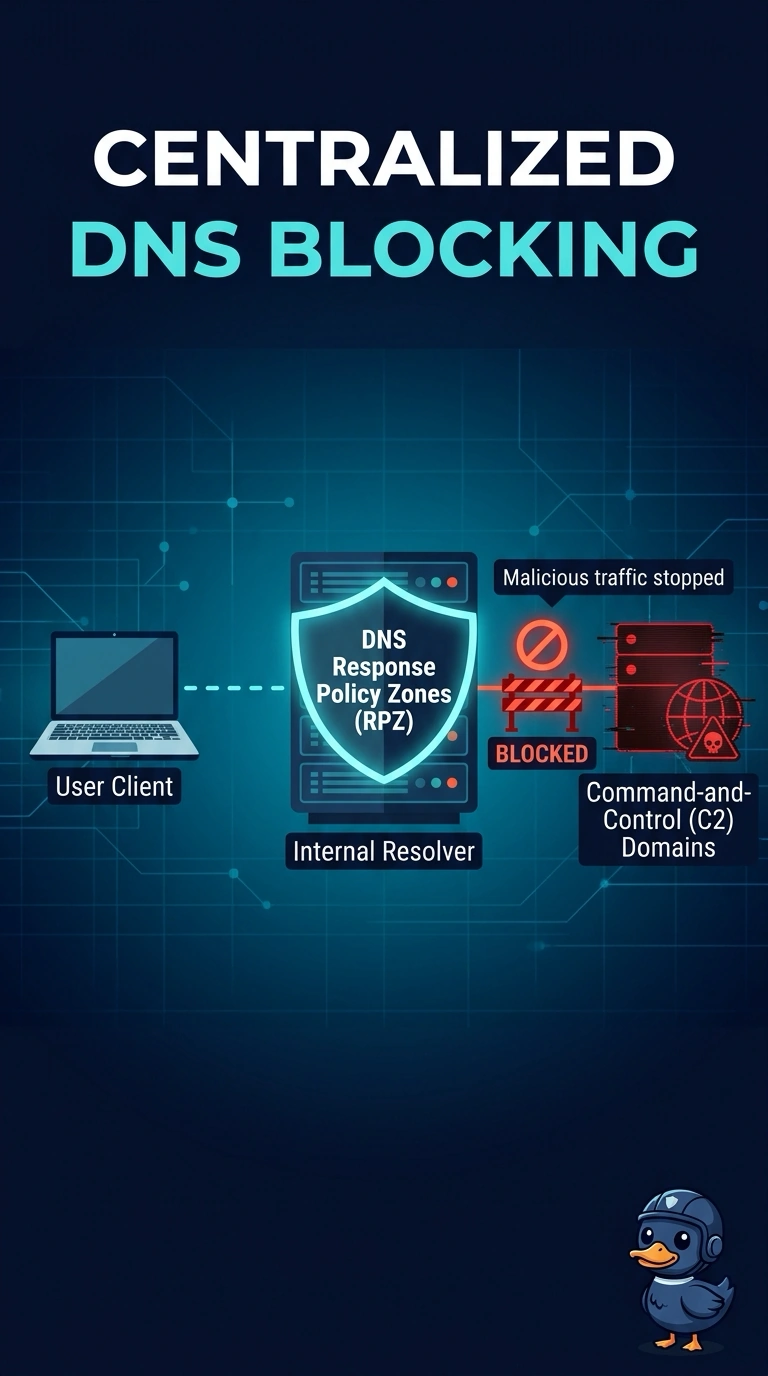
You’re looking for centralized DNS enforcement: DNS Response Policy Zones on internal resolvers can block the malicious domains for endpoints using those resolvers. Browser debug logging only records activity, removing DNS servers disrupts name resolution, and disabling HTTPS disrupts legitimate web access.
Full Explanation
Implementing DNS Response Policy Zones on internal resolvers lets defenders centrally block, sinkhole, or modify responses for confirmed command-and-control domains across endpoints that use those resolvers, disrupting lookups without changing each host. Enabling verbose debug logging on every internal workstation browser creates heavy local telemetry but does not block malicious name resolution. Removing all internal DNS servers from corporate DHCP scope options disrupts internal name resolution and business operations. Disabling outbound HTTPS traffic for every enterprise user account blocks legitimate web services and causes severe operational disruption. One caveat is that malware using hardcoded external IP addresses or encrypted DNS through external providers may bypass internal resolver policies unless paired with egress controls. As a practical check, query the internal resolver from a test host for a blocked domain, confirm the expected block or sinkhole response, and verify query logging.