
After a threat hunt reveals compromised internal database servers communicating over arbitrary outbound ports to newly registered external domains, a security architect wants a durable outcome that disrupts future command-and-control channels. Which control best achieves this goal?
Select an answer to reveal the explanation.
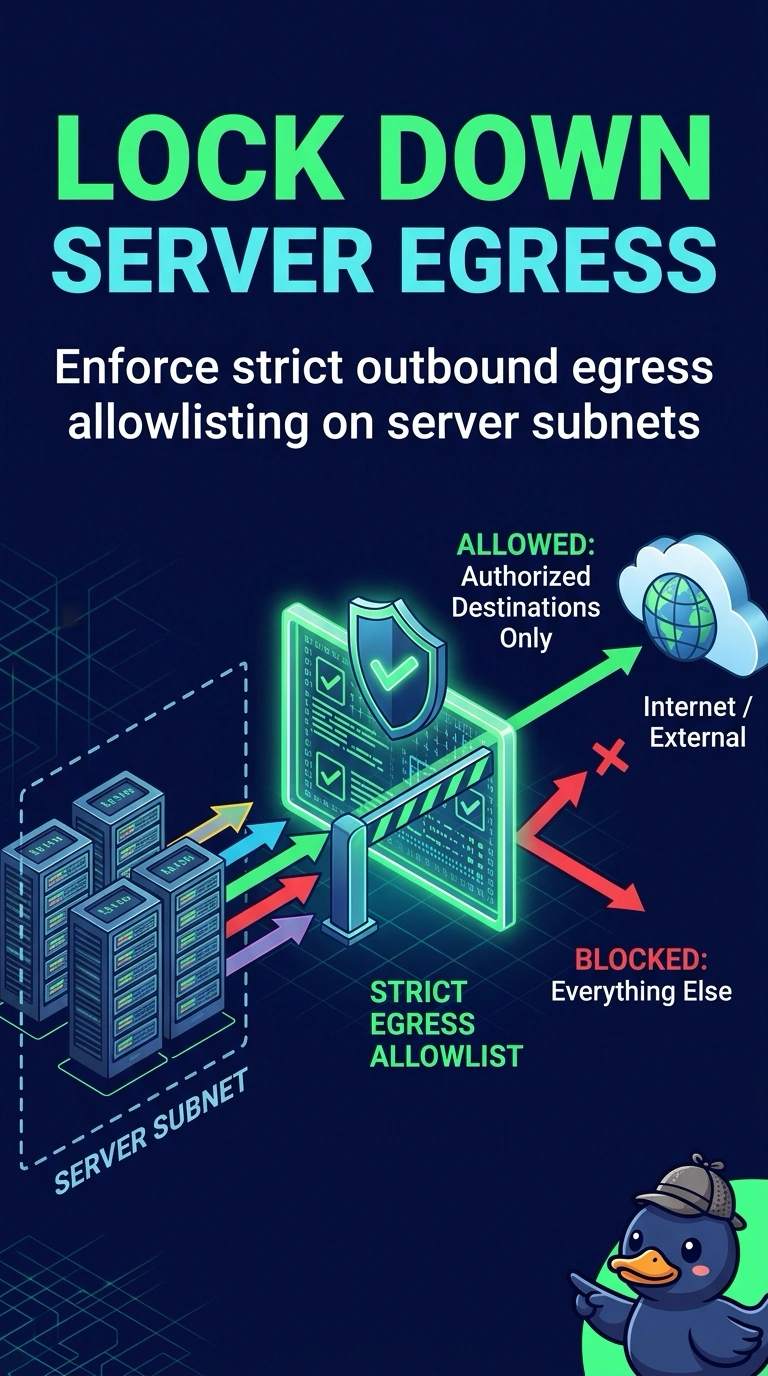
Short Explanation
You can make command-and-control callbacks much harder by allowing database servers to reach only approved destinations. Outbound egress allowlisting blocks unauthorized connections by default, even when attackers rotate domains or ports. Longer log retention and static file-hash indicators may help with investigation or known threats, but they do not provide this durable disruption.
Full Explanation
Enforcing strict outbound egress allowlisting on server subnets is the durable control because database servers generally do not need unrestricted internet access. Permitting only explicitly approved destinations blocks known and unknown command-and-control channels, including callbacks that use newly registered domains or arbitrary ports. Default-deny egress forces adversaries to abandon unauthorized outbound paths even when they rotate domains or IP addresses. Increasing local firewall log retention from thirty to ninety days improves historical investigation but does not block active outbound sessions. Deploying additional static file-hash indicators to endpoint agents targets known binaries on disk, so it can miss living-off-the-land tools or recompiled payloads. Disabling TLS certificate validation on internal web proxy gateways weakens cryptographic trust and can expose traffic to interception; it does not restrict unauthorized outbound paths. Exam caveat: overly hasty allowlisting can disrupt legitimate patch repositories, licensing checks, or cloud telemetry, so map required dependencies first. Practical check: audit firewall rules on server subnets to confirm a default-deny outbound policy is active, then test that unauthorized external connections fail immediately.