
A remote-first enterprise discovers that compromised laptops communicated with external command-and-control servers without appearing in corporate web proxy logs. Which architectural visibility gap most likely caused this blind spot?
Select an answer to reveal the explanation.
Short Explanation
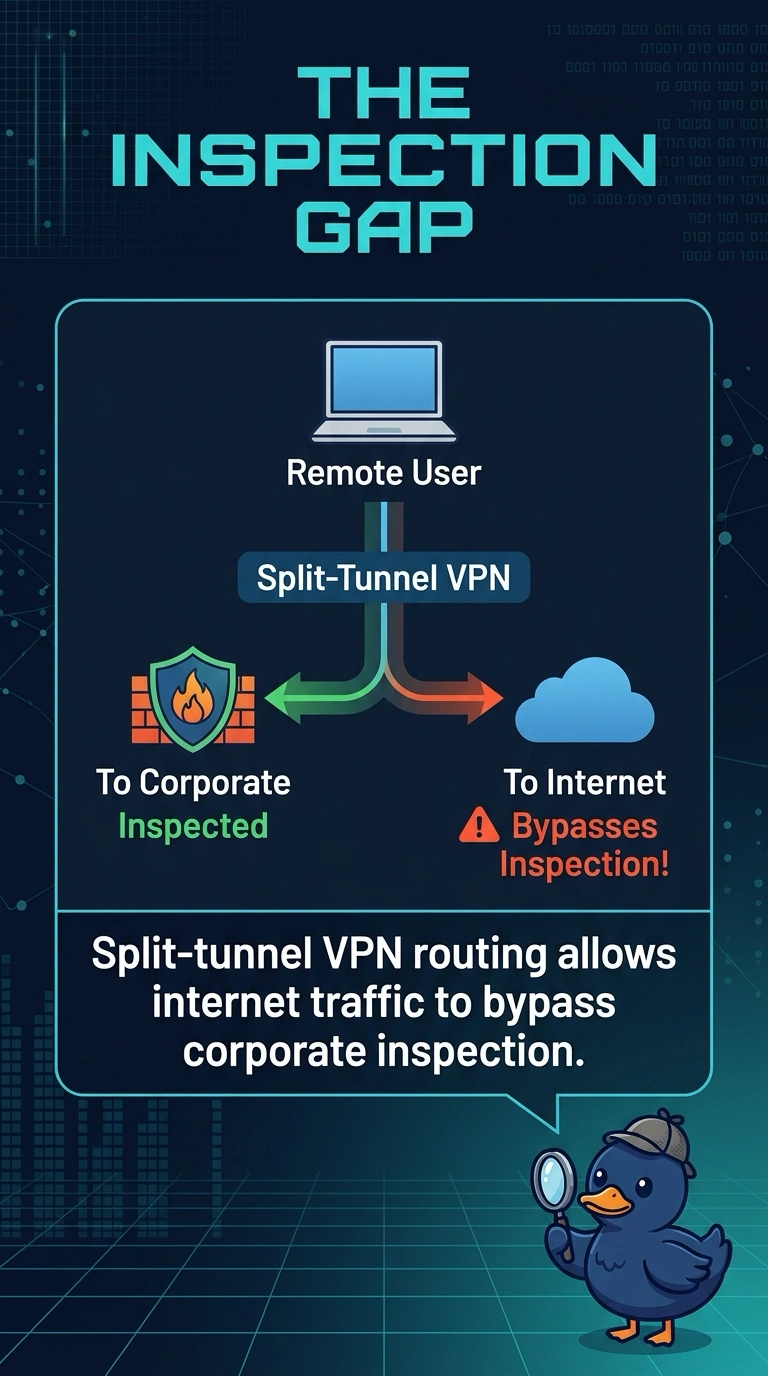
Think of split-tunnel routing as a side door out of a guarded building: your laptop’s internet traffic can slip past corporate inspection and the proxy. You can’t assume the proxy sees every connection; remote routing policies can leave a real visibility blind spot.
Full Explanation
Effective threat hunting depends on understanding where architectural routing choices create telemetry blind spots. Split-tunnel VPN routing allowed internet traffic to bypass corporate inspection, explaining why compromised remote laptops reached external command-and-control servers without generating corporate web proxy records. Centralized SIEM time synchronization does not explain the missing proxy logs: proper time synchronization enables correlation across time zones, but it does not determine whether internet traffic passes through the proxy. Strict application allowlisting concerns which binaries can execute; even if it blocks unsigned binaries, it does not explain why outbound network activity would be absent from proxy logs. Automated DNS sinkholing redirects malicious domains to an internal collector, producing sinkhole telemetry and preventing those connections from reaching external servers rather than allowing silent egress. One caveat is that expanding inspection of remote endpoint traffic can strain VPN concentrator bandwidth if capacity is not planned. As a practical check, review remote VPN routing profiles and confirm endpoint DNS or network telemetry records outbound connections when laptops are off the corporate network.