
An organization currently collects logs from only a few perimeter firewalls with short local retention, yet leadership asks the SOC to launch advanced hypothesis-driven threat hunts across endpoints. Which foundational step must come first to advance hunting maturity?
Select an answer to reveal the explanation.
Short Explanation
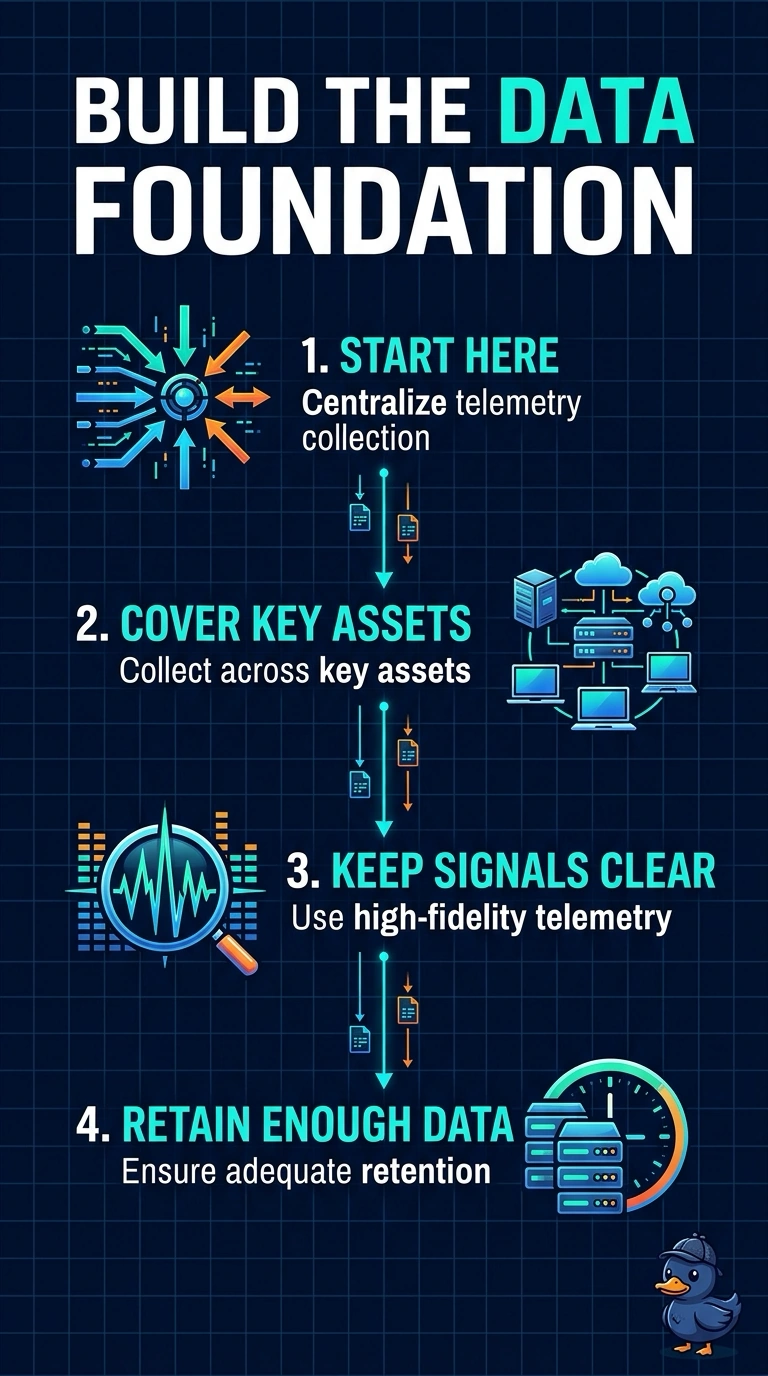
You cannot hunt for footprints in the snow if nobody is recording where anyone walks. Build centralized telemetry and retention across key assets first, so you can test hunting hypotheses with evidence rather than blind spots.
Full Explanation
Advancing threat hunting maturity requires you to establish centralized, high-fidelity telemetry collection and adequate retention across key assets before launching hypothesis-driven hunts. Without consistent endpoint process, authentication, and network visibility in a searchable repository, analysts cannot validate or refute assumptions about adversary behavior. Purchasing an automated machine learning scoring add-on before expanding endpoint log collection fails because analytics cannot detect threats in blind spots where telemetry does not exist. Asking analysts to run ad-hoc manual searches directly on individual user laptops during business hours does not scale, misses historical activity, and disrupts users. Publishing a quarterly threat hunting executive report using only existing perimeter firewall alerts mistakes perimeter alert summaries for proactive internal hunting. As a caveat, collecting every verbose debug log indiscriminately can overwhelm storage budgets, so you should prioritize high-value security events. As a practical check, audit log coverage against critical asset tiers and confirm endpoint process creation, DNS, and authentication logs are searchable across your target dwell-time window.