
An enterprise SOC ingests logs from cloud identity providers, endpoint agents, and next-generation firewalls, but analysts struggle to write unified hunting queries because each vendor uses different field names for IP addresses and usernames. Which architectural improvement best resolves this limitation?
Select an answer to reveal the explanation.
Short Explanation
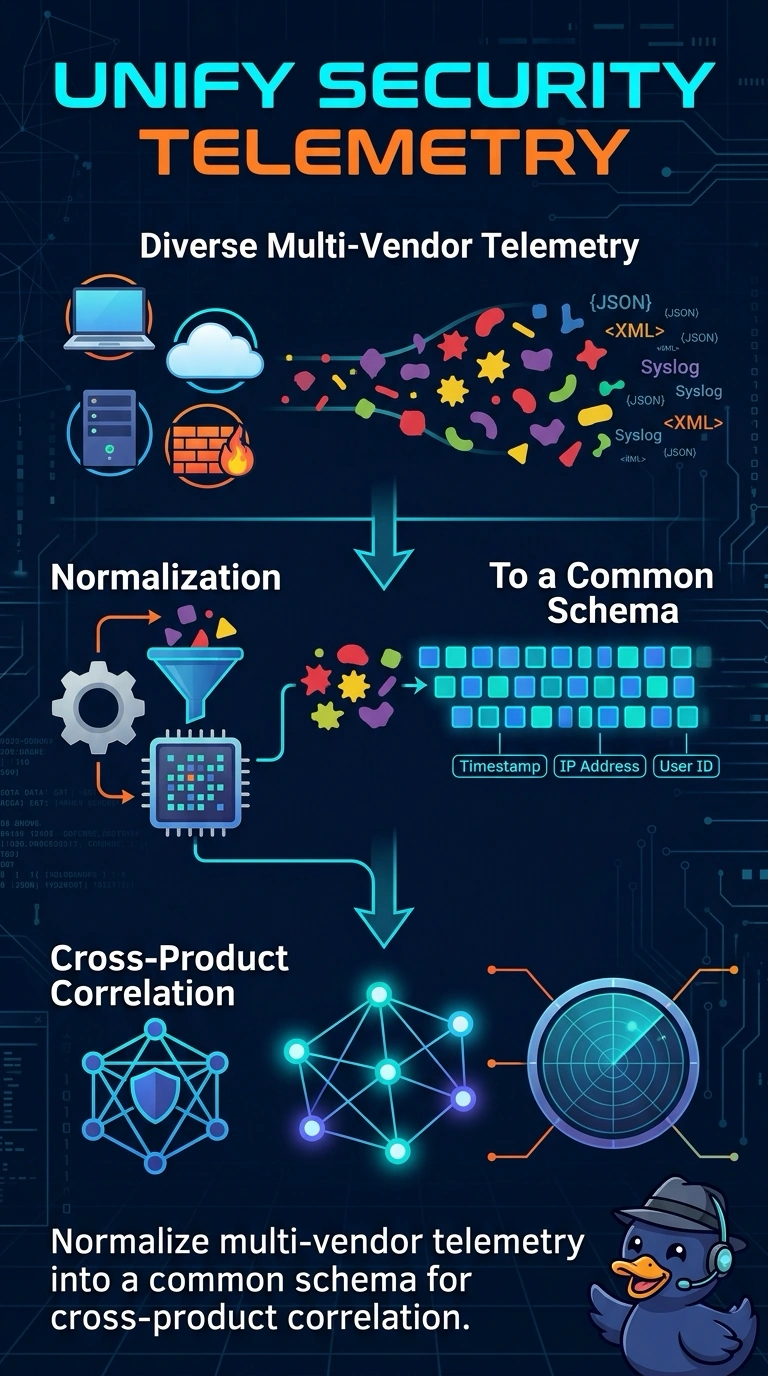
Connecting alerts from different security tools fails if each product speaks a completely different language. Normalizing multi-vendor telemetry into a common schema for cross-product correlation lets you trace an intrusion seamlessly across endpoints, networks, and identity logs. The trap is collecting plenty of logs while leaving them unparsed in isolated silos.
Full Explanation
The correct improvement is Normalizing multi-vendor telemetry into a common schema for cross-product correlation. When disparate products map equivalent fields—such as source IP, destination host, and user identity—into a standardized schema during ingestion, threat hunters can run a single query across all telemetry sources to reconstruct multi-stage attacks. Without normalization, analysts waste time translating vendor-specific syntax and miss subtle cross-domain links. By contrast, Forwarding raw, unparsed syslog messages into separate vendor consoles preserves data but reinforces silos and slows correlation. Increasing the local disk storage quota on individual perimeter firewalls only extends local retention on one device type without solving cross-product visibility. Similarly, Disabling verbose authentication logging to reduce SIEM licensing costs removes critical identity context needed to trace lateral movement. As an operational caveat, overly aggressive normalization can drop useful vendor-specific attributes, so retain key custom fields alongside the common schema. For an operational check, test a cross-product hunt query using a single standardized user or IP field and verify it returns matching events from identity, endpoint, and firewall logs.