
After concluding a month-long threat hunt that uncovered unmonitored remote access services, a lead hunter prepares a briefing for executive leadership. What should this presentation emphasize?
Select an answer to reveal the explanation.
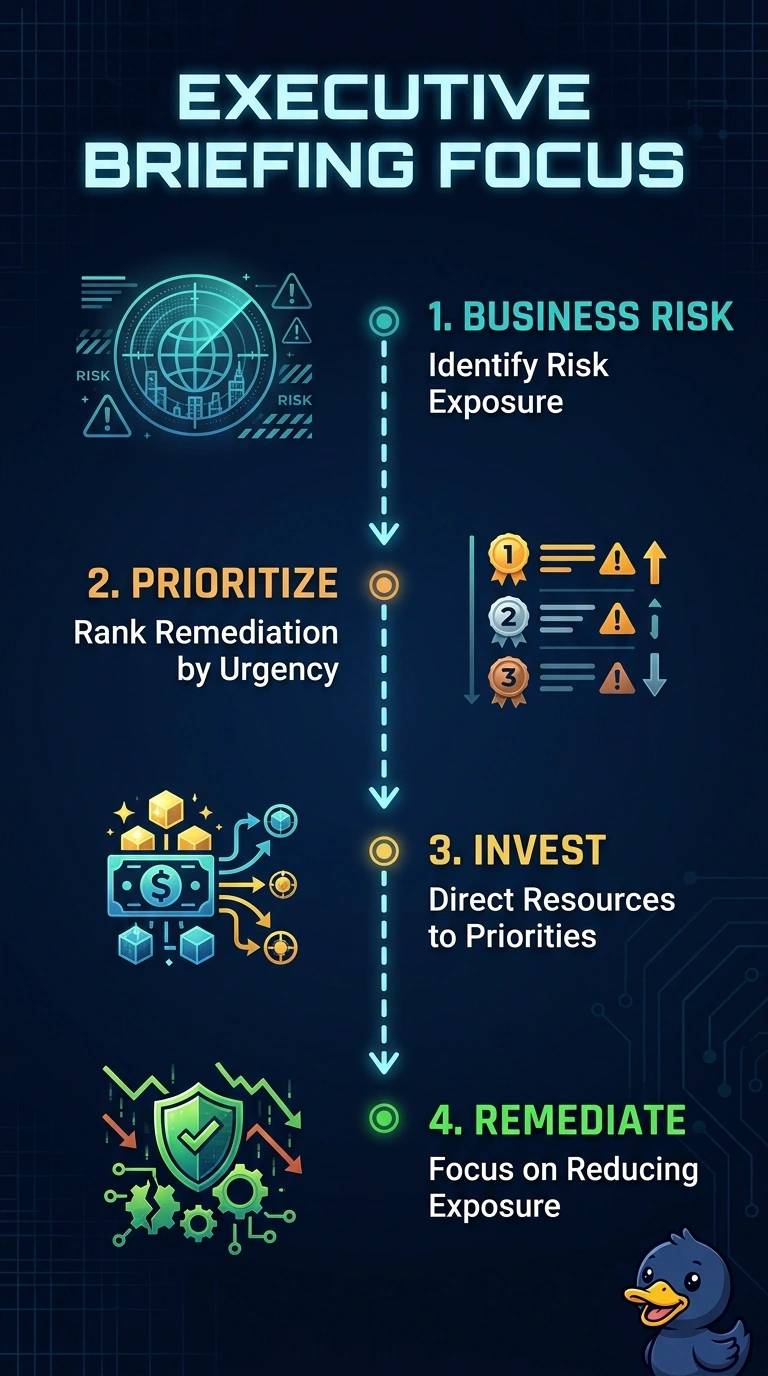
Short Explanation
Briefing executives with raw packet hex is like handing a homeowner a soil chemistry report when they just need to know if the foundation is cracked. Keep your leadership summary focused on business impact and clear next steps. The trap is drowning decision-makers in technical artifacts they cannot act on.
Full Explanation
Business risk exposure and prioritized remediation investments gives leadership the context needed to approve budgets, accept or mitigate risk, and assign ownership across teams. Complete packet captures and raw hexadecimal memory offsets from servers belong in technical incident archives for forensic specialists rather than executive decision briefings. Individual analyst query syntax and regular expression tuning steps help detection engineers refine SIEM rules, but obscure the strategic takeaway for non-technical stakeholders. Chronological terminal histories for every workstation investigated provide granular host timelines useful during containment, yet fail to summarize organizational exposure or resource priorities. As a caveat, summarizing risk for executives does not mean hiding technical scope; attach an appendix for engineering leads who will execute the fixes. As an operational check, review your executive slide deck and confirm every finding links directly to an affected business asset and a concrete remediation owner.