
After an intrusion went undetected because endpoint agents missed an unmanaged appliance while network sensors lacked process context, a security architect wants to improve multi-stage visibility. Which outcome-focused change addresses this gap?
Select an answer to reveal the explanation.
Short Explanation
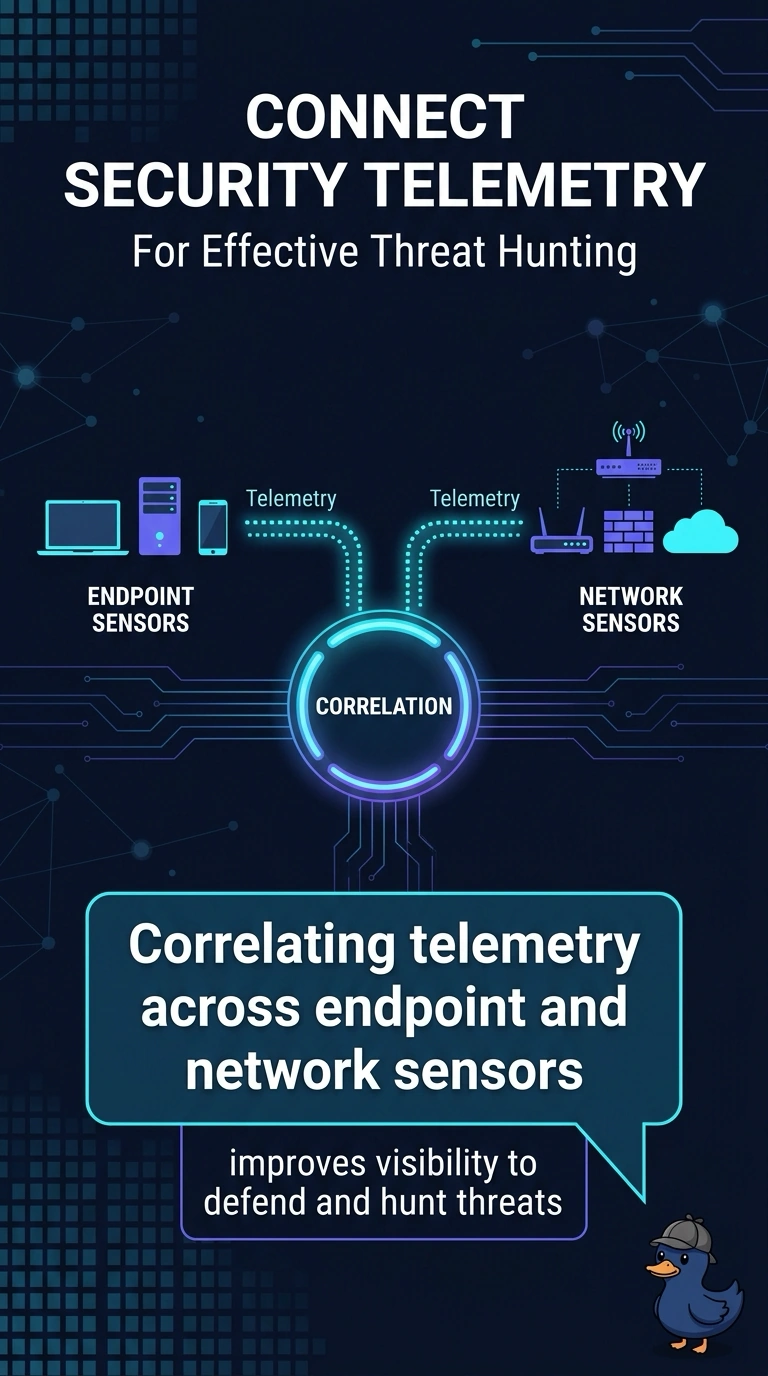
You can close the visibility gap by correlating endpoint and network telemetry, joining process context with network activity to reveal multi-stage behavior. Archiving isolated logs or reviewing alerts one at a time leaves those connections hidden, while replacing network sensors with a host firewall misses unmanaged devices and traffic beyond host controls.
Full Explanation
Correlating telemetry across endpoint and network sensors is correct because it combines host-level process and identity context with network-level flow and protocol visibility, helping you connect events across stages of an intrusion. This addresses the visibility gap left when endpoint agents miss an unmanaged appliance but network sensors lack process context. Archiving raw sensor logs in isolated local storage preserves records for later review or compliance, but the isolated logs do not support real-time cross-domain detection. Replacing all network sensors with a single host firewall removes visibility into unmanaged devices, IoT systems, and lateral traffic that bypasses host controls. Restricting analysts to manual reviews of individual alerts slows response and makes it harder to recognize how events across layers form one attack chain. A caveat is that correlation depends on consistent time synchronization and normalized fields, and it cannot create process telemetry that was never collected for an unmanaged appliance. As a practical check, run a query joining a network flow record to its originating endpoint process ID, then verify that the timestamps align across both platforms.