
After multiple hunts show intruders bypassing static file-hash alerts by recompiling payloads between targets, a retail SOC lead recommends overhauling the team's detection methodology. Which change most effectively addresses this evasion pattern?
Select an answer to reveal the explanation.
Short Explanation
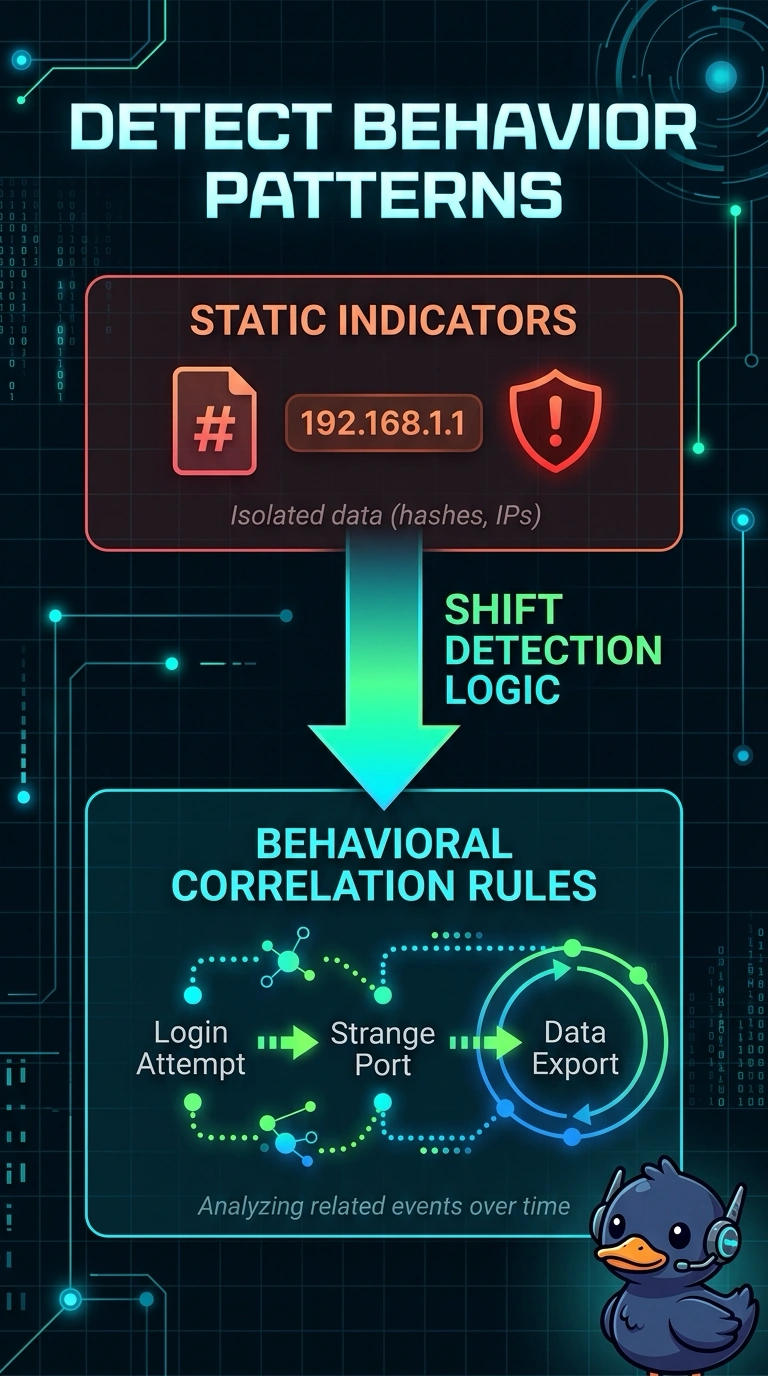
Chasing recompiled malware with new file hashes is like trying to catch a shape-shifter by memorizing yesterday's outfit. You win by watching how the intruder behaves, while the trap is thinking faster IP blocklists or longer log storage will fix brittle static rules.
Full Explanation
Shifting detection logic from static indicators to behavioral correlation rules is correct because adversaries can trivially change file hashes and IP addresses, whereas sequences of execution, credential access, and lateral movement behaviors remain far more consistent across campaigns. Increasing the frequency of daily external IP blocklist imports into the firewall fails because IP rotation is cheap for attackers and does nothing to catch recompiled payloads executing on internal endpoints. Restricting SOC analysts to investigating only high-severity antivirus alerts fails because narrowing triage to existing static alerts leaves the team blind to evasive intrusions that never trigger antivirus signatures. Extending log retention periods without modifying existing SIEM correlation rules fails because storing historical records longer helps post-incident forensics but does not improve active detection logic. As a caveat, behavioral rules require careful baselining against legitimate administrative workflows so they do not overwhelm analysts with noisy alerts. For an operational check, test each new behavioral correlation rule against recorded adversary emulation telemetry and recent benign administrative activity to verify detection accuracy before enabling automated alerting.