
After a threat hunt identifies internal workstations resolving dynamically generated domains to communicate with an external command-and-control server, the defense team needs to sever the channel while still identifying any remaining infected hosts. Which action best achieves both goals?
Select an answer to reveal the explanation.
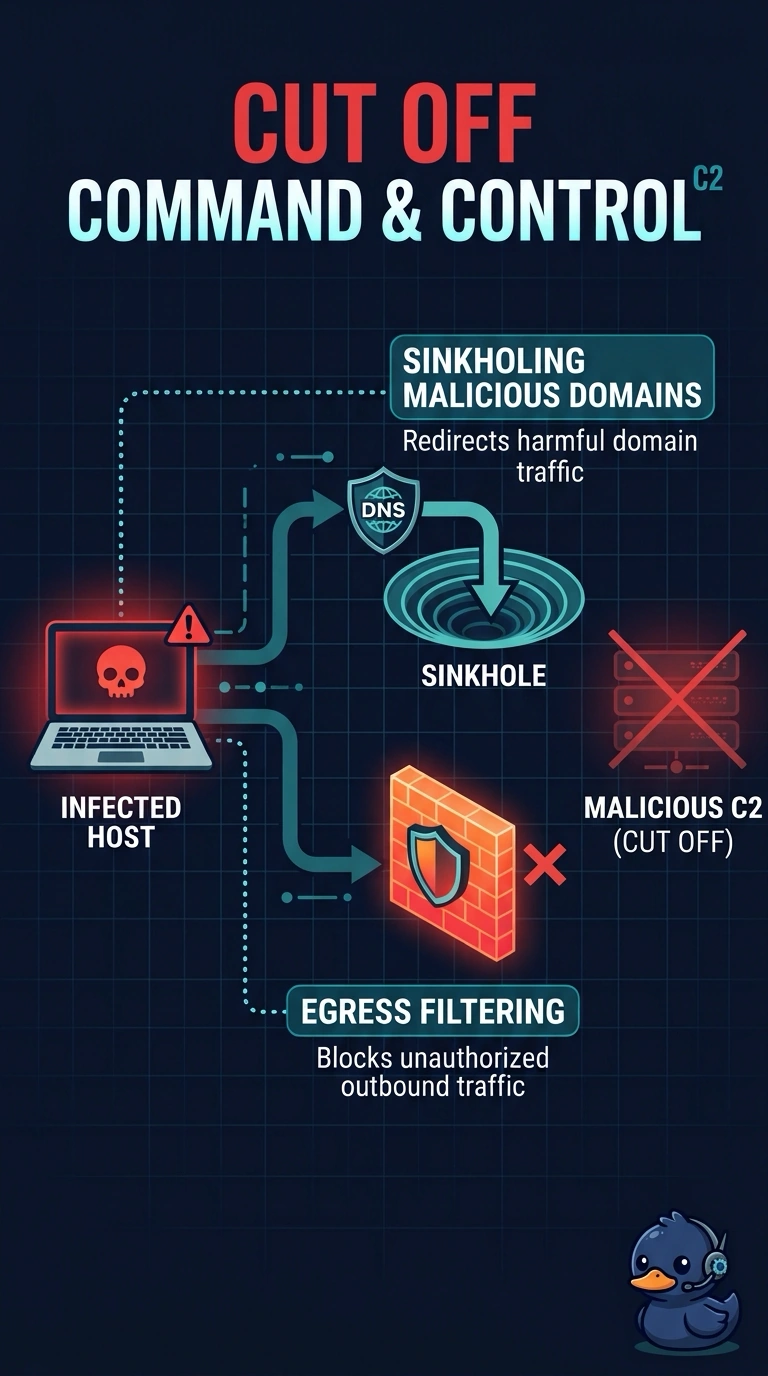
Short Explanation
Cutting off an attacker's phone line is even better when you can still see who is trying to dial out. By redirecting malicious domains internally while blocking unauthorized egress, you stop the channel and catch every remaining beacon. The trap is taking a partial step that leaves other infected machines quietly calling home.
Full Explanation
Sinkholing the malicious domains while enforcing egress filtering severs the adversary's control channel and simultaneously funnels internal beacon attempts to a monitored responder. When infected workstations query the malicious domains, internal DNS redirects them to a controlled sinkhole IP address, revealing observed clients using the controlled path; caches, NAT, offline hosts, alternate DNS, and hardcoded addresses limit coverage, while egress rules block fallback connections. Reimaging only the single workstation that triggered the initial alert leaves any other compromised machines active and able to maintain external command-and-control access. Disabling internal DNS logging to reduce firewall processing load blinds defenders to which endpoints are querying suspicious domains, making scoping impossible. Changing local administrator passwords without blocking outbound traffic does not stop an already-running implant from communicating over an established network path. One caveat is that sinkholing must be paired with egress IP blocking in case malware falls back to hardcoded addresses when domain resolution fails. Correlate sinkhole hits with endpoint evidence before risk-based containment; research and scanners can also trigger hits.