
A threat hunting team ingests indicators from multiple external sharing groups into its SIEM watchlist, but analysts later cannot tell why an alert fired or whether the source is still trustworthy. Which threat intelligence handling practice prevents this issue?
Select an answer to reveal the explanation.
Short Explanation
An indicator without its backstory is like an unlabeled key on your desk—you have no idea what door it opens or if it still works. Keeping provenance metadata lets you judge whether an alert is urgent or stale. The trap is stripping away context to save space or automate faster.
Full Explanation
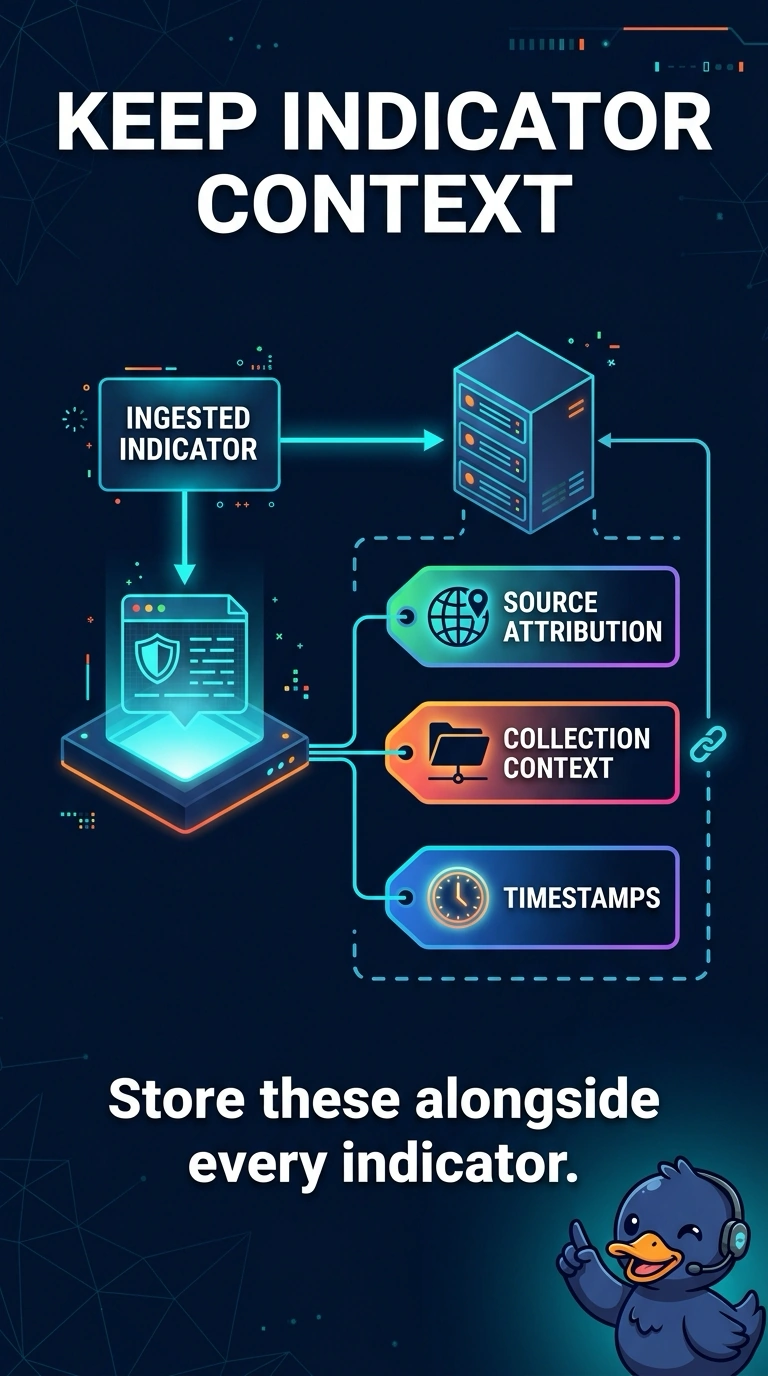
Effective intelligence handling depends on traceability, which requires Storing source attribution, collection context, and timestamps alongside every ingested indicator. When an alert triggers, analysts need to see which threat actor or campaign the observable came from, how recently it was active, and how reliable the originating group is before deciding on containment. Choosing Stripping all external metadata fields to minimize SIEM lookup table storage requirements saves minimal disk space at the cost of blinding responders during triage. Likewise, Merging every shared indicator into a single unlabeled global blocklist without expiration destroys analytical context and allows outdated observables to cause ongoing false positives. Furthermore, Automatically escalating every indicator match to an immediate host isolation action regardless of context risks taking down critical business systems over benign or reassigned infrastructure. As a caveat, provenance fields must still respect sharing caveats when exported to external partners. As an operational check, inspect a sample of active SIEM watchlist entries to confirm each record displays its originating source, ingestion date, and associated campaign context.