
A threat hunting team is preparing a structured hunt based on a new threat model covering lateral movement across internal Windows servers. Which hypothesis formulation best ensures the hunt produces clear, verifiable results?
Select an answer to reveal the explanation.
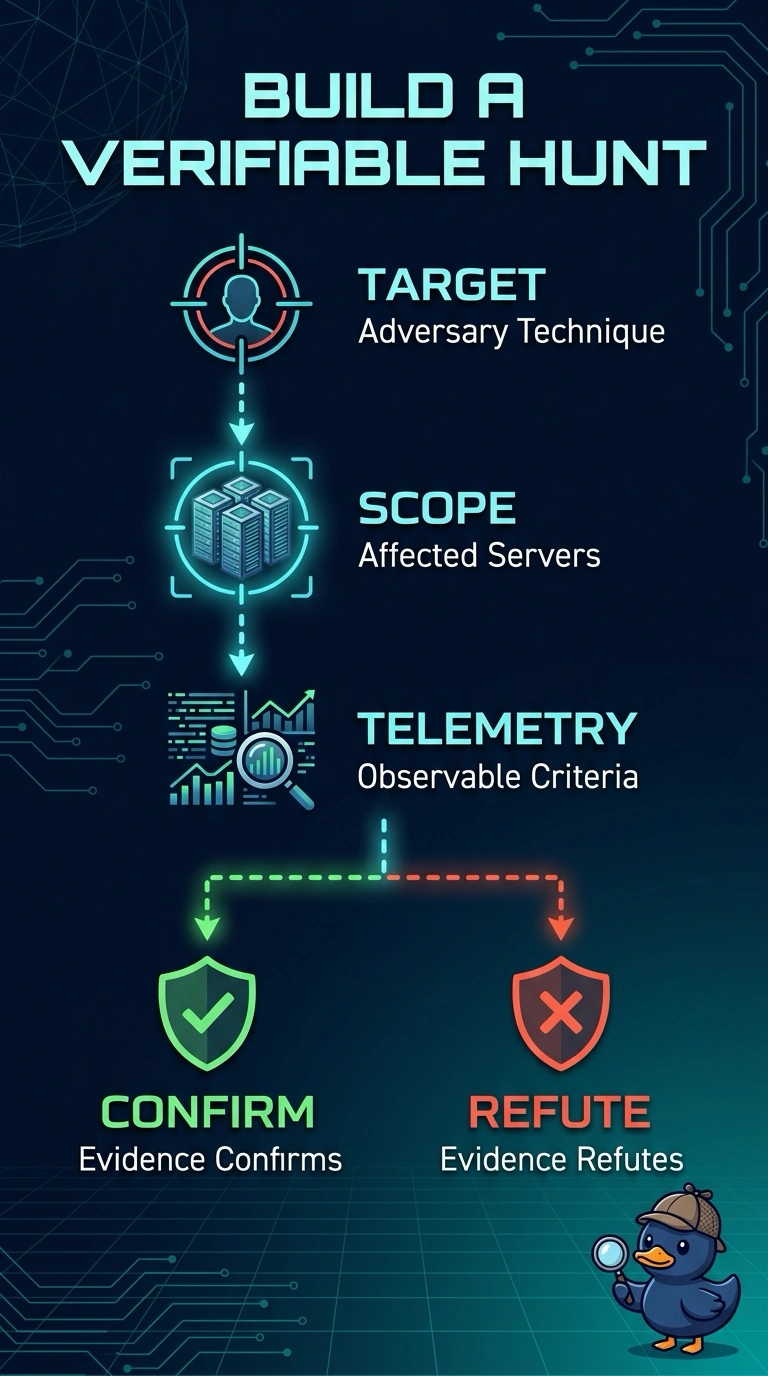
Short Explanation
A good hunt hypothesis works like a science experiment: you need to know what you are looking for, where to look, and what evidence proves you right or wrong. The trap is starting with a vague wish to 'find bad stuff,' which wastes hours in noisy logs.
Full Explanation
Structured threat hunting relies on testable assumptions, so analysts must Specify the target adversary technique, affected server scope, and observable telemetry criteria that confirm or refute it. Defining the exact behavior, the server tier, and the required process or authentication events gives the hunter a repeatable query plan and a clear stopping rule whether the behavior is found or disproven. Choosing to State a broad goal to find any suspicious server activity without defining target logs lacks falsifiable criteria and turns a structured hunt into unfocused browsing. Choosing to List only known malicious IP addresses from last year's reports to search across firewalls reduces the hunt to stale indicator matching rather than testing modeled lateral-movement behaviors. Choosing to Assume the environment is fully compromised and immediately isolate all internal servers skips investigation entirely and causes unnecessary business disruption. As a caveat, a disproven hypothesis is still a valuable outcome because it validates baseline behavior and exposes missing log fields. For an operational check, verify that your required log fields are actively parsed in the SIEM across the entire target server scope before launching the hunt.