
A security architect is using MITRE ATT&CK to model threats against a corporate identity environment and needs to decide which new log source to onboard first with a limited budget. Which prioritization approach delivers the broadest defensive impact?
Select an answer to reveal the explanation.
Short Explanation
Think of telemetry mapping like placing cameras at your building's main hallways instead of buying a lock for just one desk drawer. The trap is spending your budget on narrow indicators or single-malware rules instead of log sources that expose dozens of techniques.
Full Explanation
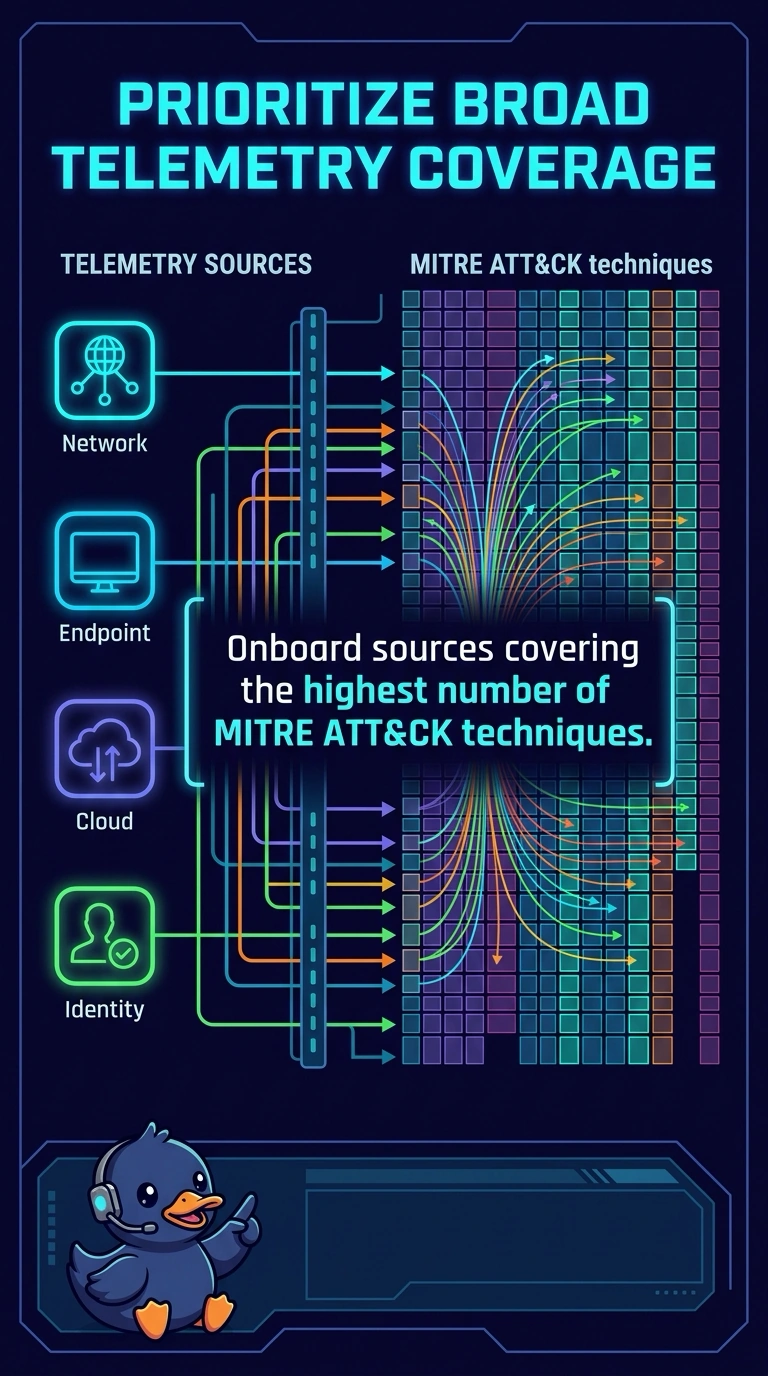
Onboarding telemetry sources that cover the highest number of modeled adversary techniques delivers the broadest impact. Use current ATT&CK detection strategies, analytics, and data components to identify telemetry covering the highest-priority modeled techniques. Legacy ATT&CK Data Source objects were deprecated in v18 (October 2025); technique count alone does not measure local detection quality or risk reduction. Prioritizing high-leverage telemetry closes multiple blind spots simultaneously regardless of which tool an intruder uses. By contrast, Purchasing a threat feed of external IP addresses tied to past phishing campaigns only addresses brittle atomic indicators that adversaries rotate frequently. Similarly, Focusing exclusively on late-stage exfiltration alerts at the perimeter firewall leaves earlier credential access and lateral movement undetected until damage is already underway. Finally, Implementing custom signatures for a single recently publicized malware sample provides narrow, short-lived coverage that misses living-off-the-land techniques. One caveat is that high-volume telemetry sources can strain SIEM ingestion budgets if verbose benign events are not filtered at the collector. As an operational check, map your current log sources against your prioritized ATT&CK techniques to rank which missing data source covers the most unmonitored behaviors.