
A development team is building an internal microservices application and wants a threat modeling approach that starts from architecture diagrams, data flows, and trust boundaries to uncover design flaws before coding. Which approach best fits this goal?
Select an answer to reveal the explanation.
Short Explanation
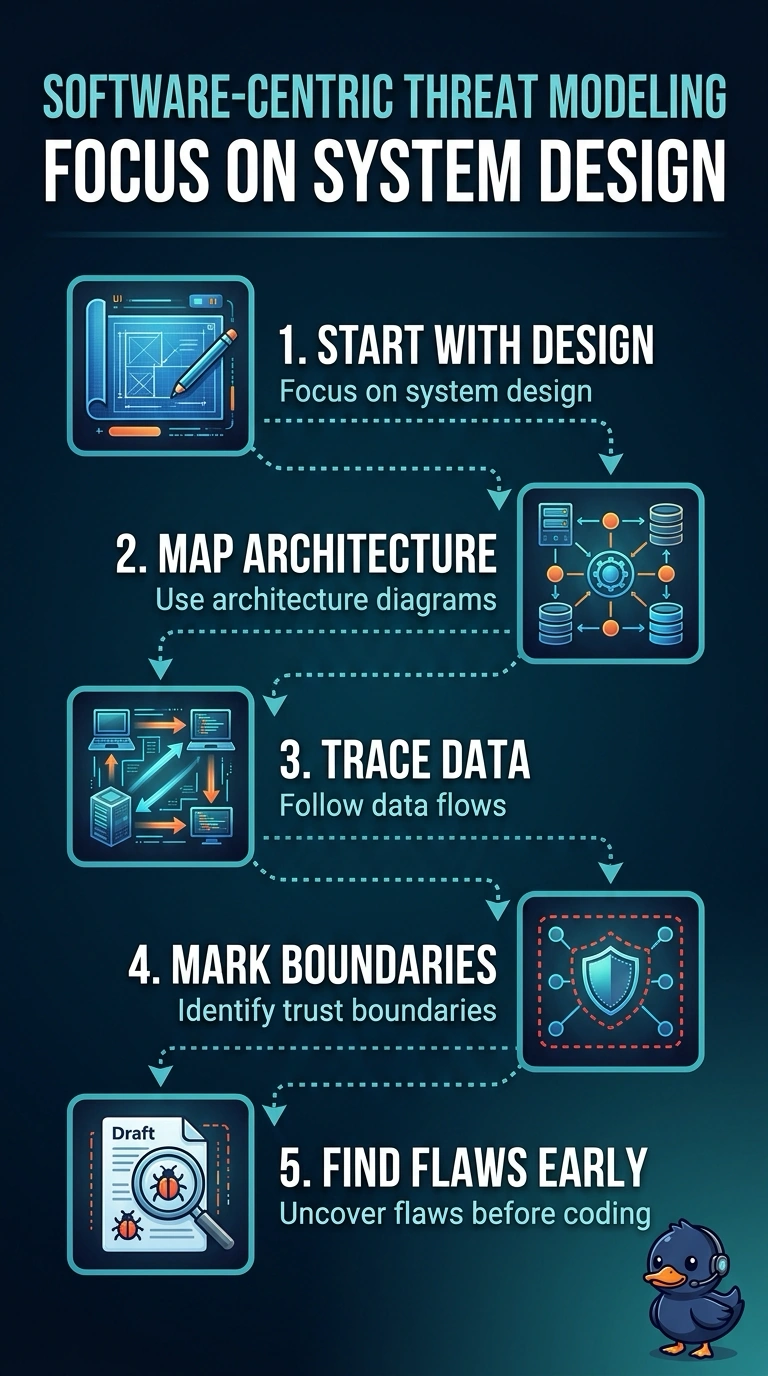
When your engineering team is staring at architecture diagrams and data-flow arrows, you want a model built around the software itself. The trap is picking an attacker-centric approach that starts with external threat actor profiles instead of the application's trust boundaries.
Full Explanation
Software-centric threat modeling focused on system design is the best fit because it anchors analysis in architecture diagrams, data-flow diagrams, and trust boundaries, enabling developers to identify input validation, authentication, and authorization weaknesses before writing code. Attacker-centric threat modeling focused on adversary motivation begins with external threat actor profiles and capabilities rather than the internal structure of the software being built. Compliance-only checklist auditing after production release occurs too late in the lifecycle to catch architectural design flaws and emphasizes regulatory checkboxes over data-flow risks. Reactive incident response modeling based on past breaches looks backward at known incidents rather than systematically analyzing a new microservice design. As a caveat, software-centric modeling can overlook emerging adversary tactics if architecture diagrams are never updated or paired with current threat intelligence. As an operational check, review each data flow crossing a trust boundary and verify that documented security controls map to testable acceptance criteria.