
A retail security team wants to maximize its threat hunting coverage across both documented adversary campaigns and unknown internal anomalies. How should the team balance structured and unstructured hunting?
Select an answer to reveal the explanation.
Short Explanation
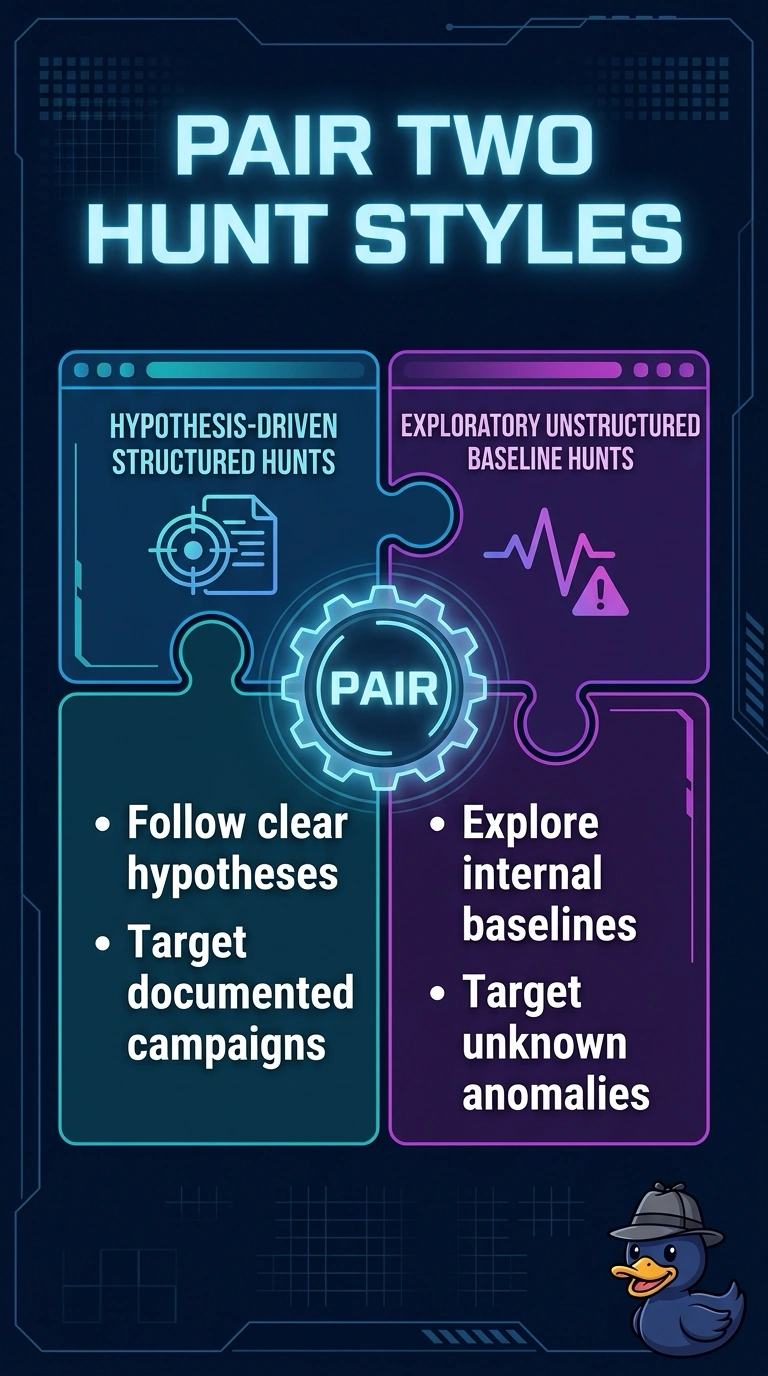
Structured hunts let you search with a specific suspect in mind, while unstructured hunts help you spot strange footprints you never expected to see. The trap is treating these two styles as competitors when your best coverage comes from combining them.
Full Explanation
Deciding to Pair hypothesis-driven structured hunts with exploratory unstructured baseline hunts gives a hunting program balanced visibility into both known adversary behaviors and unexpected environmental outliers. Structured hunts start from intelligence-backed hypotheses about specific tactics, whereas unstructured hunts use statistical rarity and baseline deviations to surface novel activity that lacks prior reporting. Choosing to Run only unstructured hunts because threat intelligence feeds are always outdated wastes valuable external context on active campaigns targeting the organization's sector. Attempting to Replace all structured hunting with automated perimeter firewall signature blocking mistakes automated boundary enforcement for proactive internal investigation of post-compromise behavior. Opting to Limit unstructured hunting exclusively to endpoints that have already triggered alerts defeats the proactive purpose of hunting, which is to uncover stealthy threats that evaded existing alerting rules. As a caveat, unstructured hunts can consume significant analyst time if not scoped by asset criticality. Perform an operational check by scheduling time-boxed structured sprints alongside periodic baseline outlier reviews on crown-jewel subnets.