
A defense contractor's security team wants to build a threat model that centers on the specific motivations, capabilities, and tactics of adversaries known to target aerospace suppliers. Which threat modeling approach best fits this objective?
Select an answer to reveal the explanation.
Short Explanation
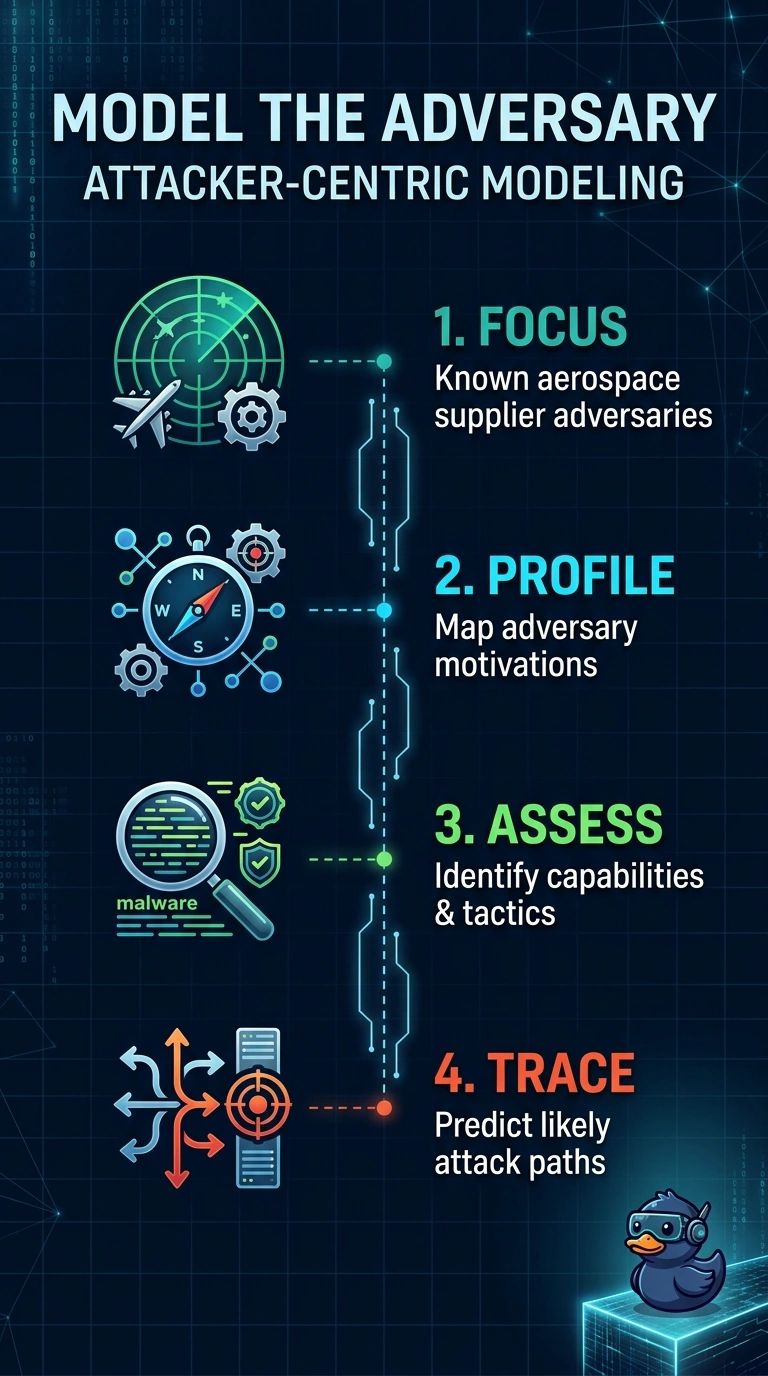
Choosing a threat model is like picking a map before a hike—if you want to anticipate who is chasing you, you study the pursuer's playbook. The trap is defaulting to a generic architecture or compliance checklist, when your goal is to model specific industry adversaries.
Full Explanation
Threat modeling approaches differ based on whether they start from software architecture, critical assets, or adversary behavior. Attacker-centric modeling focused on adversary profiles and likely attack paths directly aligns with an organization seeking to anticipate the motivations, capabilities, and tactics of threat groups targeting its sector. Software-centric modeling starting from architecture, data flows, and trust boundaries examines application design flaws without centering on external adversary profiles. Compliance-driven auditing focused strictly on regulatory checklist alignment measures policy adherence rather than modeling active threat actors. Asset-centric modeling starting from valuable data, services, identities, and other assets prioritizes what needs protection without mapping specific adversary tradecraft. A key caveat is that attacker-centric models can become outdated if an organization overlooks emerging threats outside its primary sector. As an operational check, map the profiled adversary tactics against your existing detection coverage and verify that high-risk attack paths have active monitoring.