
A security team plans to automatically push IP addresses and domains from external threat intelligence feeds directly into perimeter firewall blocklists. Which threat intelligence handling practice should the team implement first to prevent self-inflicted outages?
Select an answer to reveal the explanation.
Short Explanation
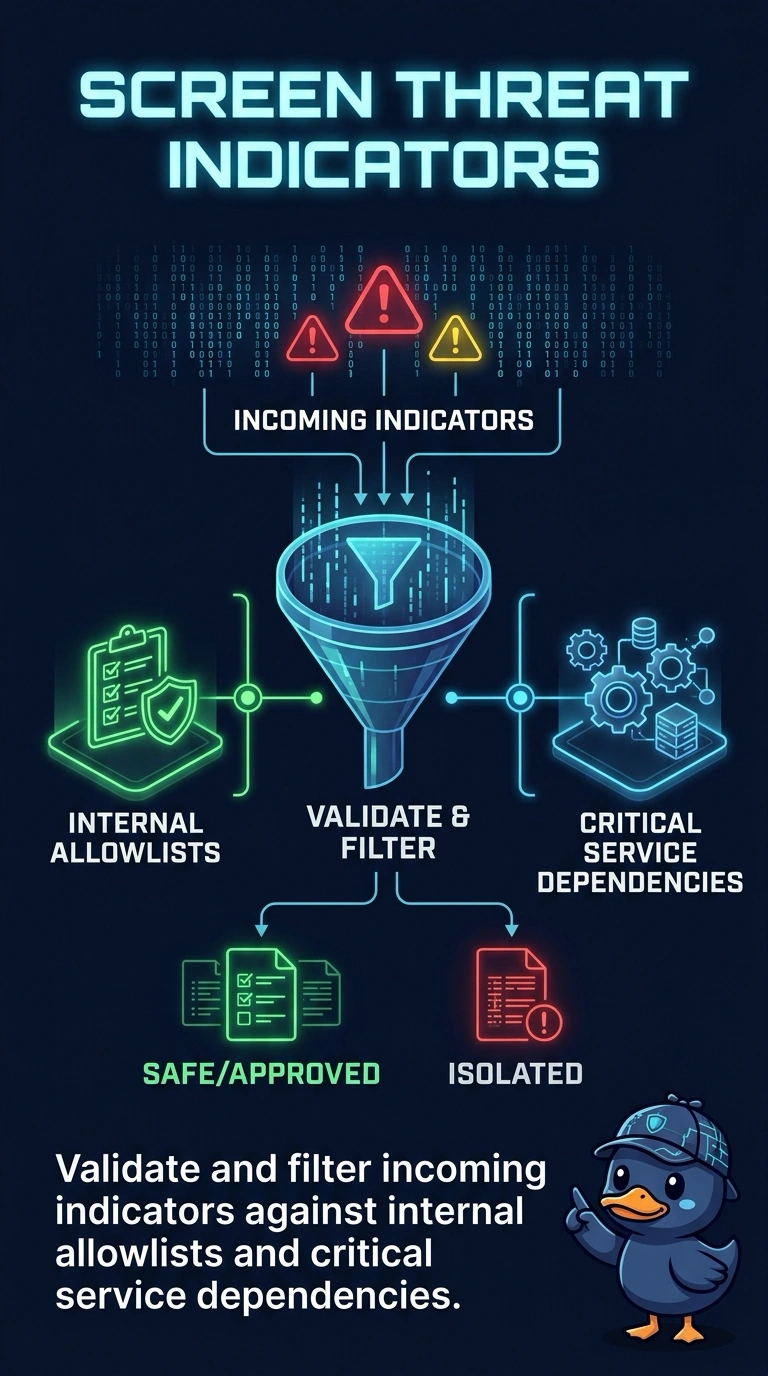
You can prevent a threat feed from disrupting your services by checking indicators against internal allowlists and critical dependencies before blocking them. This validation matters because a feed may include shared cloud services, DNS resolvers, or your own infrastructure.
Full Explanation
Before automatically blocking indicators from external feeds, validate and filter them against internal allowlists and critical service dependencies. Feeds can include shared content delivery networks, public DNS resolvers, or reassigned cloud addresses; blocking these indiscriminately can disrupt legitimate business operations. Permanently blocking every reported indicator without an expiration policy can turn a temporary overlap with legitimate infrastructure into a lasting outage. Prioritizing unverified social media feeds for rapid blocking bypasses source-reliability checks and raises the risk of false positives. Disabling logging on automated block rules to conserve SIEM storage removes visibility into both legitimate traffic that was blocked and actual adversary contact attempts. One caveat is that allowlists need periodic review, since attackers may abuse trusted third-party services. As a practical check, run new feeds in alert-only mode against historical proxy and DNS logs to measure false-positive impact before enabling automated blocking.