
A threat hunting team ingests thousands of IP addresses and domain indicators from external feeds every month, causing SIEM lookup tables to slow down and generate false positives on reassigned cloud addresses. Which threat intelligence handling practice addresses this issue?
Select an answer to reveal the explanation.
Short Explanation
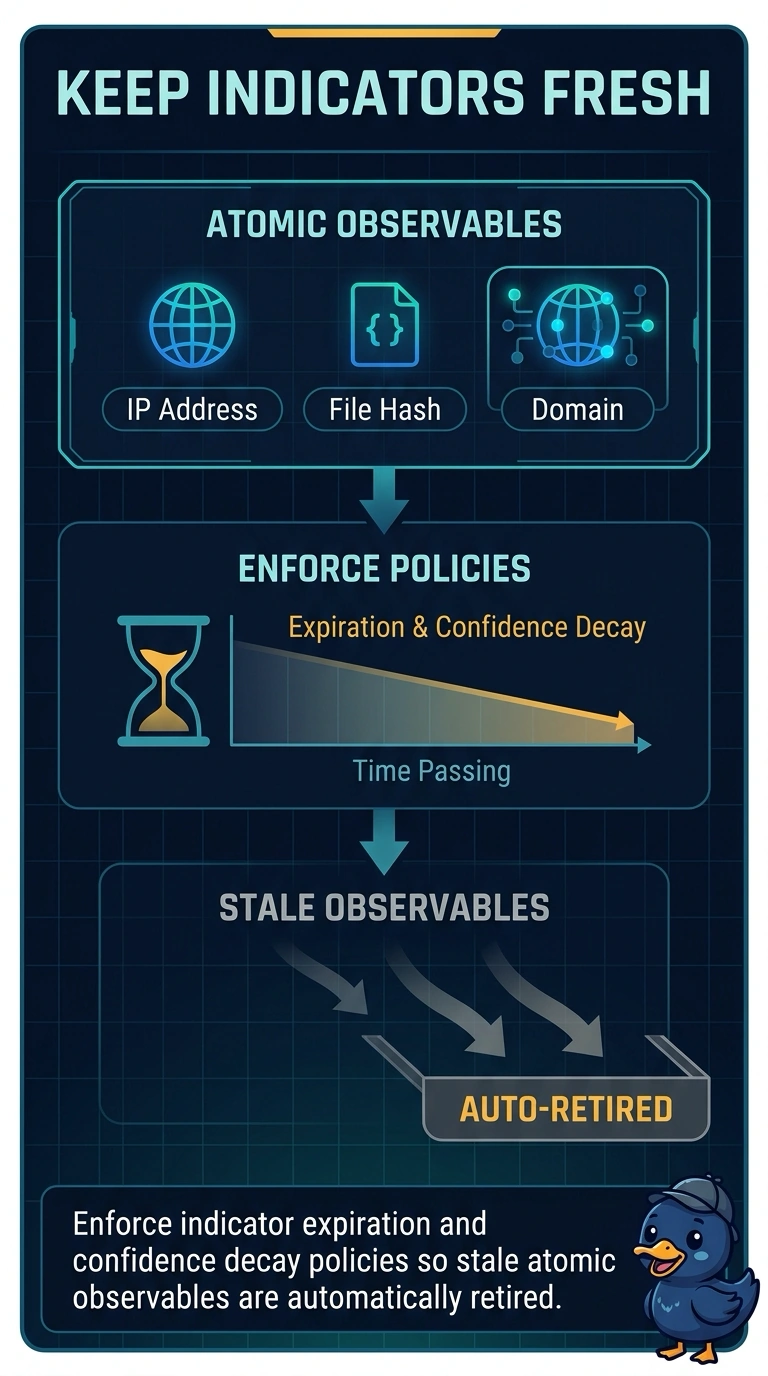
Atomic indicators like IP addresses age like milk in a cloud-hosted world, so keeping old feeds forever turns your SIEM into a false-positive factory. The trap is hoarding stale observables instead of retiring them on a schedule.
Full Explanation
To keep detection pipelines accurate and responsive, teams should Enforce indicator expiration and confidence decay policies so stale atomic observables are automatically retired, reflecting the short operational lifespan of shared cloud IPs and disposable domains. Choosing to Keep every historical indicator active indefinitely in real-time correlation tables without expiry bloats active correlation tables and triggers false alerts long after an IP address has been reassigned to a legitimate business service. Attempting to Promote all external feed indicators directly into automated firewall blocking rules amplifies the damage of stale or unverified feeds by disrupting legitimate traffic without analyst validation. Going to the other extreme to Disable all external threat feeds and rely exclusively on manual log searches throws away timely tactical intelligence that can still catch active campaigns early. Retiring active matches does not require deleting historical intelligence records; retain an archive with timestamps for retrospective analysis. For an operational check, audit active threat intelligence lookup tables for age distribution and measure how many alerts come from indicators older than their expected shelf life.