
A software engineering team is threat modeling a new external web portal and wants to enumerate concrete ways attackers abuse authentication logic and input handling before writing code. Which approach best supports this goal?
Select an answer to reveal the explanation.
Short Explanation
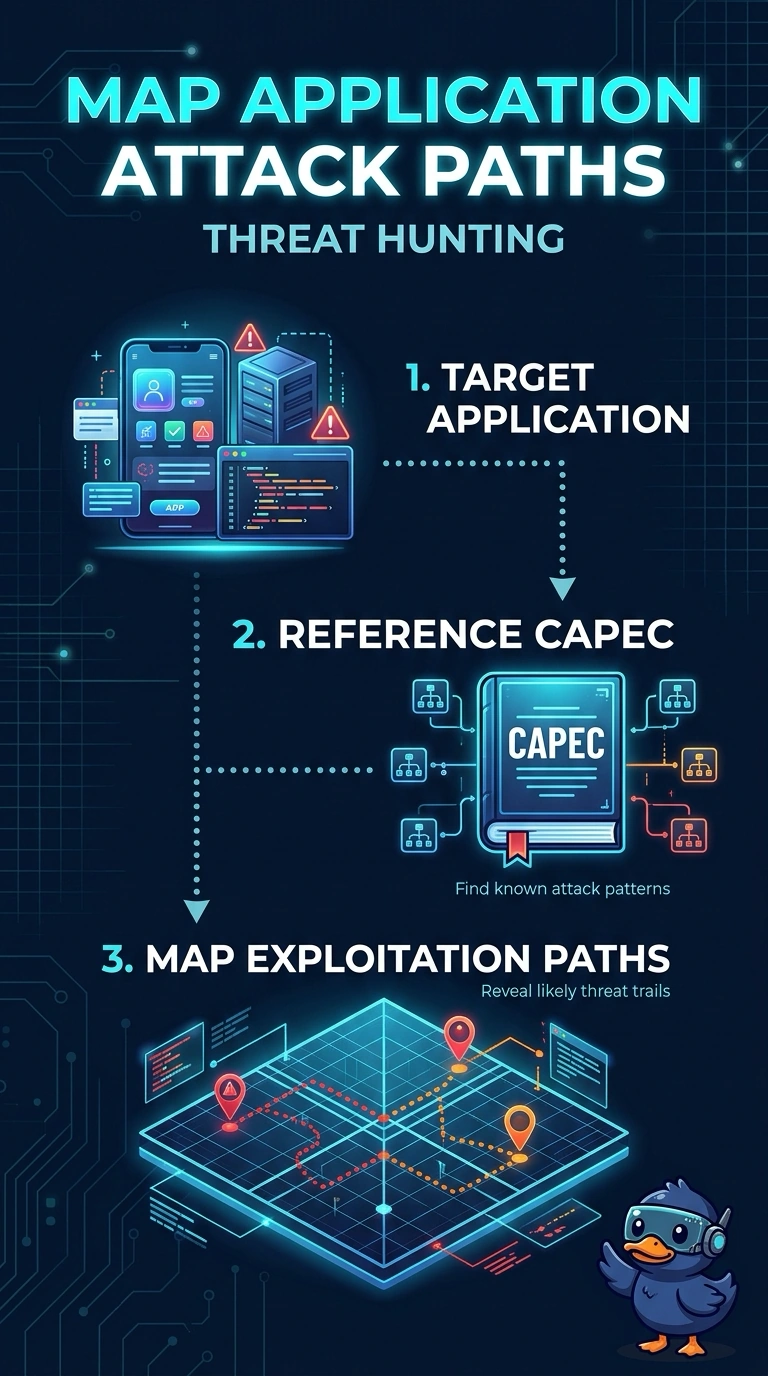
Before your developers pour concrete on a new web portal, you want a blueprint of how attackers actually try to break the locks. The trap is reaching for post-compromise network models or old blocklists when you really need software-level attack patterns. Using CAPEC during design helps you anticipate application abuse before a single line of code ships.
Full Explanation
During software design, teams should Reference CAPEC attack patterns to identify likely application exploitation paths because CAPEC catalogs structured patterns of how adversaries exploit software weaknesses such as authentication flaws and improper input handling. By contrast, choosing to Map post-compromise domain persistence techniques using the Cyber Kill Chain focuses on multi-stage enterprise intrusion phases rather than granular application logic flaws before code exists. Attempting to Collect raw packet captures from production subnets before design begins provides no relevant architecture guidance for an unbuilt portal. Similarly, trying to Block known malicious IP addresses from last year's perimeter feeds is a reactive network control that fails to address design-level application vulnerabilities. Caveat: CAPEC works best when paired with architecture diagrams and data-flow reviews so developers focus on reachable attack surfaces. As an operational check, map each identified CAPEC pattern to a concrete secure coding requirement or automated security test in your pipeline.