
A healthcare network is modernizing its electronic health record platform and wants a threat modeling approach that prioritizes security controls around its most sensitive databases and internal trust boundaries. Which approach best fits this objective?
Select an answer to reveal the explanation.
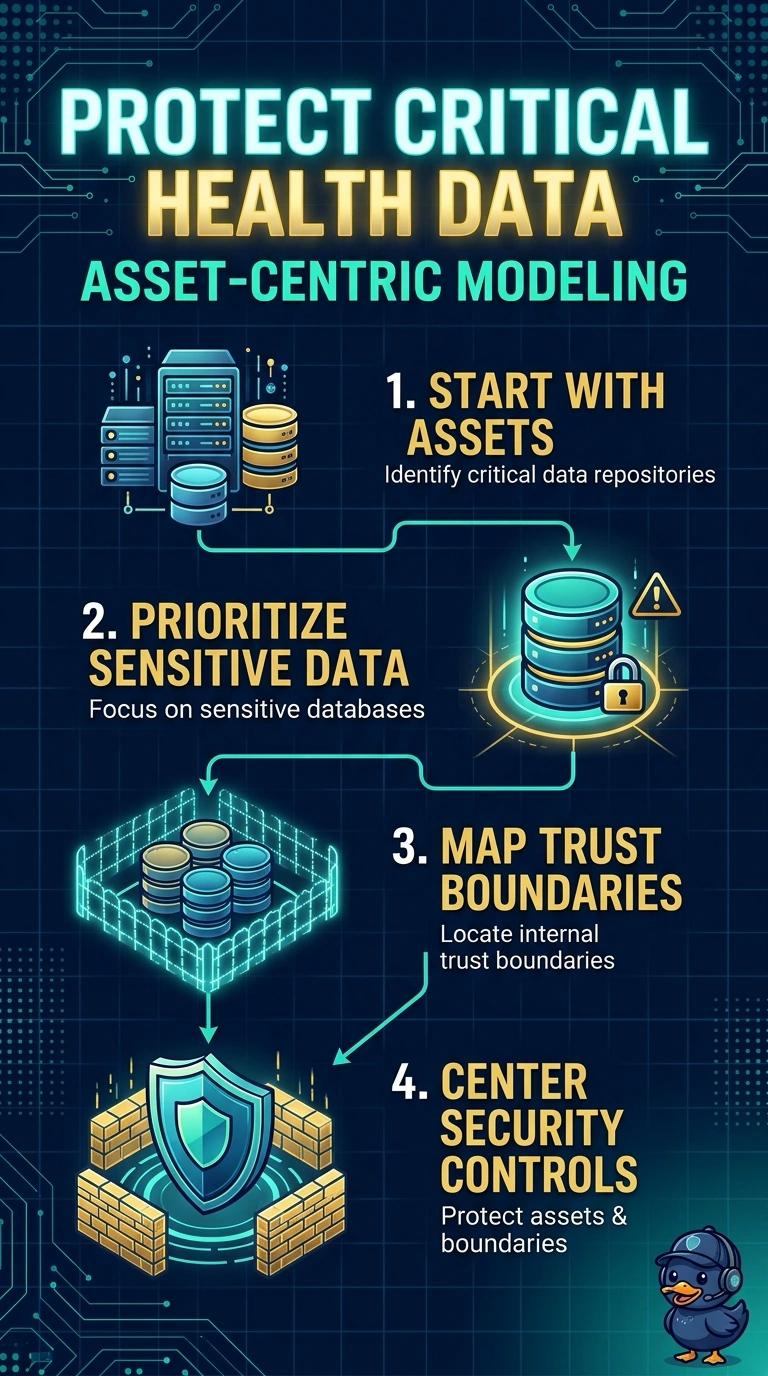
Short Explanation
When you need to protect your organization's crown jewels first, start by mapping what matters most rather than chasing every external rumor. Asset-centric modeling centered on critical data repositories and trust boundaries lets you focus defenses around high-value targets. The trap is spending all your modeling effort on generic patch lists or unverified actor profiles.
Full Explanation
The correct choice is Asset-centric modeling centered on critical data repositories and trust boundaries. This methodology begins by identifying the organization's most valuable assets, mapping how sensitive data flows between systems, and evaluating where trust boundaries could be crossed or abused. By anchoring defensive priorities to crown-jewel repositories, teams ensure limited security resources protect what would cause the greatest business impact if compromised. Conversely, Adversary-centric modeling focused exclusively on named external threat actor profiles concentrates on specific attacker motivations rather than systematically mapping internal data exposure. Unstructured threat hunting initiated solely by random spikes in perimeter firewall logs is an investigative hunting technique rather than a structured architectural modeling approach. Likewise, Vulnerability-only scanning that ranks systems solely by operating system patch age overlooks architectural flaws, access-control gaps, and business criticality. As a caveat, asset-centric models must be updated whenever new APIs or storage tiers are introduced. For an operational check, review your data-flow diagrams with system owners to confirm every trust boundary protecting critical databases has logged access controls.