
A security team maps its monitoring coverage against the Cyber Kill Chain and discovers that most existing alerts fire only during final data exfiltration. How should the team reprioritize its threat modeling and detection efforts?
Select an answer to reveal the explanation.
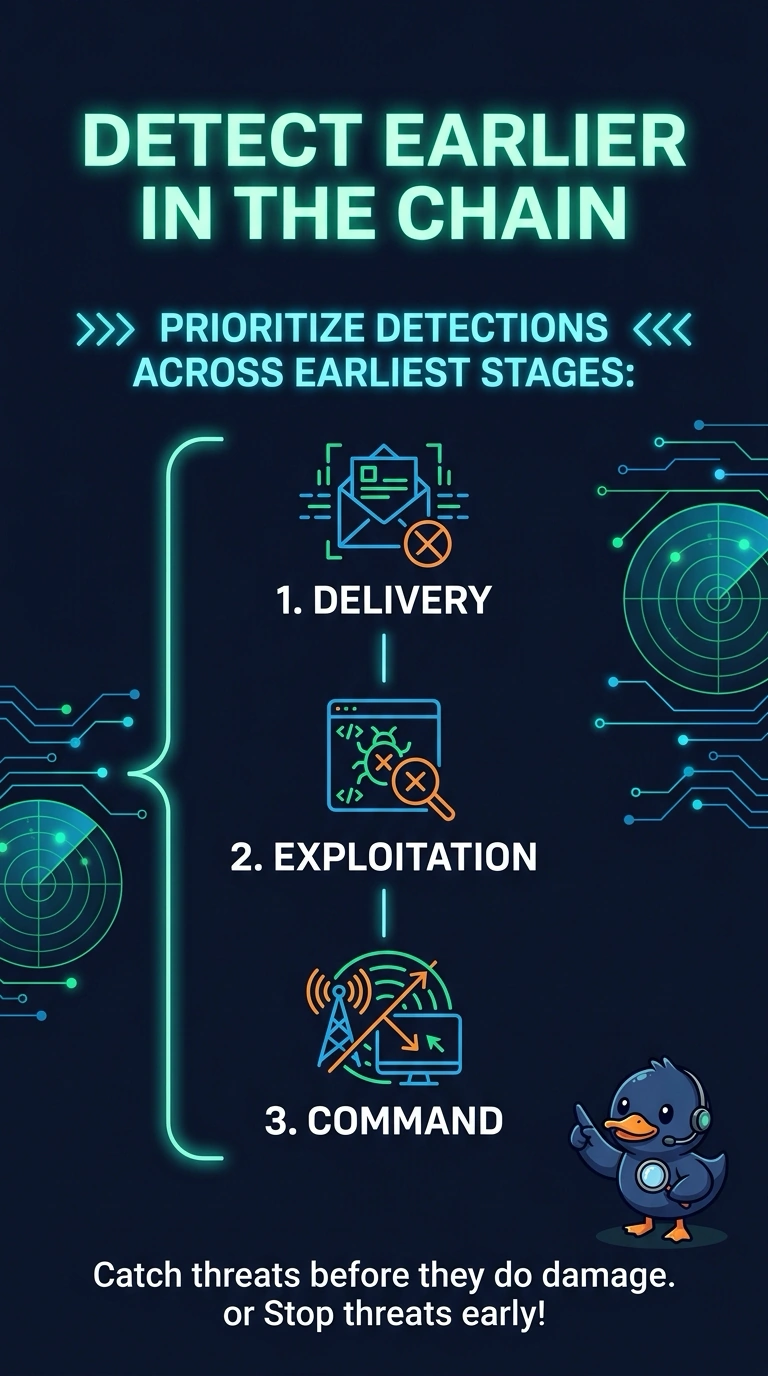
Short Explanation
Waiting until the thief is carrying your TV out the front door means you missed every earlier chance to stop them. You should prioritize detections across earlier delivery, exploitation, and command stages to break the chain sooner. The trap is over-investing in either late-stage alerts or noisy perimeter scans.
Full Explanation
Using the Cyber Kill Chain effectively means teams prioritize detections across earlier delivery, exploitation, and command stages so defenders can disrupt an intrusion before data loss occurs. Disrupting an earlier link can prevent the current attack path from reaching its objective; adversaries may retry, use alternate paths, or retain other footholds, so layered coverage remains necessary. Choosing to alert solely on large outbound file transfers during actions on objectives leaves the organization blind until damage is already underway. Choosing to restrict threat modeling exclusively to post-compromise lateral movement omits initial access vectors such as phishing delivery and perimeter exploitation. Choosing to focus defensive controls only on initial external reconnaissance scans generates unmanageable noise from routine internet scanning without catching payloads that bypass the perimeter. As a caveat, no single stage offers perfect visibility, so layered detections across multiple phases remain essential. As an operational check, map each critical asset's telemetry sources to every kill chain phase to confirm there are no unmonitored gaps between delivery and command-and-control.