
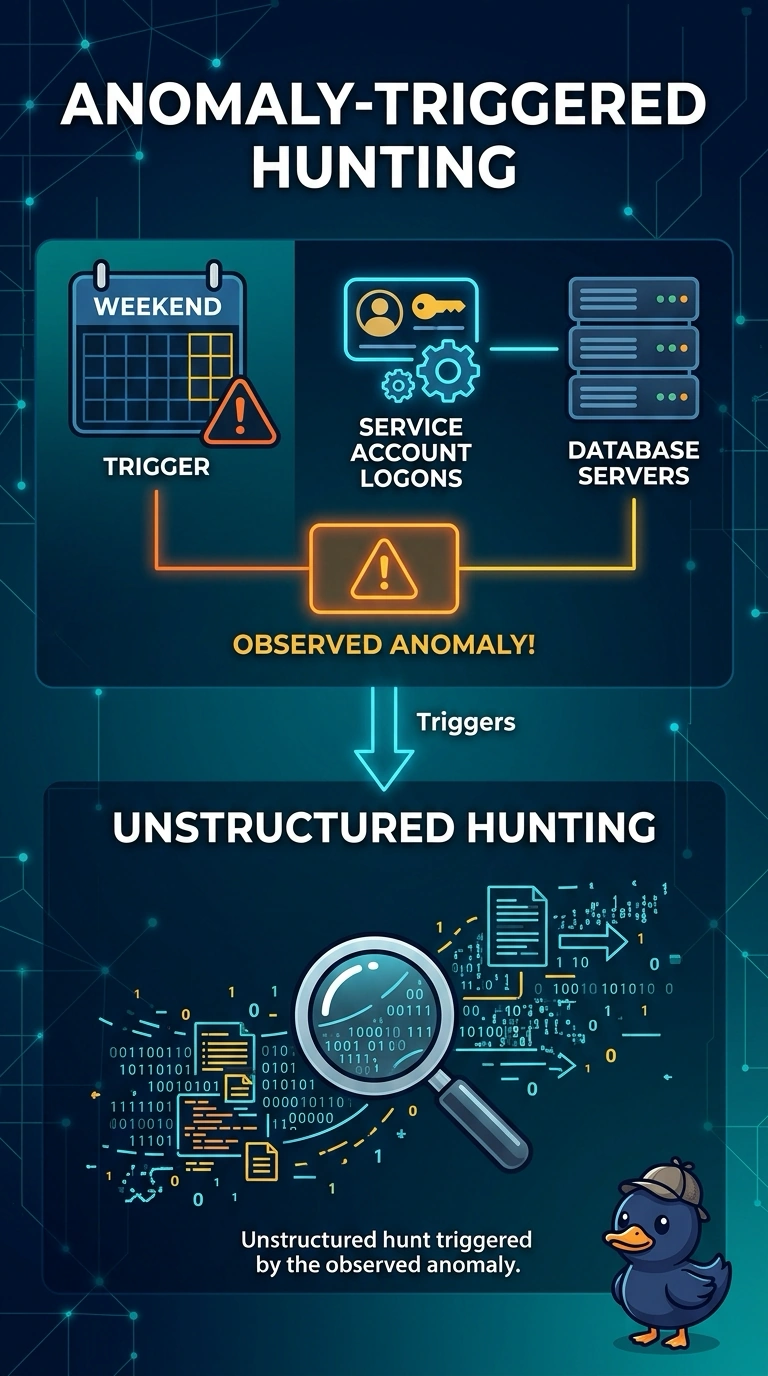
While reviewing weekend authentication metrics, a SOC analyst notices an unexpected spike in service account logons across several database servers and begins exploring the logs to see what caused it. Which hunting approach does this describe?
Select an answer to reveal the explanation.
Short Explanation
Not every hunt starts with a threat report—sometimes a weird blip on your dashboard is all the invitation you need. When you follow a data anomaly without a pre-built adversary playbook, you're doing unstructured hunting, so don't confuse it with intelligence-led or compliance-driven work.
Full Explanation
Unstructured hunting triggered by an observed anomaly is correct because unstructured (or exploratory) hunting begins when an analyst spots an unusual pattern, outlier, or statistical deviation in telemetry and investigates it without a predefined threat-actor hypothesis. Structured hunting driven by a published actor advisory starts from known adversary tactics or intelligence reports and builds a targeted hypothesis before querying logs. Automated signature matching against known malware hashes is passive, reactive alerting rather than proactive human-led exploration. Compliance auditing against a static configuration baseline verifies policy adherence at a point in time, rather than investigating suspicious behavioral outliers. As a caveat, unstructured hunts can easily drift into time-consuming rabbit holes if analysts do not set clear timeboxes and exit criteria. As an operational check, document the initial anomaly metrics and set a two-hour triage checkpoint to decide whether the finding warrants a formal incident ticket or a baseline update.