
A defense team relies on signature-based network intrusion prevention at its perimeter, yet an intruder exfiltrates sensitive records over several weeks using tiny, valid-looking HTTPS requests. Why did the IPS fail to stop this activity?
Select an answer to reveal the explanation.
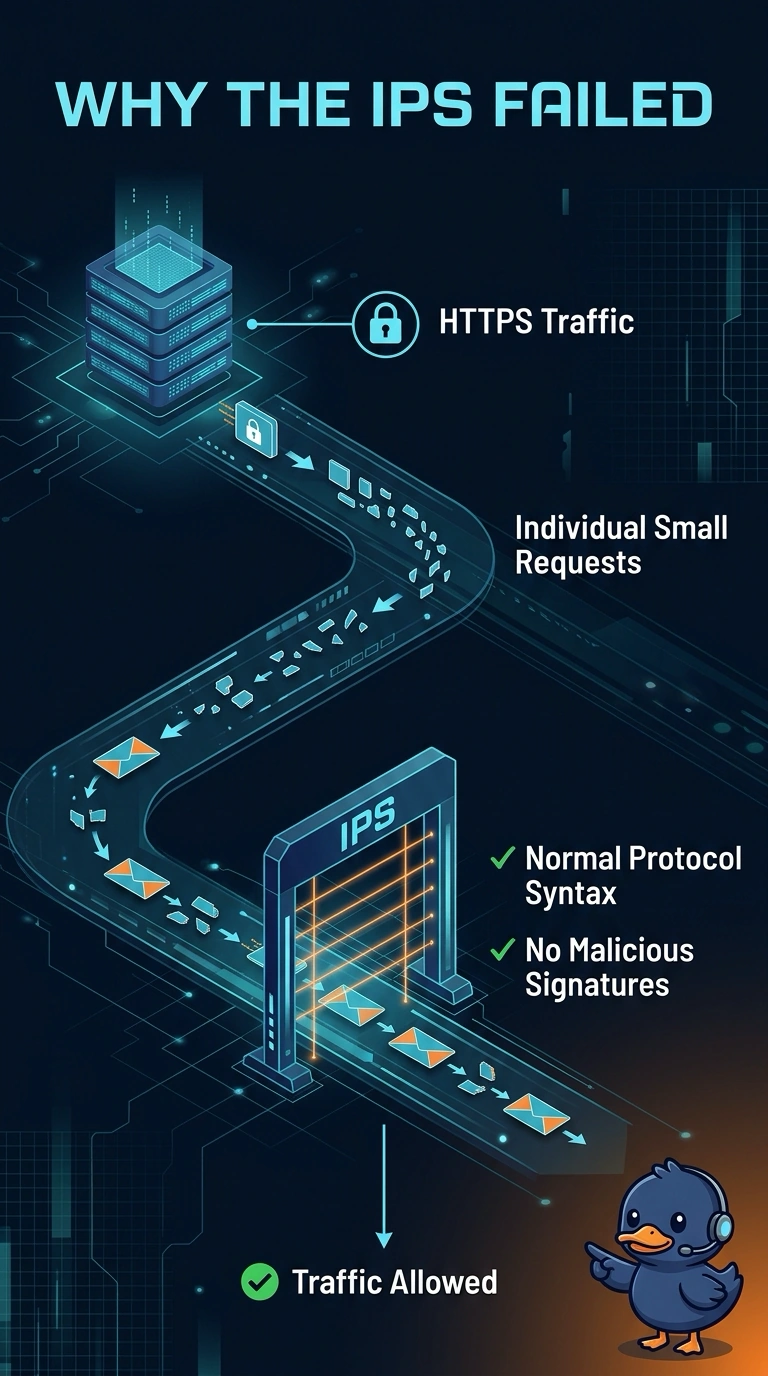
Short Explanation
If an intruder carries data out one spoonful at a time in normal-looking cups, a perimeter guard checking for oversized crates will wave them right through. The trap is assuming signature-based IPS tools track long-term behavior across weeks. Because each tiny request looks valid on its own, you need behavioral aggregation and threat hunting to catch low-and-slow theft.
Full Explanation
Signature-based intrusion prevention systems evaluate traffic primarily against known malicious byte patterns and protocol anomalies. Valid-looking requests may lack a matching signature; without TLS decryption the IPS also cannot inspect the encrypted application payload. Stateful signatures and protocol inspection are not restricted to single packets, and behavioral aggregation complements them. In a low-and-slow exfiltration campaign, Individual small requests match normal protocol syntax and lack malicious payload signatures, allowing each transfer to blend into routine web traffic without triggering a block. Claiming that IPS sensors automatically disable inspection after seven days of uptime is incorrect, as appliances operate continuously when properly licensed and maintained. Stating that Perimeter IPS appliances cannot inspect traffic on standard TCP ports misunderstands how network sensors operate, since common web ports are their primary inspection target. Asserting that Signature databases only evaluate outbound traffic from domain controllers is false, because perimeter sensors inspect traffic across all routed subnets unless explicitly excluded. As an operational check, aggregate outbound session byte counts per destination over multi-week rolling windows in your SIEM or flow collector to spot gradual exfiltration.