
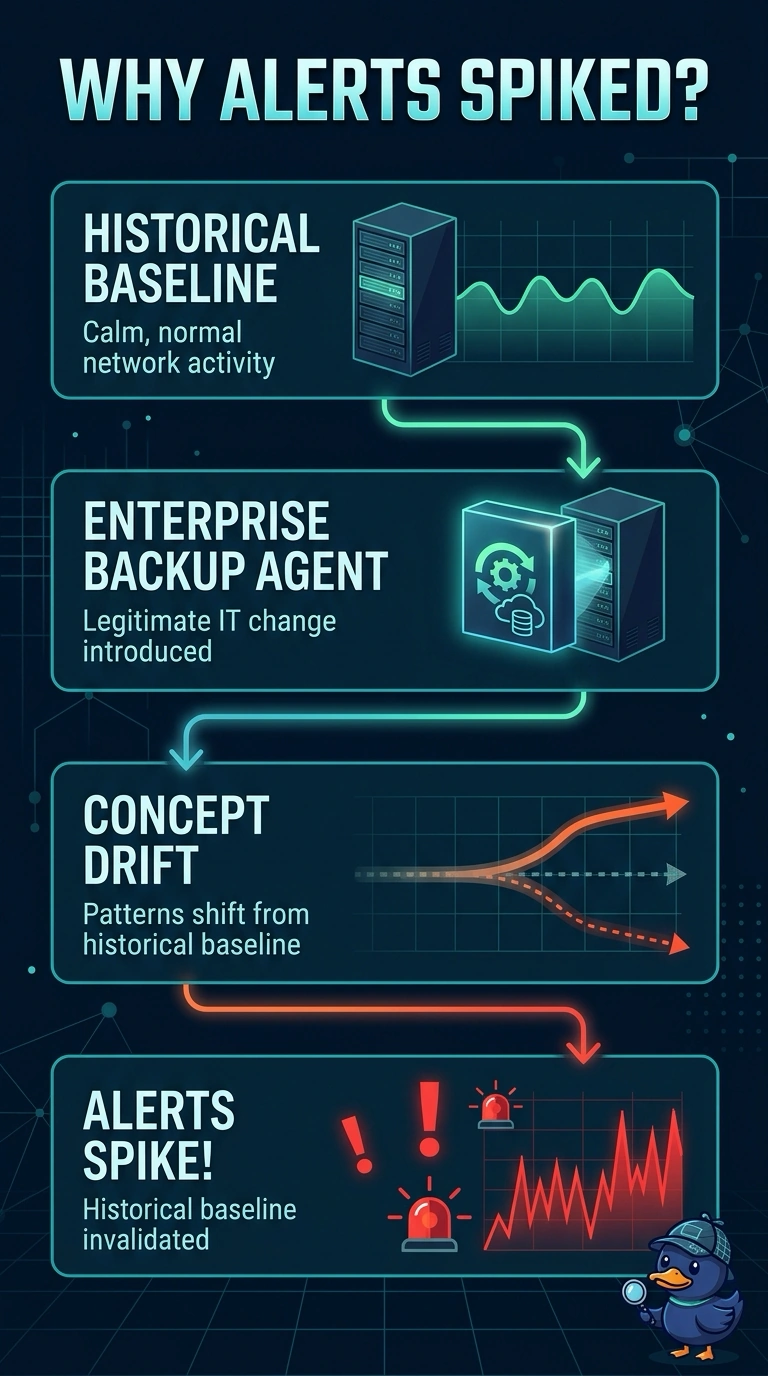
A retail company's SOC notices a sudden surge in anomaly alerts from its machine learning behavioral detector right after the IT department rolls out a new enterprise backup agent. What is the most likely cause of this alert spike?
Select an answer to reveal the explanation.
Short Explanation
Think of a machine learning baseline like a neighborhood watch that only knows yesterday's delivery trucks. When IT introduces new legitimate software, your model flags normal traffic as suspicious because the environment changed. The trap is assuming every anomaly spike means an active breach rather than baseline drift.
Full Explanation
Machine learning anomaly detectors learn what normal activity looks like from historical telemetry, so Legitimate IT changes introduced concept drift that invalidated the historical baseline is the expected cause when a new enterprise tool alters process, network, or authentication patterns. When a backup agent begins scanning files or opening scheduled connections, the model sees unfamiliar behavior and raises anomaly scores even though the activity is benign. The anomaly detector's encryption keys expired during the rollout is incorrect because expired keys cause connection or authentication failures rather than behavioral anomaly alerts. The backup agent contains an active ransomware payload by default is an unsupported assumption; legitimate administrative rollouts routinely alter host telemetry without involving malware. Attackers poisoned the training dataset during the software update is also unlikely here because a sudden alert spike after a known IT deployment points to environmental drift rather than deliberate model manipulation. As a caveat, attackers can also hide inside noisy rollout windows, so high-severity alerts still warrant triage. As an operational check, correlate the alert spike start time with change-management records and retrain or update the baseline using verified post-rollout telemetry.