
A financial services security team adopts the PASTA methodology to model threats against a new online lending platform. Which activity must the team complete first before enumerating technical attack trees or software weaknesses?
Select an answer to reveal the explanation.
Short Explanation
Picture building a vault before asking what you are storing inside it—that is the trap of jumping straight to technical flaws. PASTA flips that habit by anchoring your threat model in business risk first, so you never waste cycles chasing low-impact bugs.
Full Explanation
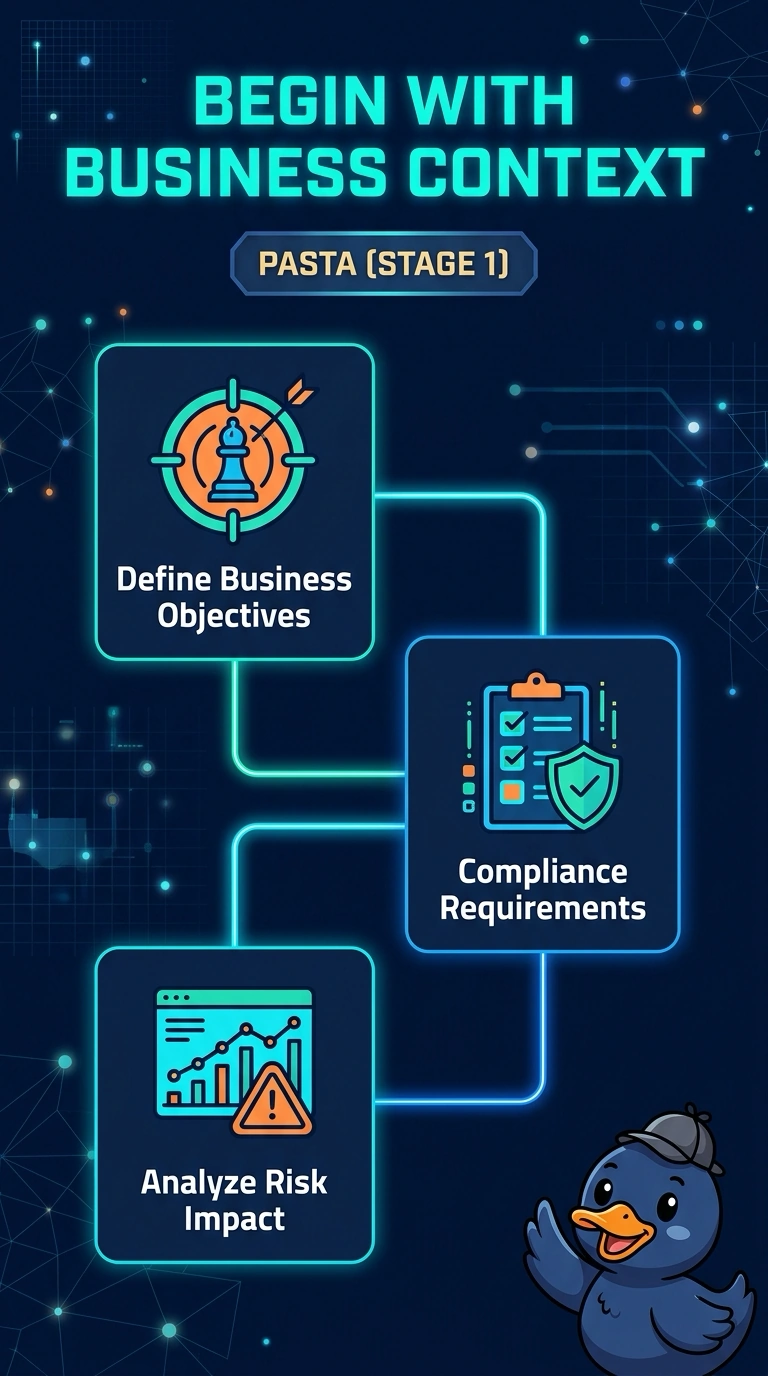
PASTA (Process for Attack Simulation and Threat Analysis) is a risk-centric threat modeling methodology whose opening stage requires teams to Define business objectives, compliance requirements, and risk impact before any technical modeling begins. By establishing what the organization stands to lose—such as regulatory penalties, financial fraud, or customer trust—analysts can prioritize later technical analysis around the assets that matter most. Choosing to Capture packet traces from the staging environment to baseline normal API traffic skips strategic scoping and produces noisy telemetry without business context. Similarly, choosing to Map known adversary post-exploitation techniques using MITRE ATT&CK belongs to later threat-analysis stages once critical components and risk tolerances are already defined. Choosing to Run static code analysis across microservices to catalog input flaws jumps prematurely into vulnerability discovery before establishing which weaknesses actually threaten core business goals. As a caveat, teams sometimes stall in early workshops if business stakeholders cannot quantify risk; keep definitions concise and actionable. Operationally, verify that your completed Stage 1 document lists measurable business objectives and regulatory obligations signed off by product leadership before advancing to architecture decomposition.