
A threat hunter at a regional healthcare clinic reviews an annual threat intelligence report from a security vendor that operates primarily in the financial sector. The report lists zero active ransomware campaigns targeting healthcare, so a colleague recommends deprioritizing healthcare ransomware hunts. Why is this reasoning flawed?
Select an answer to reveal the explanation.
Short Explanation
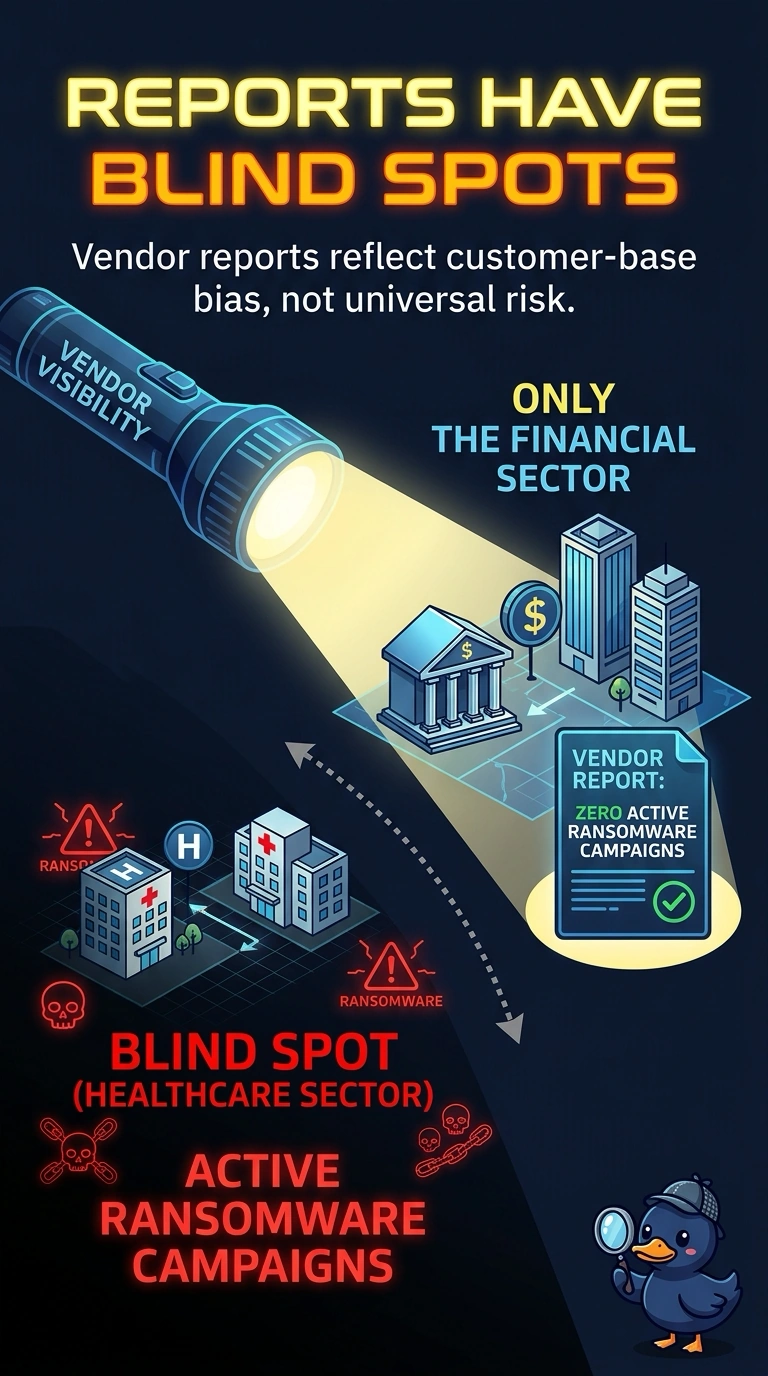
If you only count fish in one pond, you cannot claim the neighboring lake is empty. The trap is mistaking a vendor's blind spot—caused by where their sensors happen to sit—for proof that your industry is safe.
Full Explanation
Every commercial intelligence brief is shaped by collection bias, because Vendor reports reflect customer-base visibility bias rather than universal risk. A vendor whose telemetry comes mostly from financial institutions will naturally observe and report finance-focused campaigns while missing attacks aimed at regional healthcare clinics. Claiming that Ransomware operators are technically unable to reuse tactics across different industry sectors is false, as adversaries routinely apply the same credential-access and encryption playbooks across verticals. Assuming that Threat intelligence reports always cover every global sector with equal sensor density ignores how commercial telemetry follows market share and geographic footprint. Believing that Healthcare organizations are exempt from opportunistic exploitation by cybercrime groups contradicts real-world targeting of exposed services and legacy systems. As a caveat, sector-skewed reports still offer value when they document transferable post-exploitation TTPs. For an operational check, supplement commercial vendor briefs with sector-specific ISAC advisories and your own internal vulnerability exposure before adjusting hunt priorities.