
A SOC team using the TaHiTI threat hunting methodology confirms during an investigation that an adversary abused a specific registry persistence technique, and the hunter documents the query logic that uncovered it. What should occur during the Finalize phase to maximize defensive value?
Select an answer to reveal the explanation.
Short Explanation
Finding a hidden threat is like spotting a leaky pipe—if you only mop the floor without fixing the valve, you will be back with a bucket tomorrow. The trap is treating a hunt as a one-time report rather than feeding what you learned back into daily monitoring.
Full Explanation
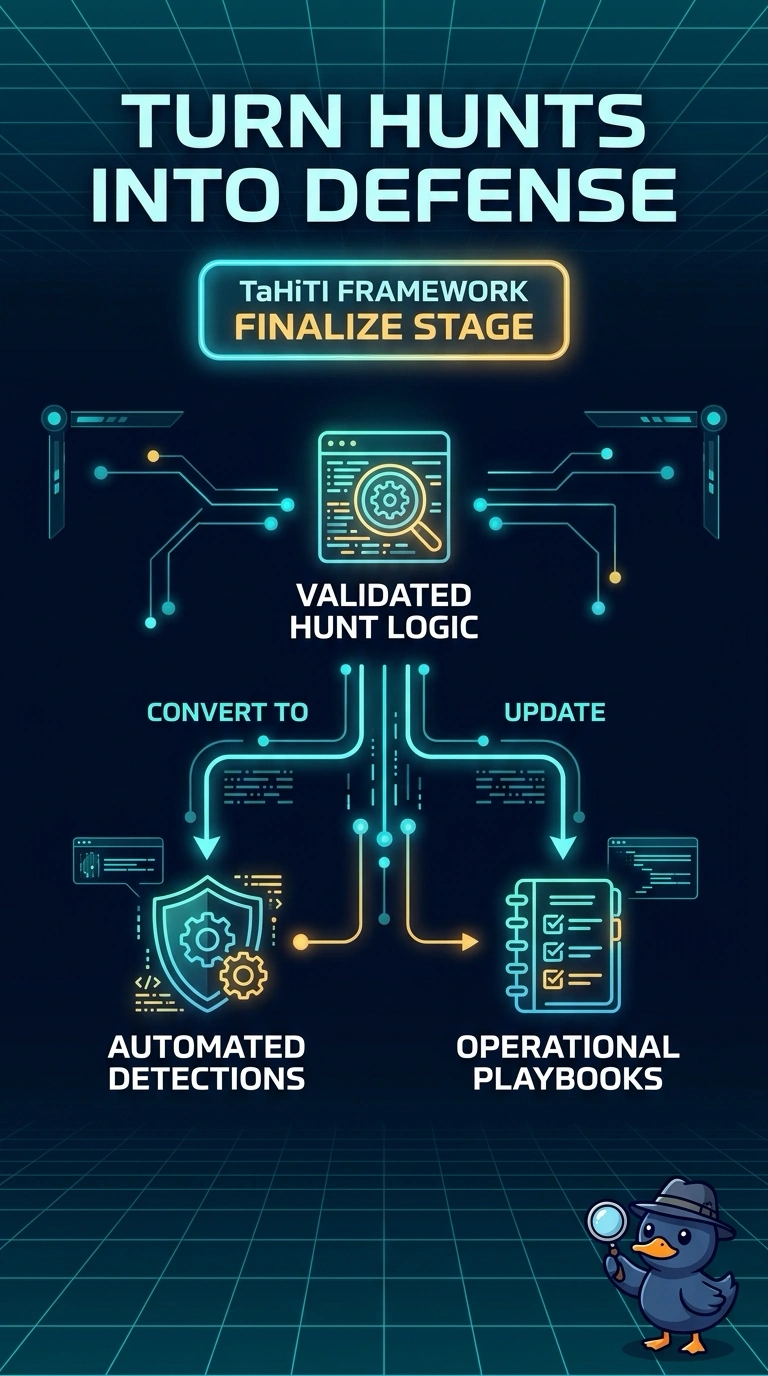
During the TaHiTI Finalize phase, the team closes the loop by choosing to Convert validated hunt logic into automated detections and update operational playbooks. Turning a proven manual query into a scheduled SIEM or EDR rule ensures future instances of that registry persistence technique trigger immediate alerts without requiring another manual hunt, while updated playbooks preserve triage steps for shift analysts. Choosing to Archive the raw query notes in a local folder without modifying existing SIEM correlation rules wastes the investigation because the same blind spot remains open. Choosing to Restart the Initiate phase immediately with the exact same hypothesis against identical hosts repeats completed work instead of progressing the lifecycle. Choosing to Wait for the next external threat intelligence advisory before sharing findings with SOC engineers delays critical coverage for an already confirmed exposure. As a caveat, avoid promoting noisy hunt queries straight into high-severity alerts without tuning thresholds against normal baseline activity. For an operational check, test the newly automated rule in a staging or audit mode against historical logs to confirm it fires on the known artifact without flooding the queue.