
A threat hunter receives a shared intelligence brief rated as coming from a usually reliable partner, but the specific claim about a new zero-day exploit is marked as unconfirmed by other sources. How should the hunter interpret these two ratings?
Select an answer to reveal the explanation.
Short Explanation
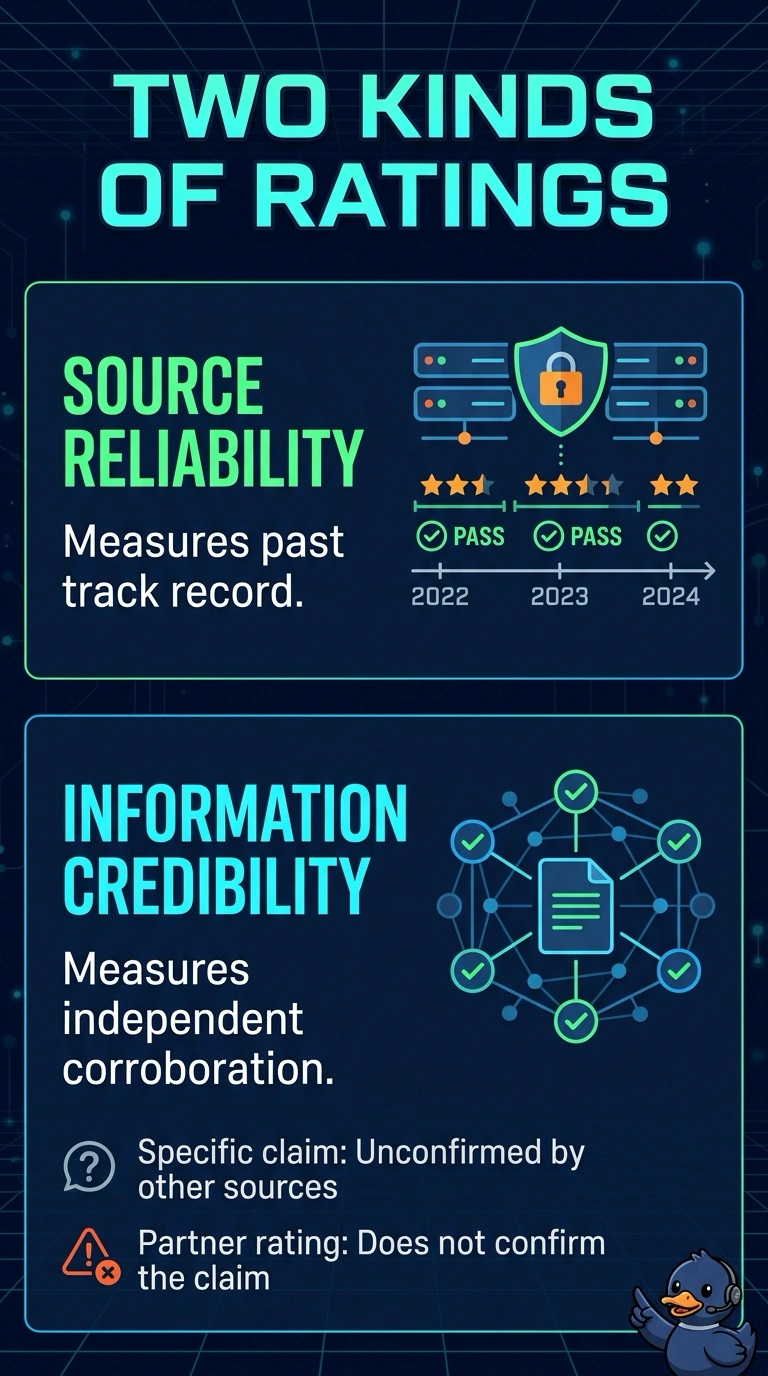
Even a trusted friend can pass along an unverified rumor, and threat intelligence works the exact same way. You need to separate who sent the report from how well the specific claim is backed up. The trap is treating a reliable partner's name as automatic proof that an unconfirmed claim is accurate.
Full Explanation
Structured intelligence evaluation separates the messenger from the message, which is why Source reliability measures past track record, while information credibility measures independent corroboration of the specific claim. Evaluating these two dimensions independently prevents analysts from launching costly hunts or disruptive blocks on a single unverified observation, even when it arrives from a respected peer. Treating this as a format split fails because Source reliability applies only to automated indicator feeds, while information credibility applies only to human-authored intelligence briefs is false; both scales apply across manual and automated reporting. Assuming that A high source reliability rating automatically overrides low information credibility and requires immediate emergency blocking is equally risky because even dependable partners can misinterpret early artifacts or forward unvetted third-party tips. Confusing trust ratings with risk scoring also misses the mark, since Information credibility evaluates the severity of potential business impact, while source reliability evaluates the adversary's technical skill misstates both definitions. As a caveat, unconfirmed claims from reliable sources still deserve monitoring rather than outright dismissal. As an operational check, review the report's corroboration notes and verify whether local telemetry shows matching behavior before escalating.