
A SOC team subscribes to a daily feed containing thousands of unvetted IP addresses and file hashes with no context, and analysts struggle to act on them. How does this feed differ from finished threat intelligence?
Select an answer to reveal the explanation.
Short Explanation
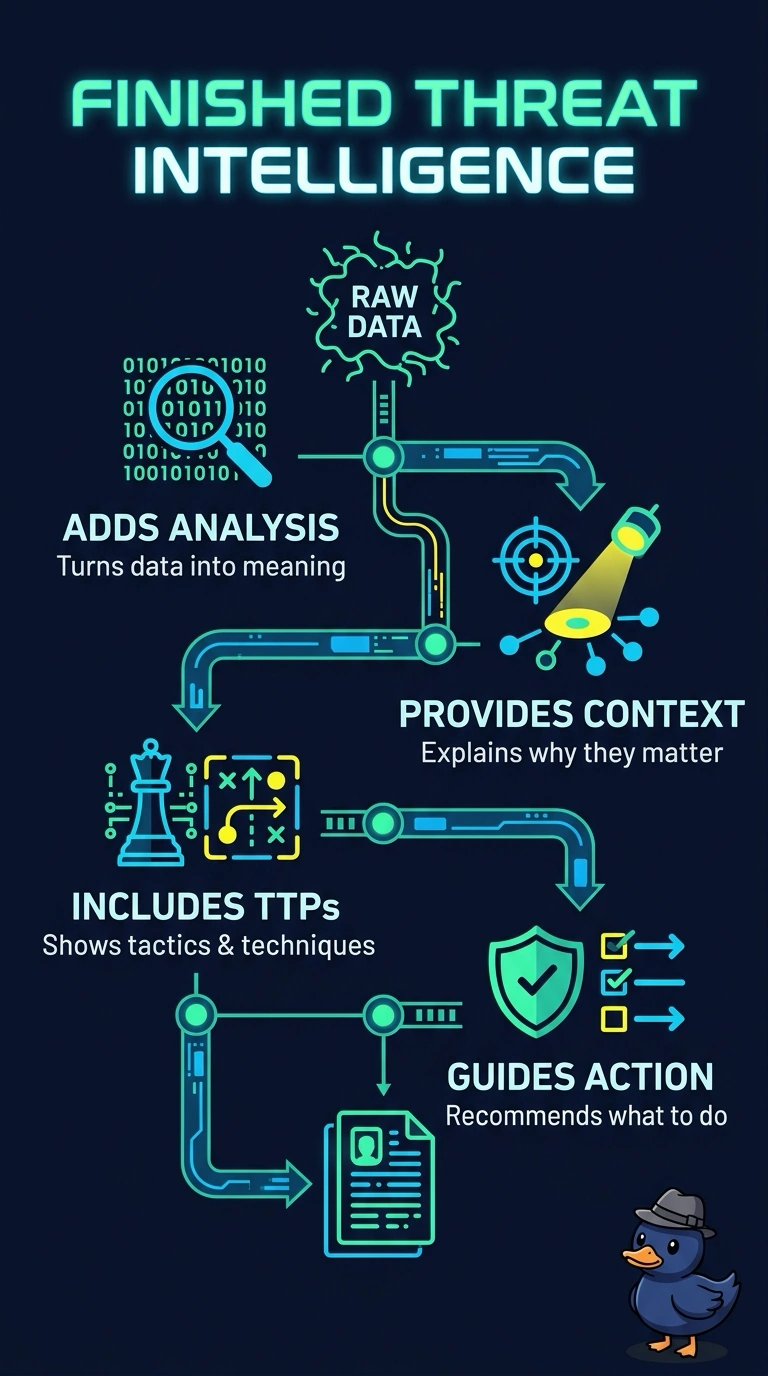
A spreadsheet of raw indicators is like a pile of flour and eggs, while finished intelligence is the baked bread ready to serve. The trap is treating unvetted observables as intelligence when you actually need context, TTPs, and clear defensive actions.
Full Explanation
Finished threat intelligence adds analytical context, TTPs, and actionable guidance by transforming raw observables through collection, processing, analysis, and dissemination so defenders understand who might target them, how an attack works, and what to hunt or block. Without that context, high-volume indicator feeds create alert fatigue and false positives because analysts cannot tell whether an IP is an active C2 node or a shared cloud proxy. Raw threat data automatically blocks malicious traffic without requiring any firewall rules is incorrect because feeds are passive data inputs that still require policy enforcement or detection engineering. Finished threat intelligence consists exclusively of unverified IP lists without any analysis is wrong because it reverses the definition by stripping away the analytical value that defines intelligence. Raw threat data always includes full adversary attribution and executive risk briefings fails since unvetted indicator lists lack evaluated attribution or decision-maker framing. As a caveat, even finished intelligence must be checked against your local environment before triggering broad blocks. For an operational check, review whether your current feeds include confidence ratings, expiration dates, and behavioral TTPs.