
While reviewing three weeks of endpoint and authentication logs at a logistics firm, a hunter observes low-volume credential reuse, creation of a secondary local administrator account, and quiet internal file discovery without any system disruption. Which threat profile best matches this log pattern?
Select an answer to reveal the explanation.
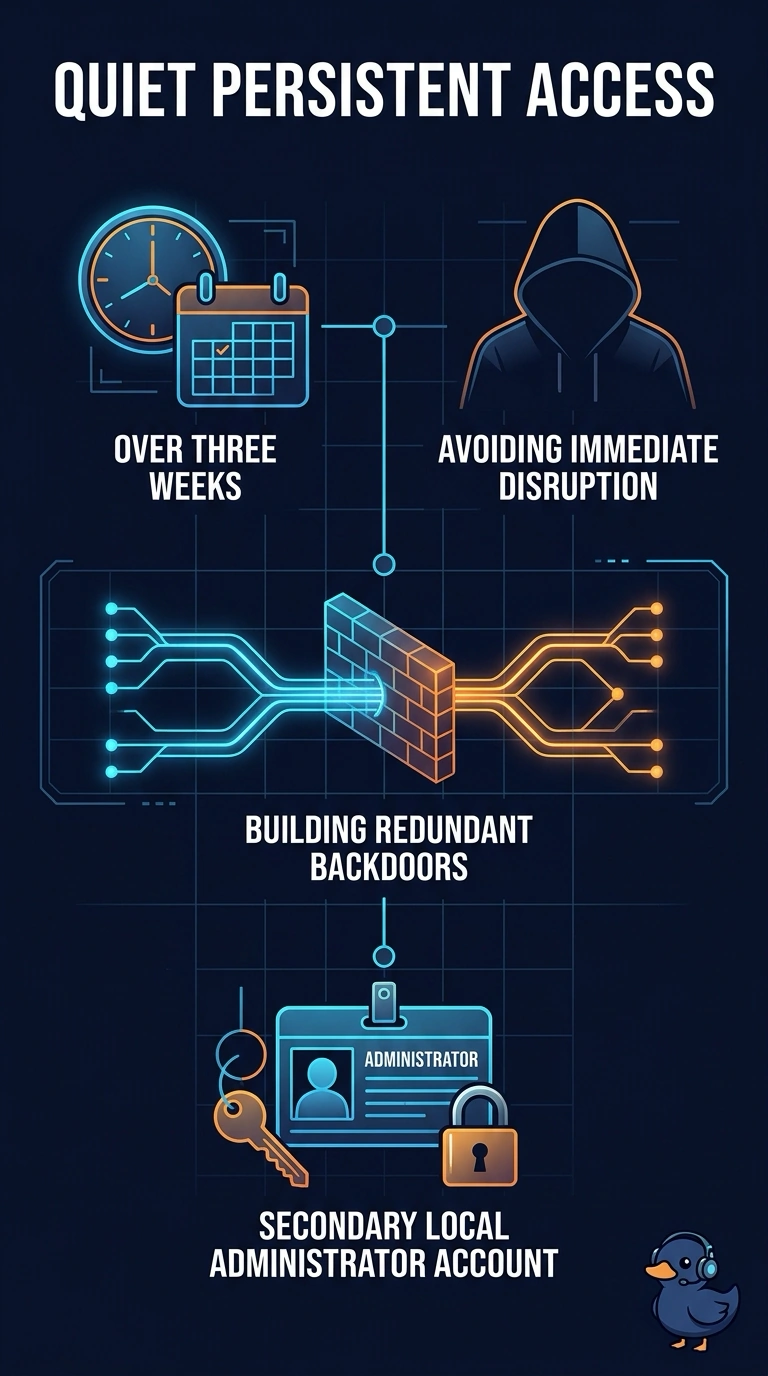
Short Explanation
Think of this like a burglar who quietly copies your spare house key instead of smashing a window. The trap is assuming quiet logs mean low risk, when a patient intruder is actually securing long-term access without triggering loud disruption alerts.
Full Explanation
A persistent actor building redundant backdoors while avoiding immediate disruption accurately describes this telemetry pattern because advanced adversaries prioritize stealth and survival over immediate noise. Creating a secondary local administrator account alongside low-volume credential reuse ensures the intruder retains access even if the initial entry point is patched. By contrast, A commodity worm automatically scanning neighboring subnets for open shares generates rapid, high-volume network connection attempts rather than quiet, selective discovery. Similarly, An opportunistic ransomware payload encrypting local files immediately after execution produces rapid file-modification spikes and immediate operational disruption, which is absent here. Finally, An automated credential-stuffing script testing leaked passwords against a login portal is a poor fit. Credential stuffing tests previously compromised username/password pairs and may be throttled or distributed; it does not by itself explain the observed local account creation and internal discovery. One caveat is that authorized administrative maintenance can mimic account creation and discovery if change tickets are not correlated. As an operational check, review account-creation audit events alongside recent privilege changes and verify every new administrative account against approved change records.