
A threat hunting team adopting the TaHiTI methodology wants to ensure analysts do not jump straight into ad hoc log searches without clear goals or data validation. Which step does the Initiate phase require before querying enterprise telemetry?
Select an answer to reveal the explanation.
Short Explanation
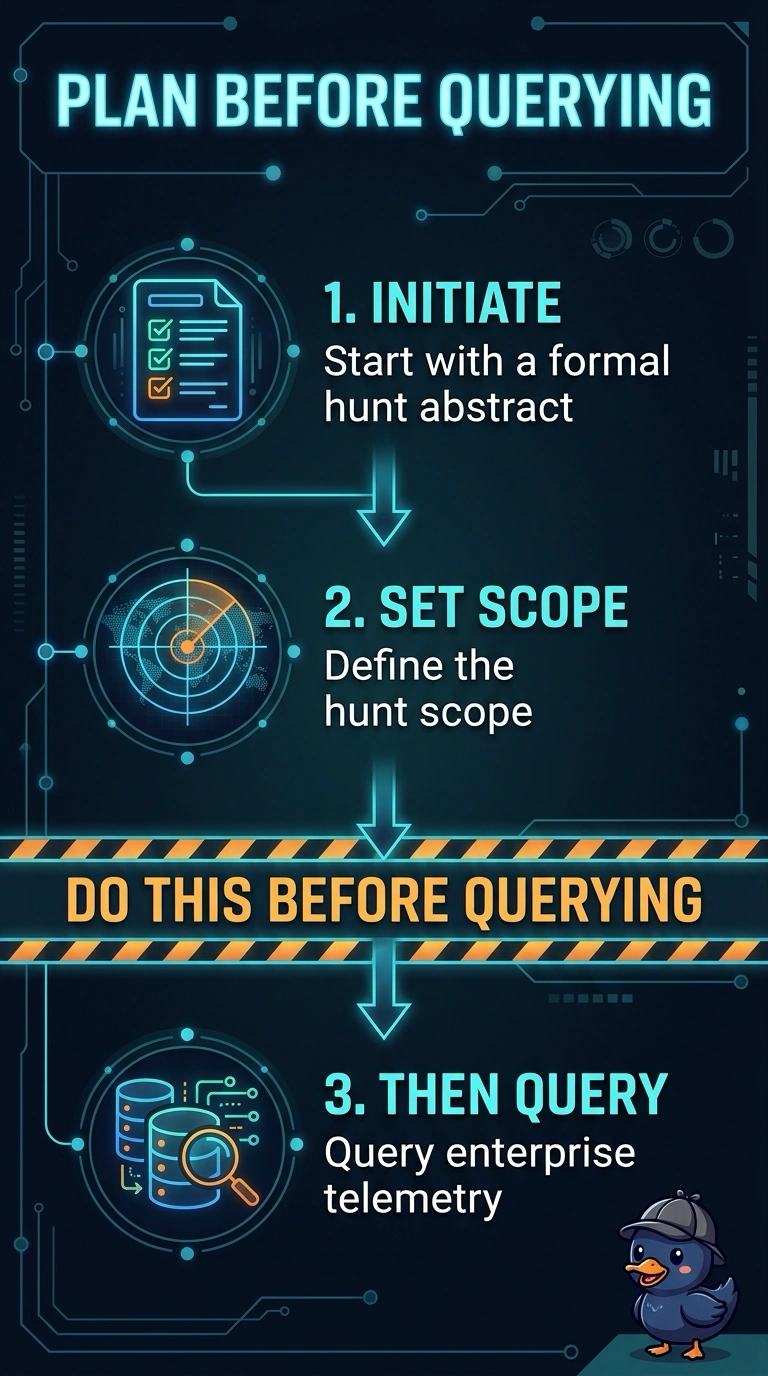
You would not set sail across an ocean without checking your charts and fuel first. TaHiTI starts by framing a clear hunt abstract and confirming data scope before you touch the SIEM, saving you from aimless log browsing.
Full Explanation
The TaHiTI methodology prevents unfocused investigations by defining a formal hunt abstract and scope before querying enterprise telemetry. Initiate turns a trigger into an investigation abstract and places it on the hunt backlog. Detailed hypothesis formulation, data-source selection, and analysis-technique selection occur in the Hunt phase’s Define/refine step before retrieval and analysis. Immediately isolating all network segments before checking whether relevant logs exist causes unnecessary business disruption without evidence of an active compromise. Skipping hypothesis formulation so analysts can browse raw firewall logs indefinitely turns structured hunting into unguided searching with no clear exit criteria. Publishing finished detection rules to production before testing them against data skips the actual hunting and validation work needed to prevent false-positive floods. As a caveat, a hunt abstract should remain concise so documentation does not delay time-sensitive investigations. For an operational check, confirm that every newly opened hunt ticket lists its trigger, hypothesis, in-scope log sources, and time-box boundary before queries begin.