
A threat intelligence report notes that a financially motivated cybercrime group possesses a sophisticated wiper module, yet assesses it is unlikely to deploy the module against retail networks. Which analytical distinction explains this assessment?
Select an answer to reveal the explanation.
Short Explanation
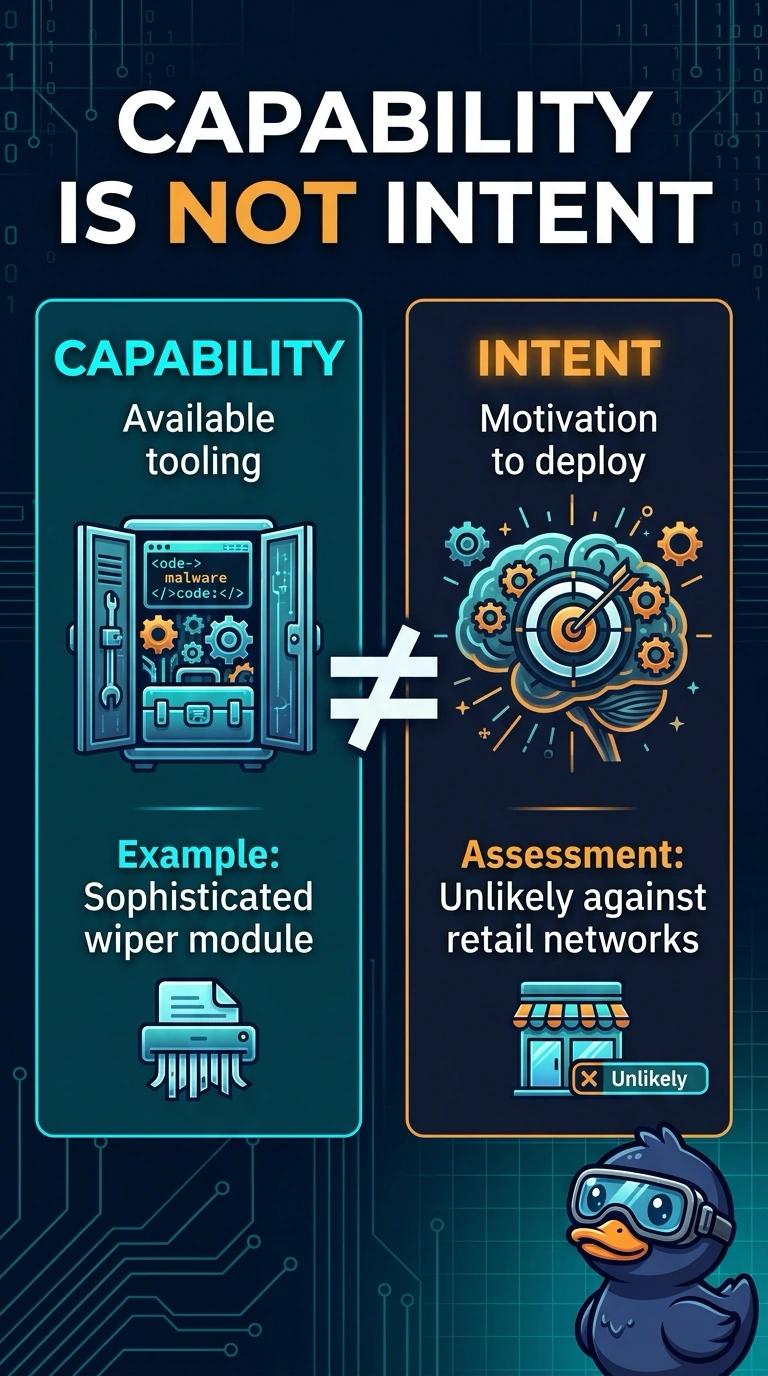
Think of capability like owning a heavy hammer, while intent is whether someone actually plans to swing it at your window. The trap is treating every tool in an adversary's arsenal as an imminent threat without weighing their actual goals.
Full Explanation
Capability reflects available tooling, while intent reflects motivation to deploy it accurately explains why an actor may hold a destructive module without intending to use it against a given sector. Financially motivated groups typically avoid destructive wipers in retail environments because destroying systems undermines extortion leverage and draws heightened law-enforcement scrutiny. Capability and assessed intent are distinct and both inform prioritization. General criminal incentives do not prove that a wiper will not be used, and a strategic assessment must not override credible evidence of active destructive behavior. Similarly, Wiper malware can only execute on industrial control systems and cannot run on retail servers is technically false because destructive payloads commonly target standard enterprise operating systems. Finally, High technical sophistication automatically proves an actor is sponsored by a nation-state conflates tooling complexity with attribution, as criminal groups frequently buy or develop advanced capabilities. One caveat is that intent can shift rapidly during geopolitical crises or failed extortion negotiations. As an operational check, review both the capability and intent sections of incoming threat reports before escalating defensive posture or deploying disruptive controls.