
A SOC detection engineer requests an intelligence brief detailing a specific malware family's command-and-control protocol structure, registry persistence keys, and payload behaviors so the team can write endpoint rules. Which category of threat intelligence best meets this request?
Select an answer to reveal the explanation.
Short Explanation
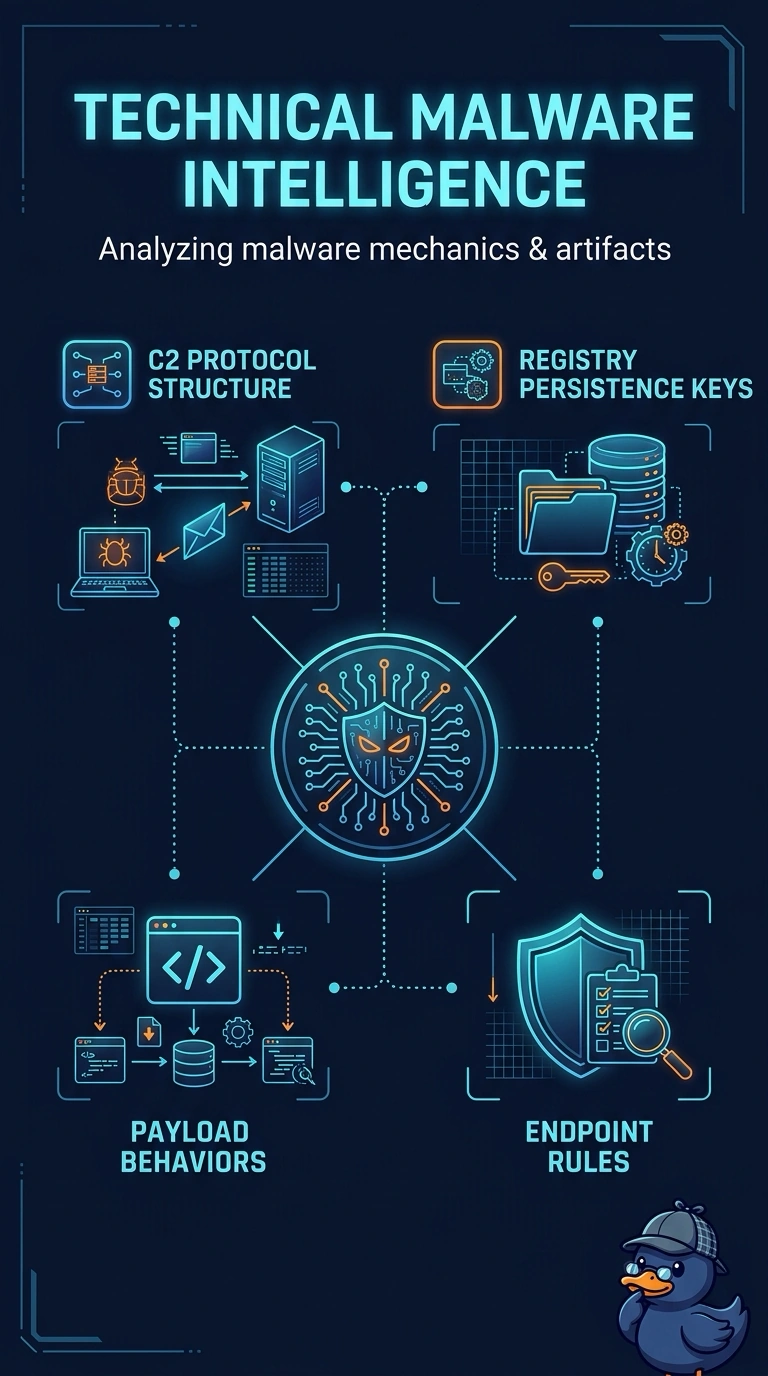
When you need to turn threat knowledge into detection rules, you want the nuts and bolts under the hood. Technical intelligence gives you those exact malware mechanics and host artifacts, whereas the trap is picking operational or strategic briefs meant for campaign tracking or budget planning.
Full Explanation
Technical intelligence on malware mechanics and artifacts is the right choice because it translates adversary tooling into concrete observables—such as C2 protocol patterns, persistence registry paths, and process behaviors—that detection engineers can encode directly into SIEM or EDR rules. Strategic intelligence for executive planning focuses on high-level risk trends, financial impact, and long-term security investments rather than rule-level artifacts. Operational intelligence on campaign timing examines how specific threat groups plan, resource, and execute upcoming operations, which guides hunt scheduling rather than low-level parser logic. Geopolitical intelligence on regional threat actors provides macro-level context on state motivations and regional tensions, which lacks the technical granularity needed for endpoint signatures. As a caveat, technical indicators decay rapidly when adversaries recompile payloads or rotate infrastructure, so behavioral traits should accompany static observables. As an operational check, test any newly authored detection rule derived from technical reporting against historical benign endpoint telemetry before enabling automated alerting.