
A threat hunting team needs a framework to catalog specific post-compromise behaviors—such as credential harvesting, scheduled task persistence, and lateral tool transfer—so it can map exact SIEM detections to each method. Why is MITRE ATT&CK better suited for this task than a high-level linear phase model?
Select an answer to reveal the explanation.
Short Explanation
A linear attack phase model gives you the highway exit signs, while MITRE ATT&CK hands you the street-level map of every alleyway. When you need to tie detections to specific post-compromise actions, the trap is expecting a broad phase chart to supply technique-level detail.
Full Explanation
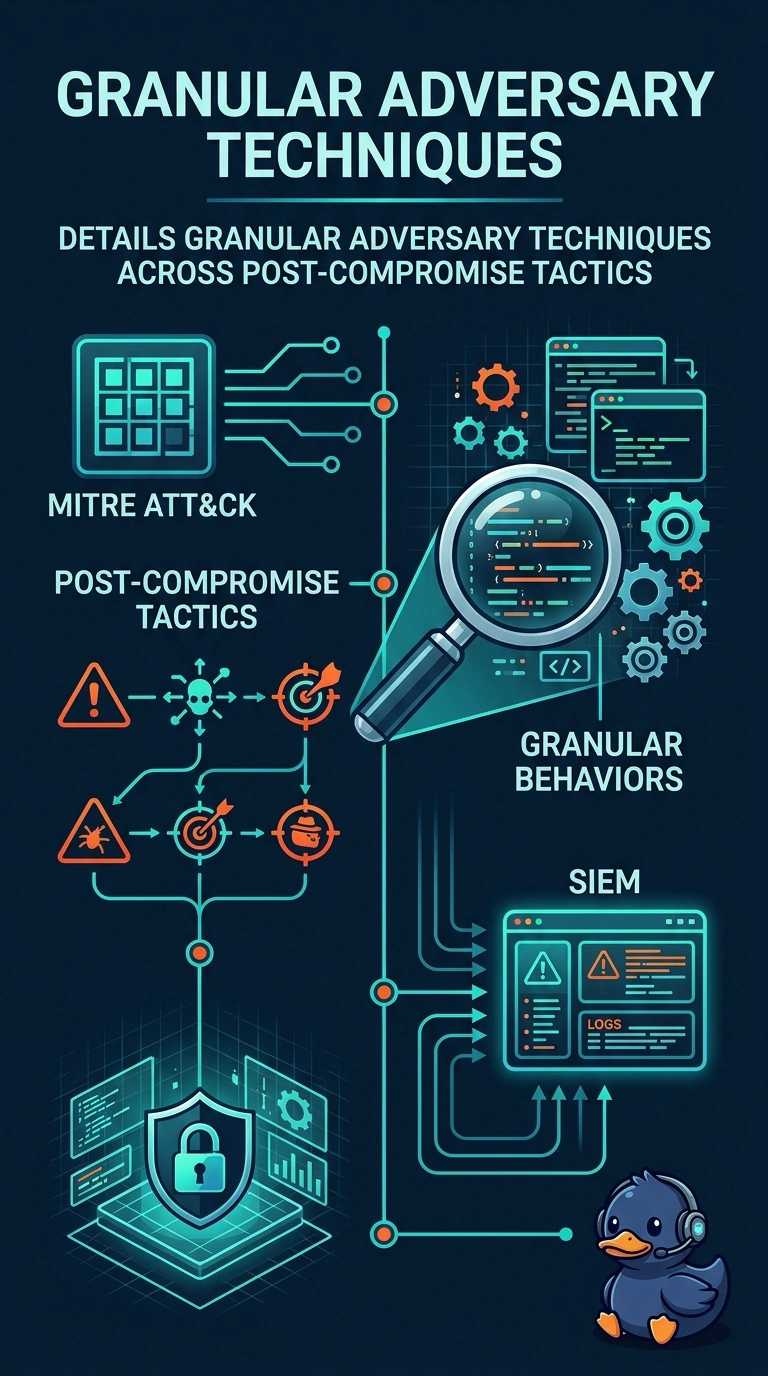
High-level linear models describe broad sequential stages, whereas MITRE ATT&CK excels for detection mapping because It details granular adversary techniques across post-compromise tactics such as credential access, persistence, and lateral movement. This structure lets hunters align specific telemetry sources and analytics directly to observed attacker methods. By contrast, It replaces the need for centralized endpoint logging is incorrect because frameworks organize detection coverage rather than collecting telemetry themselves. Similarly, It automatically patches vulnerable enterprise servers confuses a behavioral knowledge base with vulnerability remediation tooling. Likewise, It ranks software flaws using numerical severity scores describes vulnerability scoring systems rather than adversary behavior matrices. As a caveat, ATT&CK matrices do not prescribe remediation priority on their own, so teams must weight techniques against local asset criticality and exposure. For an operational check, map your current SIEM rules against priority ATT&CK tactics to identify which post-compromise techniques lack telemetry coverage.