
A threat intelligence analyst at a mid-sized energy company reviews a strategic report stating it is "possible" that a tracked adversary will target regional grid operators next quarter, while another section notes "high confidence" in the group's past use of credential harvesting. How should the analyst interpret the word "possible" when briefing leadership?
Select an answer to reveal the explanation.
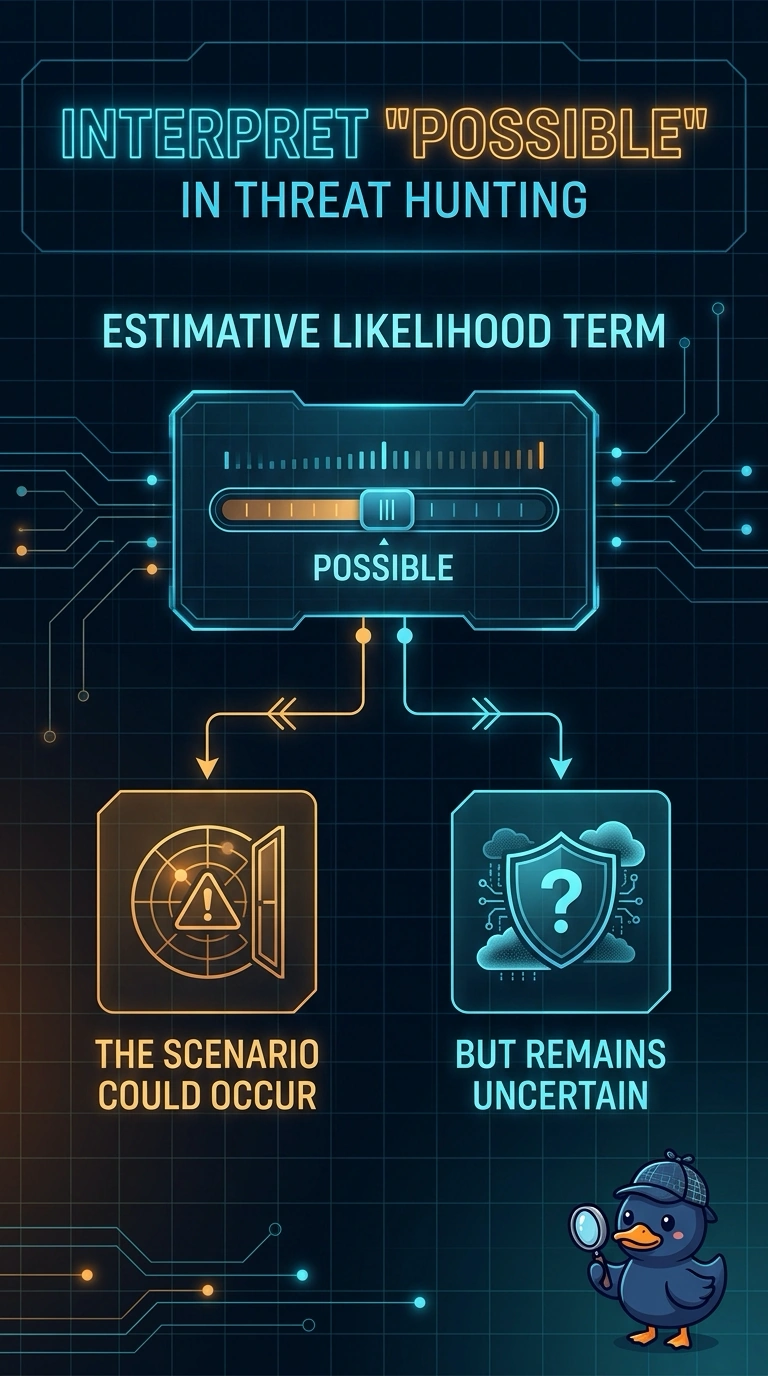
Short Explanation
Think of weather forecasts when you read intelligence reports—saying rain is possible does not mean a hurricane is already hitting your roof! The trap here is treating cautious estimative language as a confirmed emergency or a measure of damage severity, so keep your briefing grounded in what the analysts actually know.
Full Explanation
Strategic threat intelligence reports use standardized estimative language to separate how likely an event is from how much damage it would cause or how reliable the underlying evidence is. Interpreting "possible" As an estimative likelihood term indicating the scenario could occur but remains uncertain accurately reflects that the intelligence team sees plausible capability or intent without enough corroboration to call an attack probable or certain. Treating it As a confirmed imminent attack requiring immediate emergency network isolation across all substations confuses low-to-moderate probability with verified active compromise and risks unnecessary operational disruption. Reading it As an assessment of the technical severity of damage the adversary's malware would cause mixes up probability with impact scoring. Assuming it functions As a statistical guarantee derived from automated machine learning anomaly scores misunderstands qualitative human intelligence assessments, which weigh source reliability and historical context rather than automated thresholds. Caveat: intelligence producers define estimative scales slightly differently, so always check the report's legend. Operational check: review the report's methodology appendix and map the high-confidence credential-harvesting behavior to existing authentication monitoring before briefing executives.