
To reduce alert fatigue from a SOC machine learning anomaly detector, a manager raises the global risk-score threshold required to generate analyst tickets without retraining the model or tuning baselines. What operational risk does this change introduce?
Select an answer to reveal the explanation.
Short Explanation
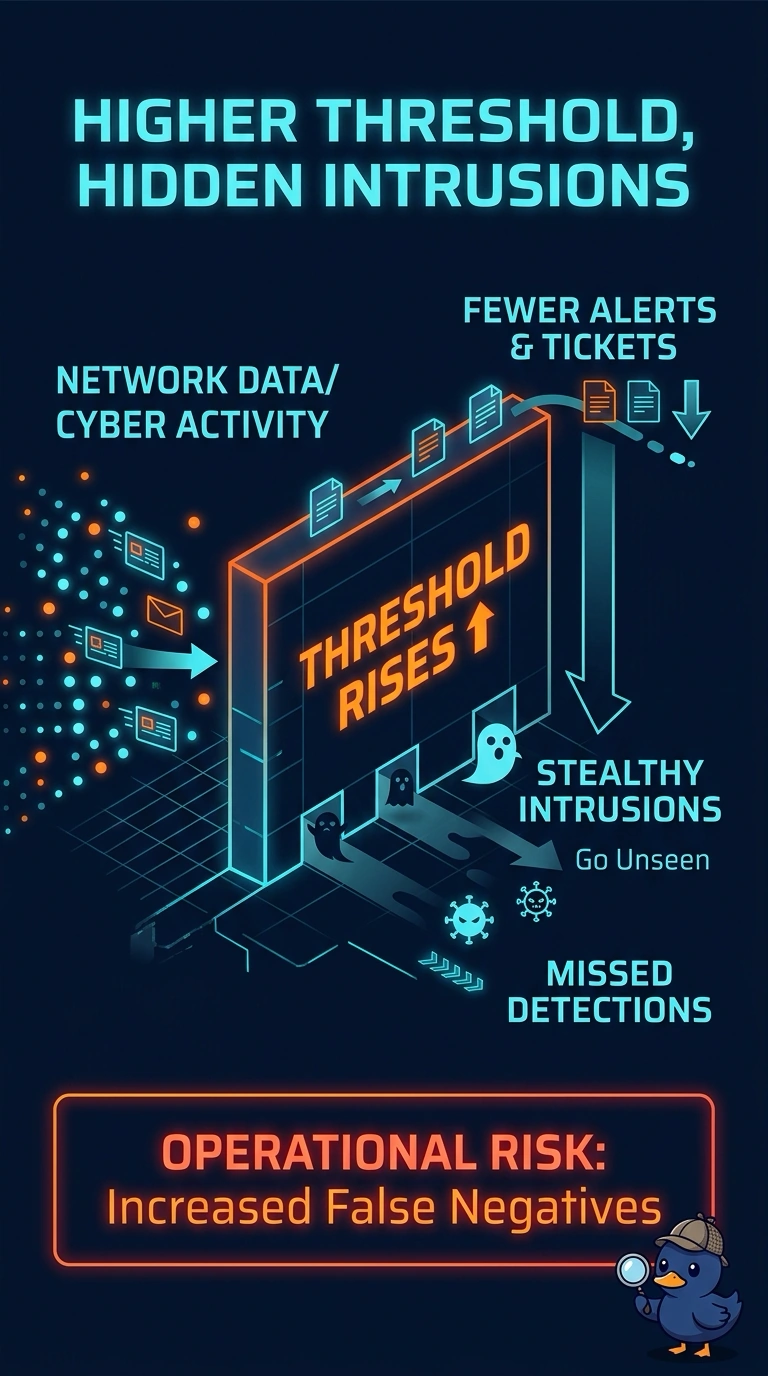
Turning up the volume threshold on a smoke detector quiets the beeps, but it also means a small fire can burn unnoticed. Your trap is treating fewer tickets as a healthier SOC. Raising anomaly thresholds without fixing the underlying baseline trades alert noise for dangerous blind spots.
Full Explanation
Raising the threshold blindly causes Increased false negatives that let stealthy intrusions go unseen, because low-and-slow adversary actions that score just below the new cutoff will no longer generate alerts for analysts to review. Anomaly detectors require contextual feature tuning and updated operational baselines rather than blunt threshold hikes. Automatic elimination of all false-positive alerts without tuning is unrealistic because high-scoring benign administrative spikes can still cross the elevated threshold. Immediate improvement in endpoint telemetry collection coverage is incorrect because threshold settings only filter existing model outputs and do not expand log sources or sensor deployment. Complete prevention of living-off-the-land script execution confuses a passive detection threshold with an active host prevention control such as application allowlisting. Caveat: keeping thresholds too low without suppression logic can still overwhelm analysts and cause real alerts to be ignored in the queue. Operational check: test the adjusted threshold against simulated low-volume adversary behaviors in a staging environment to verify that subtle intrusions still surface.