
A telecommunications SOC adopts the TaHiTI methodology for threat hunting, but analysts keep extending active investigations indefinitely without clear stopping rules. Which TaHiTI practice directly prevents open-ended hunts from draining analyst capacity?
Select an answer to reveal the explanation.
Short Explanation
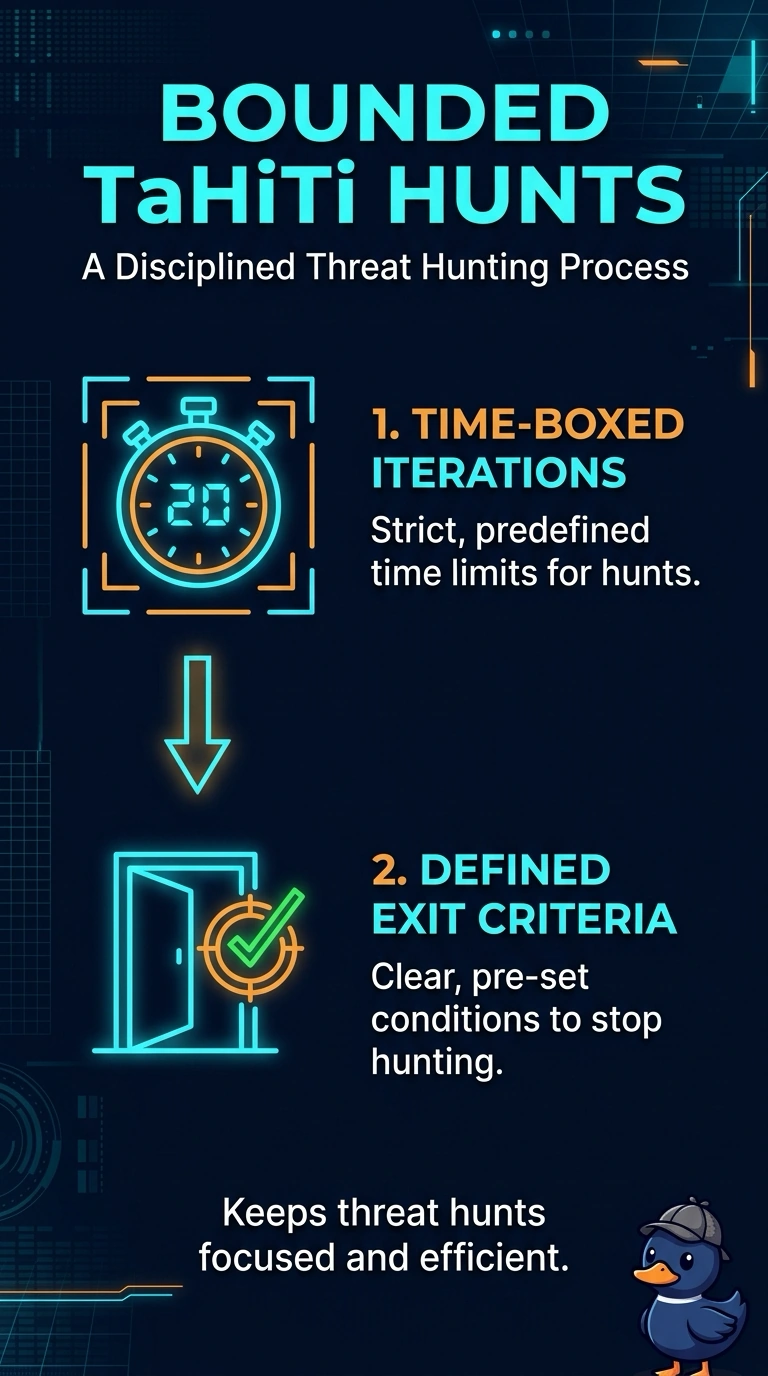
Think of a threat hunt like a timed sprint rather than an endless treasure hunt, or you will burn out your analysts chasing ghosts. The trap is assuming more hours automatically yield better findings instead of following structured exit criteria.
Full Explanation
Enforcing time-boxed hunt iterations with defined exit criteria is central to TaHiTI because it gives every investigation a clear scope, duration, and completion state. When a hunt reaches its time limit without confirming malicious activity, the team documents what was checked and closes or refines the hypothesis rather than drifting into open-ended analysis. Replacing all hypothesis-driven queries with automated SIEM correlation rules eliminates the proactive human investigation that uncovers novel behaviors missed by static logic. Restricting threat hunts strictly to indicators from external feeds narrows the team to reactive atomic matching instead of broader behavioral hypotheses. Suspending normal alert triage whenever a new intelligence report arrives creates dangerous blind spots in daily SOC monitoring. One caveat is that if an active compromise is discovered mid-hunt, the team should immediately pivot from the hunt box to formal incident response rather than waiting for the timer to expire. As an operational check, review your active hunt backlog weekly to verify every open investigation has a documented hypothesis, target completion date, and clear handoff criteria.