
A threat intelligence report warns of a destructive wiper malware family rated as high impact, but notes low analytical confidence that the campaign targets your industry. How should your threat hunting team interpret these two ratings when prioritizing a hunt?
Select an answer to reveal the explanation.
Short Explanation
Think of threat intelligence like a weather forecast: a hurricane's wind speed tells you how bad it could hit, not whether it is actually headed for your town. The trap is letting a scary severity label trick you into treating an unverified targeting claim as a confirmed threat.
Full Explanation
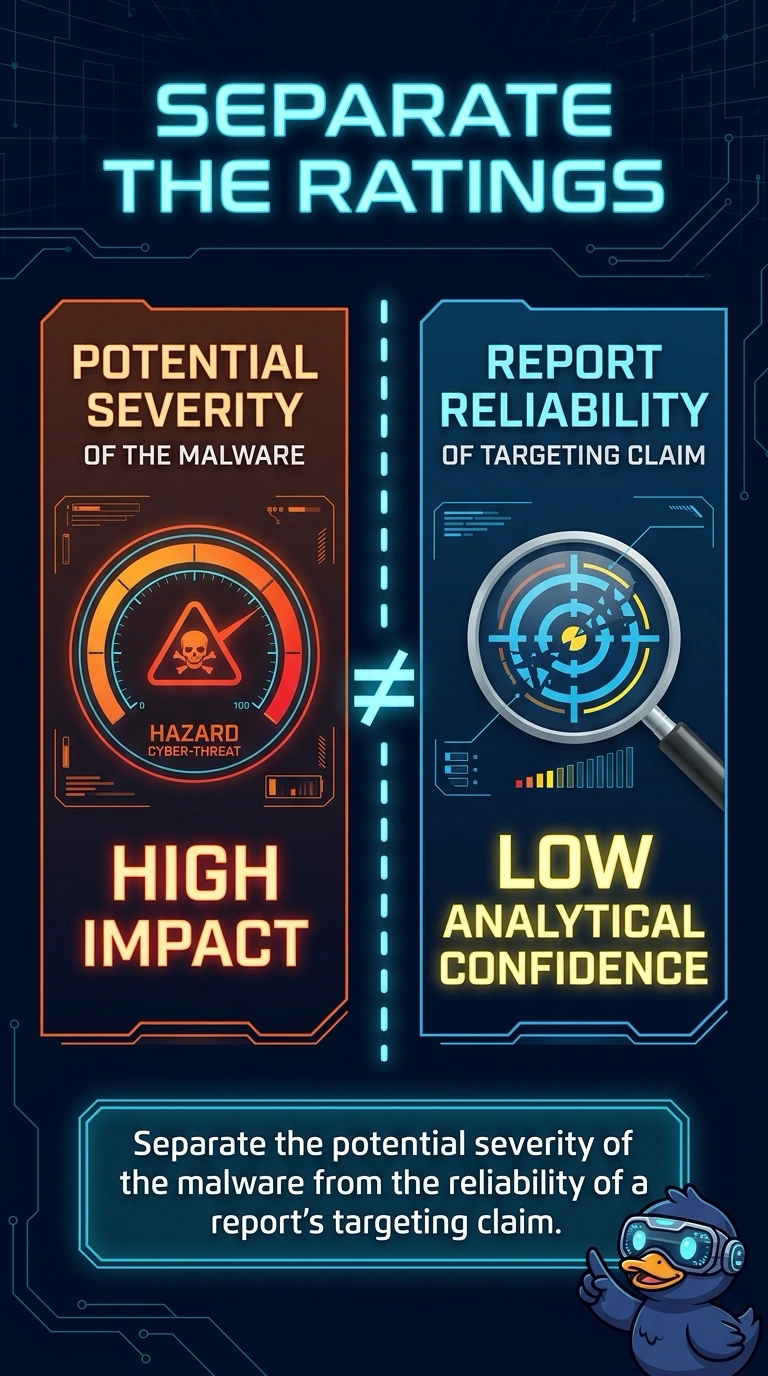
Effective threat intelligence analysis requires you to separate the potential severity of the malware from the reliability of the report's targeting claim. Impact describes how much damage a capability could cause if executed, whereas analytical confidence reflects the strength and corroboration of the underlying evidence. A destructive wiper always carries high potential impact, yet a low-confidence targeting assessment means analysts lack solid proof that the actor is actually focusing on your sector. Choosing to treat high impact as confirmation that an active intrusion is already underway inside your internal network confuses potential harm with verified local compromise. Conversely, choosing to discard the entire intelligence brief because low confidence means the destructive malware poses zero risk overlooks a real capability that could still reach your systems opportunistically. Choosing to immediately block every indicator in the brief regardless of whether the malware applies to your tech stack wastes defensive resources and risks false-positive disruptions. As a caveat, even a low-confidence report warrants baseline awareness if your organization runs the vulnerable software described. As an operational check, review the report's source reliability ratings and verify whether the malware's target platform exists in your asset inventory before launching a full hunt.