
A healthcare organization's SOC relies exclusively on out-of-the-box SIEM rules and EDR alerts, yet leadership asks why proactive threat hunting is still necessary. Which limitation of automated detection tools best explains the need for threat hunting?
Select an answer to reveal the explanation.
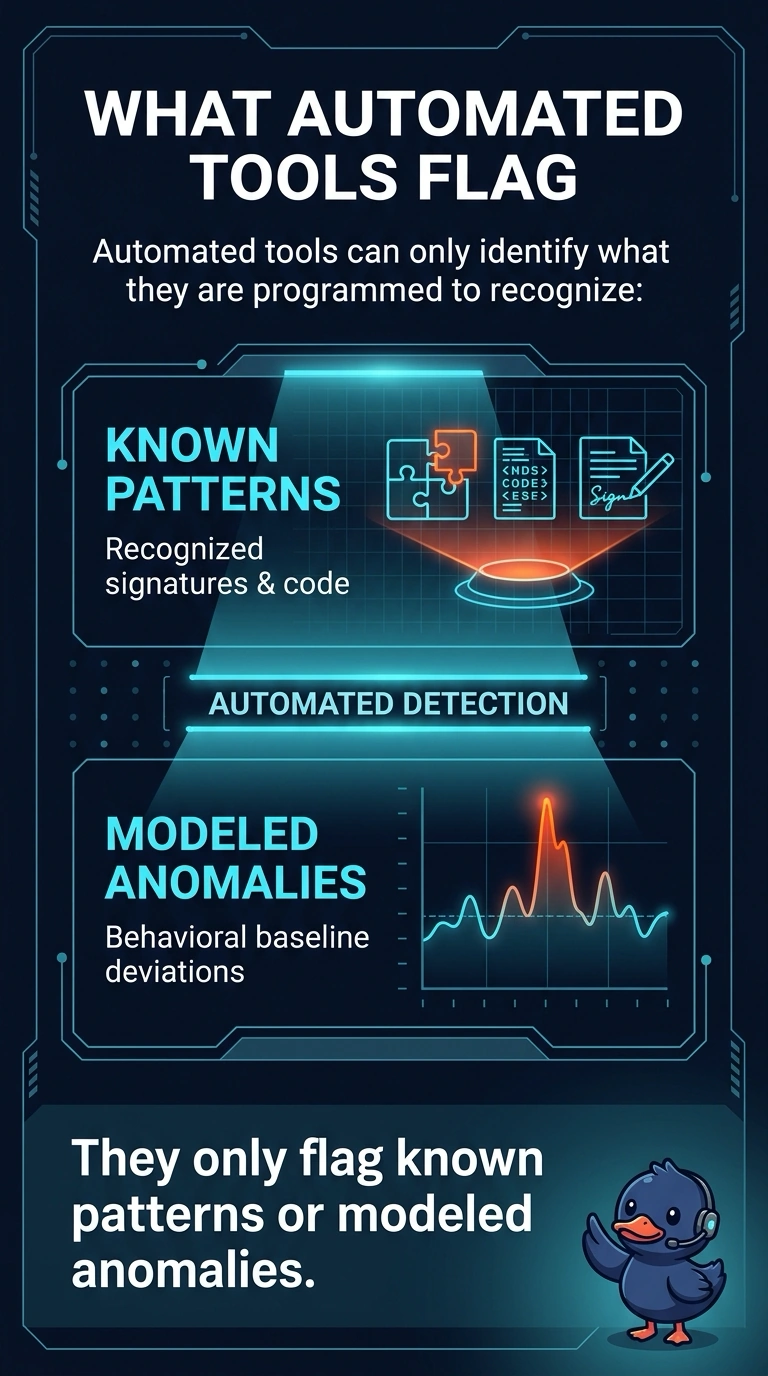
Short Explanation
Relying solely on automated alerts is like locking your front door while leaving the back window wide open. Automated detection tools only flag known patterns or modeled anomalies, so creative intruders can slip past static rules. The trap is assuming that a quiet alert queue means your network is clean.
Full Explanation
The correct answer is that Automated detection tools only flag known patterns or modeled anomalies. Automated SIEM correlation rules and EDR signatures excel at catching previously documented indicators and well-defined behavioral sequences, but skilled adversaries intentionally blend into normal administrative activity or use novel tradecraft that has not yet been codified into detection logic. Proactive threat hunting assumes compromise and uses human-led hypotheses to uncover those unalerted behaviors. The claim that Automated alerting eliminates all false positives before analysts review them is incorrect because automated tools routinely generate false positives from legitimate administrative changes and require ongoing tuning. The idea that Signature-based SIEM rules automatically adapt to novel adversary exploits is wrong because static rules only match conditions explicitly written by engineers or vendors. Finally, Proactive threat hunting eliminates the need for centralized log collection is false because effective hunting depends directly on broad, retained telemetry. As an operational caveat, threat hunting complements rather than replaces automated alerting. For an operational check, review recent hunt findings against existing SIEM rules to identify which undetected behaviors should be codified into new automated detections.