
During an internal capability review, a manufacturing firm's SOC demonstrates moderate log collection and regularly searches its SIEM for indicators from published threat feeds, but relies mostly on vendor alerts rather than analyst-created hunts. Which Threat Hunting Maturity Model level describes this team?
Select an answer to reveal the explanation.
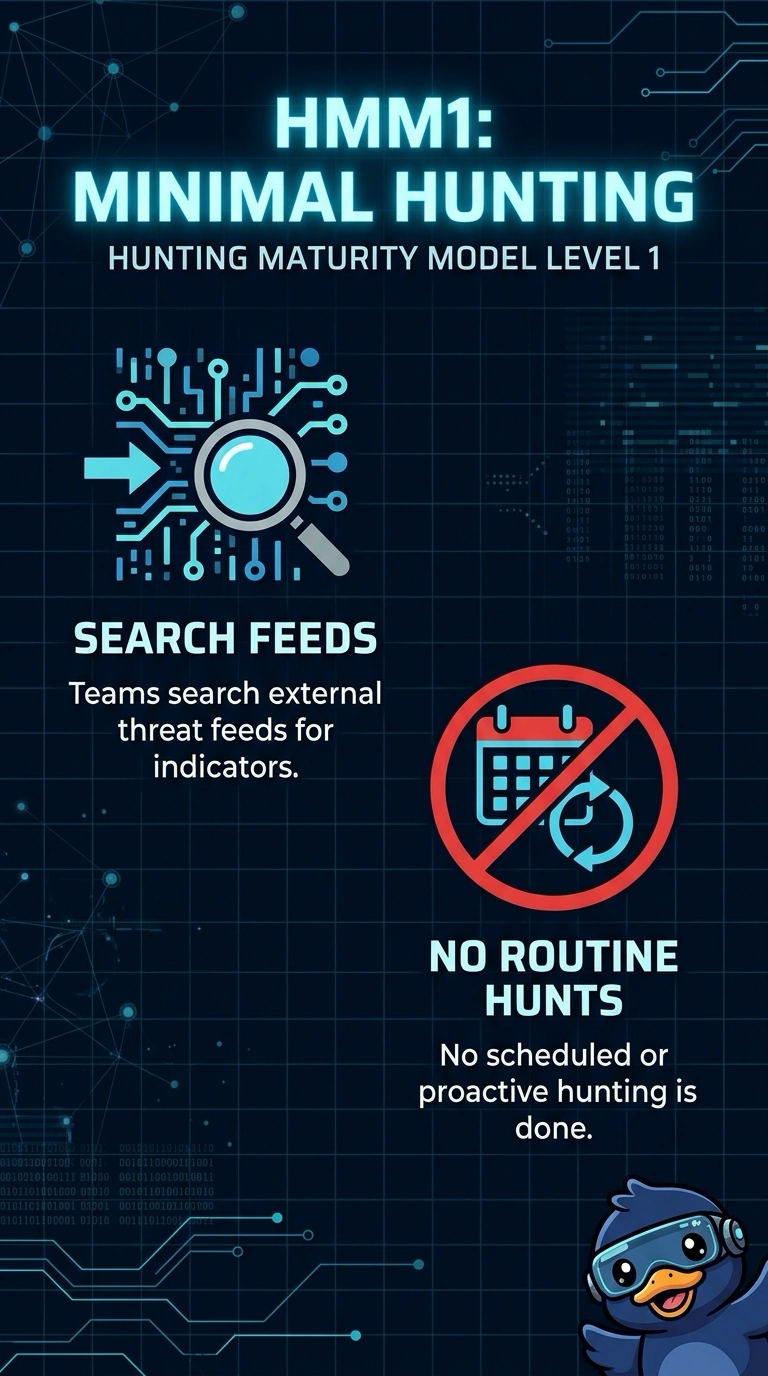
Short Explanation
Searching threat feeds in your SIEM is a solid step up from waiting passively for alarms, like checking a wanted poster instead of just locking the door. The trap is confusing basic indicator searches with mature, routine hypothesis-driven hunting.
Full Explanation
The Threat Hunting Maturity Model measures both data collection breadth and the sophistication of proactive analysis. Selecting HMM1 Minimal, where teams search feeds without routine hunts accurately captures an organization that gathers moderate telemetry and runs ad-hoc indicator lookups from threat intelligence feeds while still depending primarily on automated alerts. By contrast, HMM0 Initial, with minimal data and vendor alerts only describes teams that lack sufficient centralized logging and perform no proactive searching at all. At the upper end, HMM3 develops original repeatable procedures; statistical modeling is an example, not a requirement, which goes far beyond simple indicator queries and routine vendor alerts. Finally, HMM4 Leading, with automated continuous hunt workflows represents full operationalization where proven hunts run automatically without manual initiation. As a caveat, teams at the minimal level often have enough telemetry to begin structured hunting once analysts receive dedicated time and runbooks. As an operational check, audit current log sources against high-priority adversary tactics to confirm readiness for routine hypothesis-driven hunts.