
A retail enterprise relies heavily on unsupervised machine learning models in its SOC to flag unusual user behavior, yet an attacker operates undetected for weeks by scheduling data transfers during normal business hours using a compromised administrator account. What limitation of AI/ML detection does this highlight?
Select an answer to reveal the explanation.
Short Explanation
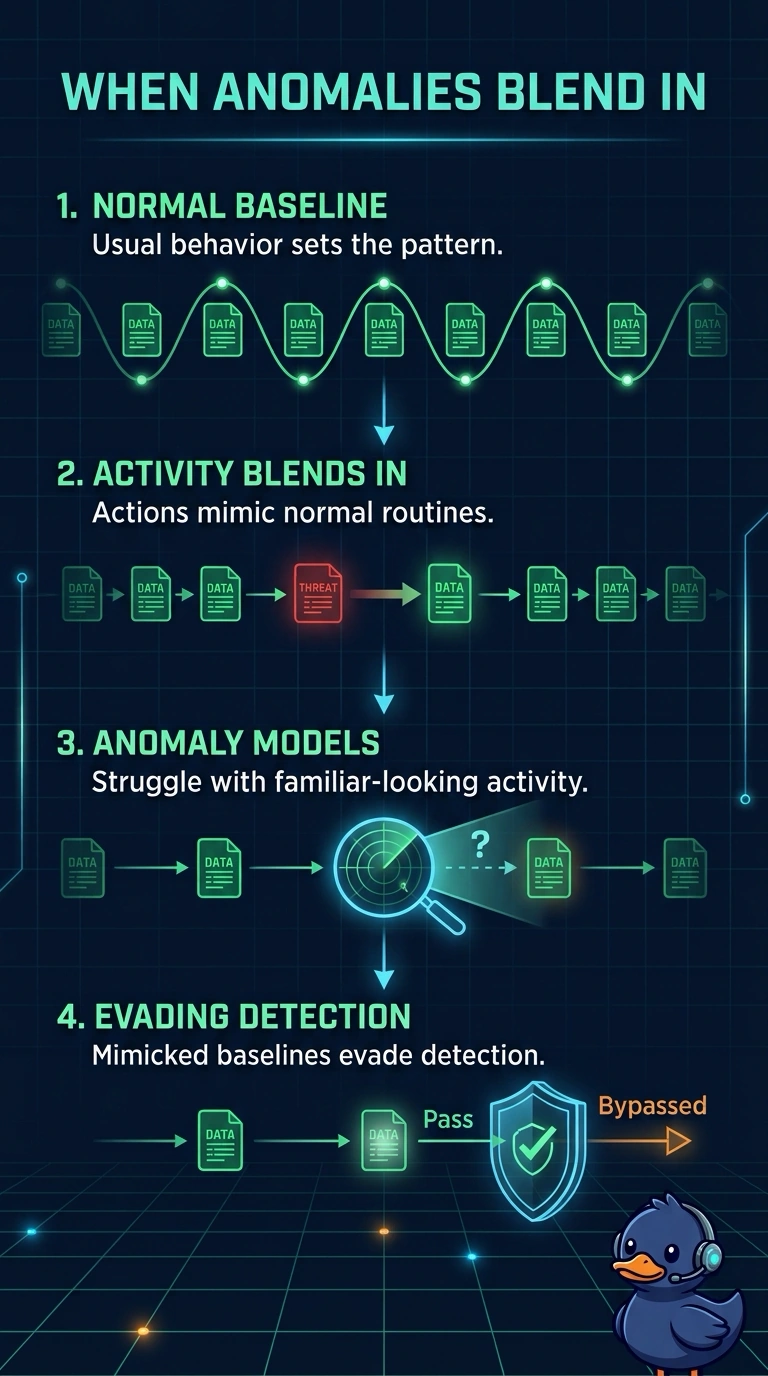
Machine learning is great at spotting someone sprinting through a quiet hallway, but it often misses a thief strolling through during rush hour. The trap is assuming unsupervised anomaly detection catches every intrusion regardless of timing or account context. When attackers blend into your normal business hours and admin routines, you still need targeted human hunts.
Full Explanation
Unsupervised anomaly detection relies on statistical deviation from historical norms, which explains why Anomaly models struggle when adversary activity mimics normal baselines such as daytime administrative sessions. When an intruder uses valid credentials during business hours, the resulting telemetry often falls within expected variance. The belief that Machine learning models automatically block every zero-day exploit is false because anomaly models are probabilistic detectors, not universal prevention engines. Similarly, stating that Machine learning systems cannot ingest centralized authentication logs is incorrect because identity telemetry is a primary input for behavioral analytics. Finally, Behavioral models require static file hashes before generating any alert confuses statistical behavior analysis with legacy signature matching. Caveat: high-volume administrative accounts frequently mask subtle abuse unless peer-group baselines are narrowly scoped. As an operational check, pair machine learning alerts with periodic hypothesis-driven hunts targeting anomalous data access by privileged accounts.