
A threat hunter at a logistics company receives an external intelligence brief claiming a new ransomware group targets freight management portals, but the report cites uncorroborated forum chatter with low source reliability. How should the hunter treat this report when planning hunt priorities?
Select an answer to reveal the explanation.
Short Explanation
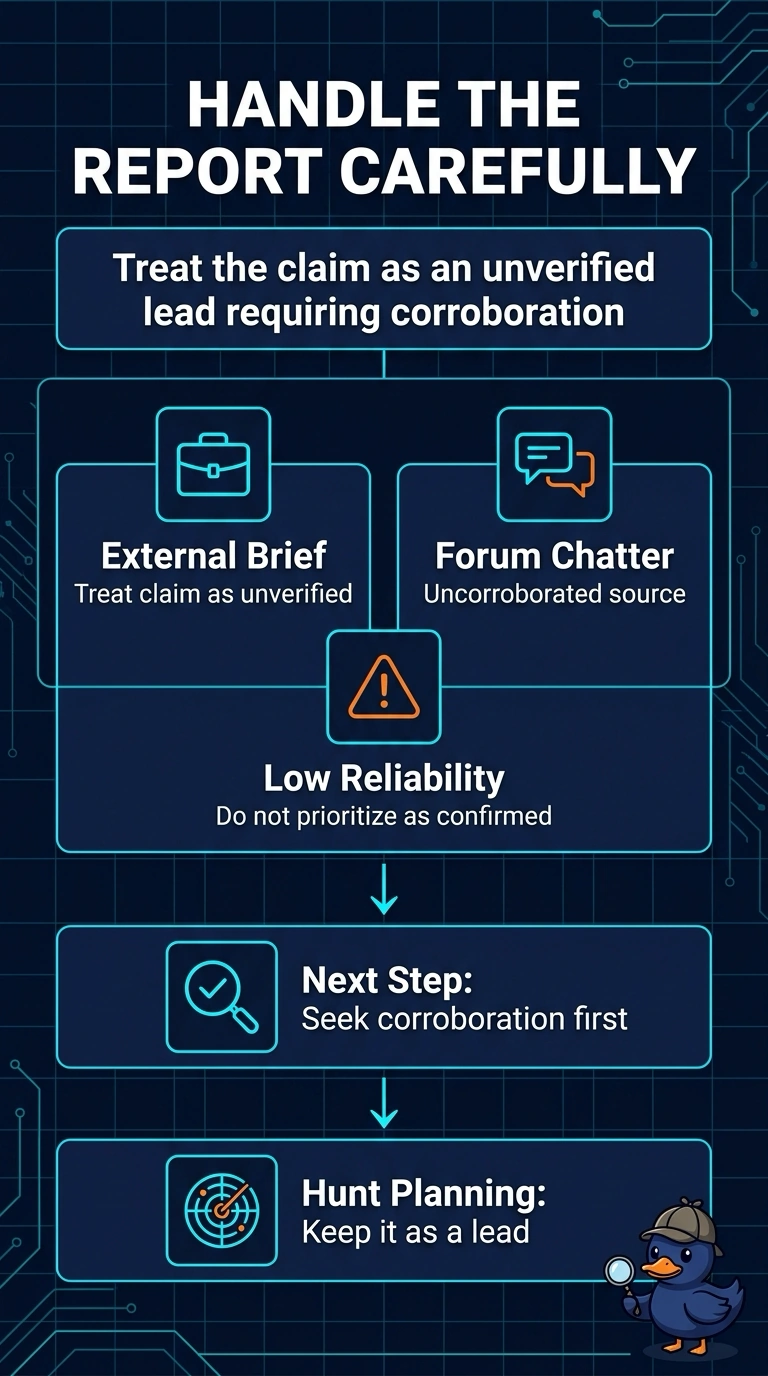
Think of unverified threat chatter like an anonymous tip on a police scanner: it points your spotlight, but you never kick down doors without checking the facts first. The trap is reacting with sweeping blocks or premature attribution before confirming source credibility.
Full Explanation
Evaluating source reliability and information credibility prevents wasted hunting cycles and operational disruption. Choosing to Treat the claim as an unverified lead requiring corroboration first ensures the hunter looks for independent technical evidence, such as vendor advisories or local telemetry anomalies, before escalating. By contrast, choosing to Deploy immediate automated blocking rules across all perimeter firewalls risks breaking legitimate freight operations based on unverified rumors. Similarly, choosing to Attribute the activity to a known state-sponsored threat actor group leaps to an unsupported conclusion without behavioral or infrastructure evidence. Finally, choosing to Discard all freight portal telemetry from the current hunting cycle creates a dangerous blind spot if the rumor happens to reflect early targeting. As an operational caveat, low-reliability chatter can still inform passive monitoring without triggering high-friction changes. As a concrete check, cross-reference the report's claims against trusted intelligence sharing partners and review freight portal authentication logs for unusual access patterns.