
A threat hunter receives a detailed intelligence report describing a newly observed exploit targeting an enterprise virtualization platform that the organization does not deploy. How should the hunter act on this report?
Select an answer to reveal the explanation.
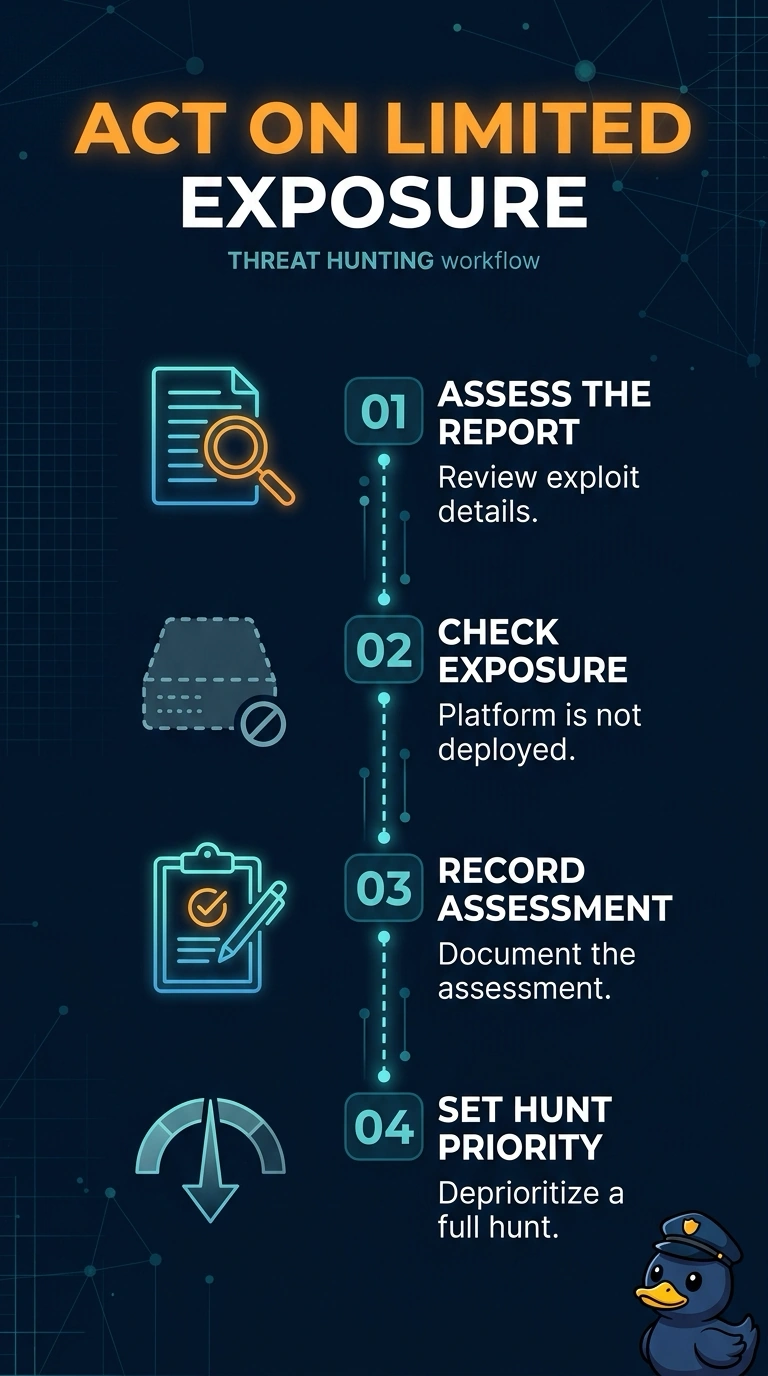
Short Explanation
Every shiny threat report looks urgent until you check whether your organization actually runs the targeted software. The trap is burning hunting hours on irrelevant exploits instead of filtering intelligence against your real asset inventory.
Full Explanation
The disciplined response is to Document the assessment and deprioritize a full hunt based on lack of exposure, because effective threat hunting aligns limited analyst time with actual organizational attack surface and risk. Choosing to Launch an immediate enterprise-wide memory acquisition campaign across all user laptops wastes response capacity and disrupts endpoints when the targeted virtualization platform is not even present. Opting to Create high-severity blocking rules for every benign dependency listed in the report risks breaking legitimate applications and flooding the SOC with false-positive alerts. Attempting to Rewrite the organization's threat hunting maturity rubric around the external exploit confuses a single tactical advisory with a strategic capability framework. As a caveat, hunters should still verify through asset management and shadow-IT logs that no undocumented or test instances of the platform exist, and check whether any shared post-exploitation TTPs in the report remain relevant. For an operational check, query vulnerability management and software inventory records to confirm zero instances exist before closing the intelligence ticket.