
A CISO asks the threat intelligence team for a briefing to guide next year's security budget and architectural investments rather than immediate firewall blocking. Which type of threat intelligence report best serves this need?
Select an answer to reveal the explanation.
Short Explanation
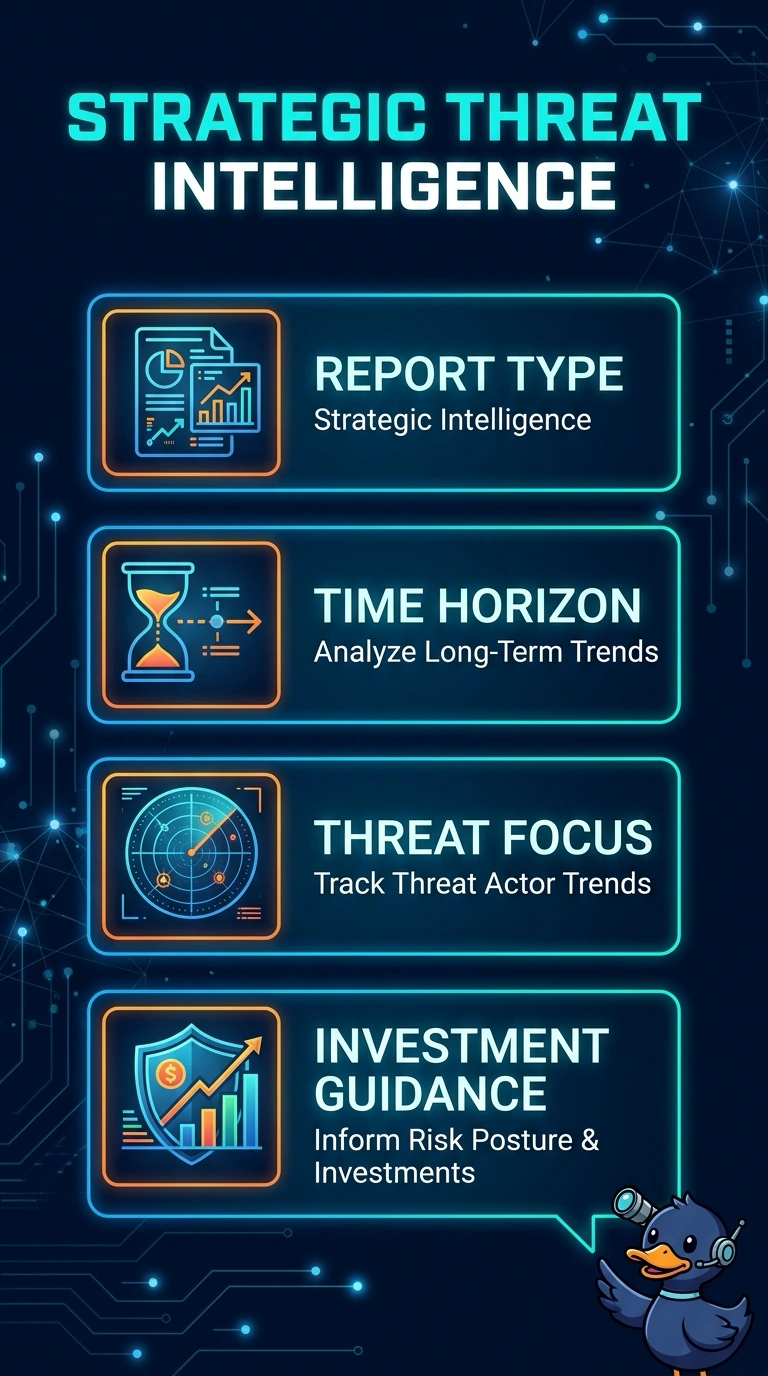
Executives planning next year's budget need the big-picture weather forecast, not a list of malicious IP addresses from yesterday. Your trap here is handing a CISO low-level technical or tactical artifacts when they asked for long-term risk trends.
Full Explanation
Choosing "Strategic intelligence analyzing long-term threat actor trends and risk posture" is correct because strategic intelligence translates broad adversary motivations, geopolitical shifts, and industry targeting patterns into executive-level risk insights that guide multi-year architecture and budget decisions. By contrast, "Tactical intelligence detailing specific malware execution commands and registry paths" supports SOC analysts and detection engineers writing host rules rather than executive investment planning. Similarly, "Technical intelligence listing recently observed malicious IP addresses and domains" provides short-lived indicators meant for automated blocking tools, not strategic roadmaps. Meanwhile, "Operational intelligence tracking an active intrusion campaign's immediate schedule" helps incident responders and defenders prepare for imminent attacks rather than shaping annual capital allocation. As a caveat, strategic briefings remain most persuasive when grounded in observed threats to the organization's specific sector rather than generic industry headlines. For an operational check, review your executive briefing draft to verify it connects threat trends to business risk and capability gaps instead of raw indicator lists.