
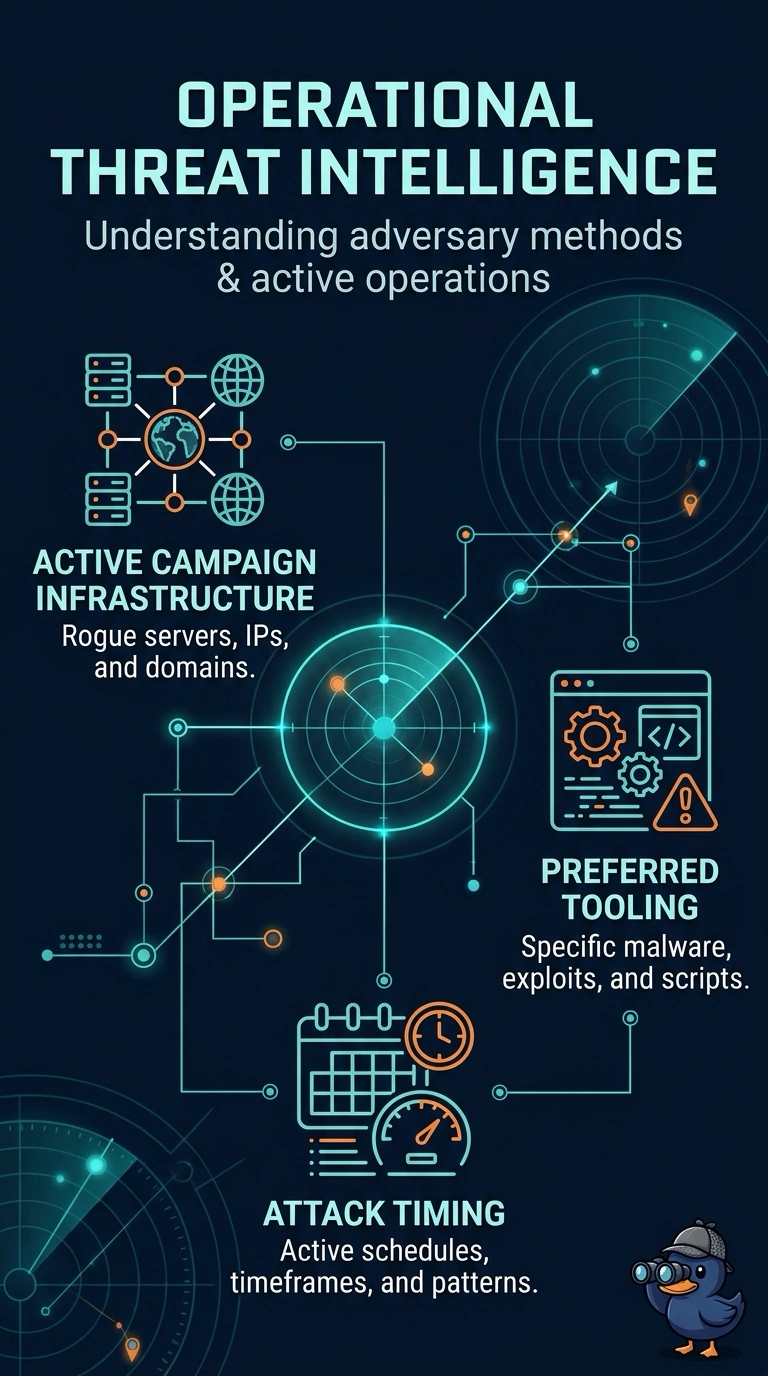
A threat hunting lead at a telecommunications provider needs intelligence detailing a specific adversary group's active campaign infrastructure, preferred tooling, and attack timing to plan an upcoming hunt. Which type of threat intelligence best meets this need?
Select an answer to reveal the explanation.
Short Explanation
Think of planning a threat hunt like preparing for a specific storm rather than studying climate history. You need details on how the adversary operates right now, not just broad executive summaries or static blocklists. The common trap is confusing tactical indicator feeds with the deeper campaign context that guides a proactive hunt.
Full Explanation
Operational intelligence detailing active campaign infrastructure and adversary methods provides the campaign-level context needed to design targeted threat hunts. By examining how a threat group stages infrastructure, sequences its tools, and times its operations, your team can build hypotheses focused on adversary behavior rather than chasing single indicators. Strategic intelligence on long-term geopolitical trends serves executive decision-makers planning multi-year budgets and risk posture, which is too broad to guide a specific hunt. Tactical intelligence listing atomic indicators for firewall blocking focuses on observables such as IP addresses or hashes that support immediate perimeter filtering but lack the behavioral narrative required for deeper hunting. Compliance reporting summarizing historical audit findings measures past control adherence rather than active external threats. One caveat is that operational intelligence decays as adversaries shift infrastructure, so teams must validate its relevance against local telemetry. As an operational check, review your hunt brief to confirm it pairs campaign behaviors with specific log sources before launching queries.