
A financial firm relies on traditional signature-based network intrusion detection sensors at its perimeter, yet an attacker exfiltrates data over encrypted HTTPS sessions without triggering payload alerts. Why did the sensors miss this activity?
Select an answer to reveal the explanation.
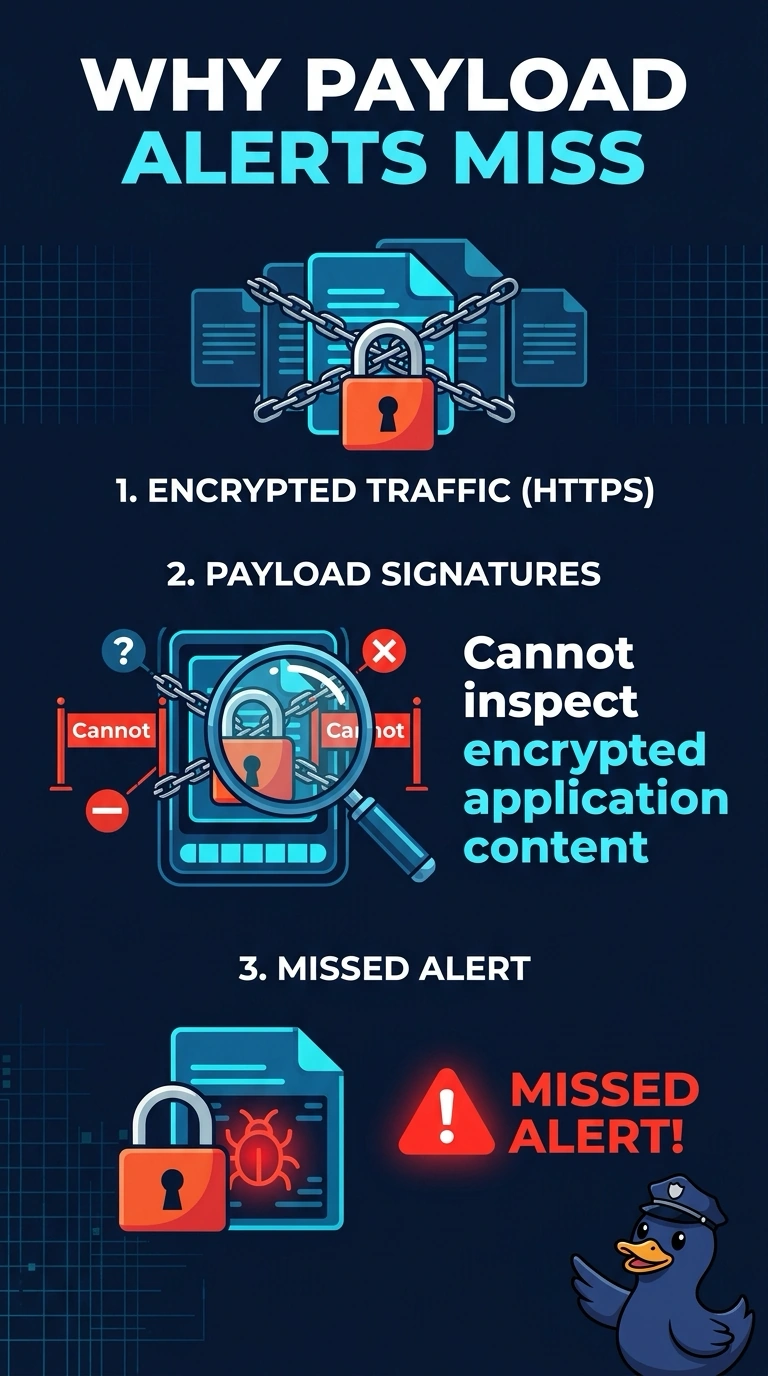
Short Explanation
Think of an armored envelope: a guard can read the outside address, but cannot inspect the letter inside without opening it. Your payload-based network sensors face that exact limit when traffic is wrapped in encryption. The trap is assuming perimeter inspection automatically sees inside every HTTPS stream.
Full Explanation
Payload signatures cannot inspect encrypted application content because transport encryption conceals HTTP headers, commands, and exfiltrated data from passive deep-packet inspection. Unless the organization performs authorized TLS decryption or supplements sensors with metadata and endpoint telemetry, signature rules matching plaintext patterns never fire. Encrypted sessions bypass all firewall port and IP address rules is false because firewalls still evaluate Layer 3 and Layer 4 headers such as source, destination, and port regardless of payload encryption. Network sensors only inspect outbound traffic during business hours describes an artificial scheduling error rather than an inherent limitation of signature-based detection. HTTPS traffic automatically disables endpoint process telemetry is incorrect because host-based agents observe process execution and local socket activity before network traffic is encrypted. One caveat is that decrypting all traffic can raise privacy or compliance concerns for sensitive financial or healthcare sessions. As an operational check, verify whether your perimeter sensors receive decrypted feeds or correlate TLS handshake metadata with endpoint process logs.