
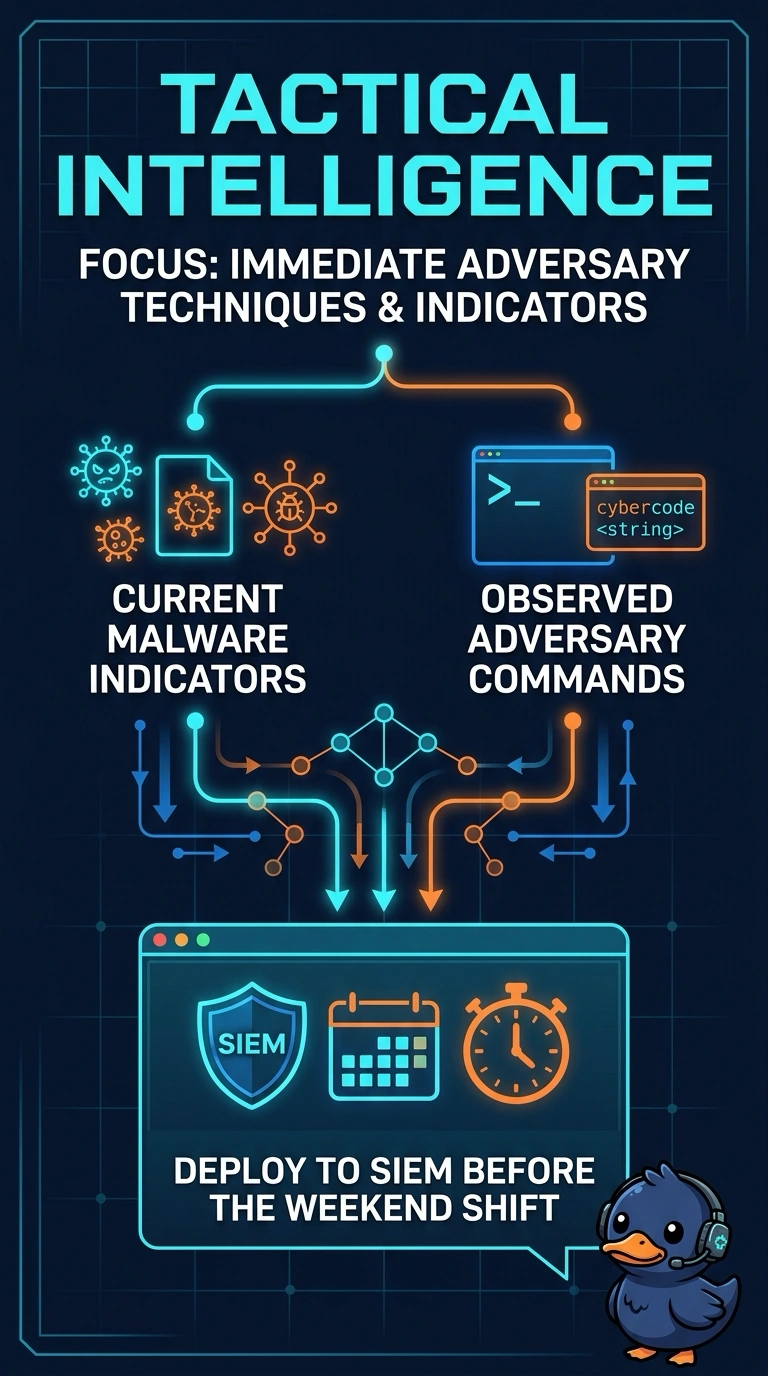
A municipal water utility's SOC lead receives a weekly intelligence feed containing current malware indicators, observed adversary commands, and immediate detection rules to deploy in the SIEM before the weekend shift. Which category of threat intelligence does this feed represent?
Select an answer to reveal the explanation.
Short Explanation
Think of tactical intelligence as the weather radar you check right before stepping outside, telling you what storm is hitting right now. The trap is confusing immediate indicators and detection rules with long-term planning feeds meant for executives or campaign trackers.
Full Explanation
Tactical intelligence focused on immediate adversary techniques and indicators is correct because it equips SOC analysts and detection engineers with actionable observables, command patterns, and SIEM rules they can deploy right away to catch active threats. Strategic intelligence for executive risk planning and long-term security budgeting fails because it translates broad threat trends into business risk language for leadership rather than providing technical observables for shift analysts. Operational intelligence detailing an adversary group's upcoming campaign schedule fails because it focuses on who is attacking, their intent, and campaign timing rather than ready-to-deploy host and network detections. Geopolitical intelligence assessing regional cyber regulations and compliance fails because legal and policy tracking does not supply technical indicators for SIEM rule tuning. As a caveat, tactical indicators age quickly as adversaries rotate infrastructure, so analysts should pair them with behavioral detections rather than relying on static feeds indefinitely. For an operational check, review your active SIEM correlation rules after ingesting a tactical feed to verify that incoming indicators map to normalized log fields without generating excessive false positives.