
A regional bank's security team collects centralized endpoint telemetry. The team regularly applies others’ documented procedures with minor adaptations and has not created original repeatable procedures. Which Threat Hunting Maturity Model level describes this team?
Select an answer to reveal the explanation.
Short Explanation
Think of hunting maturity like cooking from someone else's recipe before you write your own cookbook. You are at HMM2 when you see this pattern: The team regularly applies others’ documented procedures with minor adaptations and has not created original repeatable procedures. Remember that Original procedures distinguish HMM3; statistical models are optional.
Full Explanation
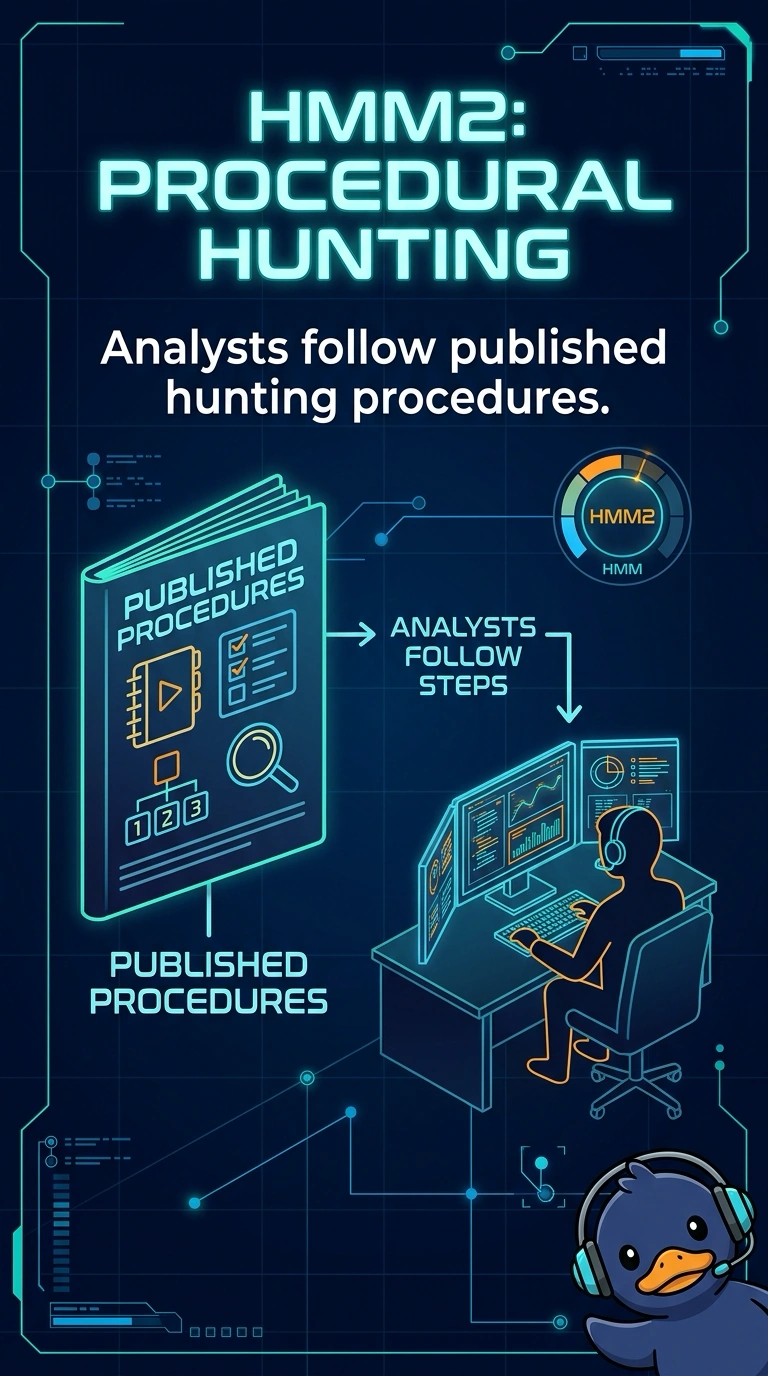
HMM2 Procedural, where analysts follow published hunting procedures accurately describes this team because The team regularly applies others’ documented procedures with minor adaptations and has not created original repeatable procedures. Centralized telemetry plus routine analyst-driven searches fits procedural hunting, not ad hoc alert triage. HMM1 Minimal, where teams rely mainly on automated alerts falls short because this team actively hunts with intelligence-led queries rather than waiting for alert queues. HMM3 Innovative, where teams create novel detection code goes too far because the scenario notes no original repeatable hunting methods were authored. Original procedures distinguish HMM3; statistical models are optional. HMM4 Leading, where teams automate proven hunt workflows is also incorrect since recurring hunts have not yet been automated into continuous detections. As a caveat, maturity levels reflect repeatable capability rather than tool budgets, so having an expensive SIEM does not raise a team's level on its own. As an operational check, review your hunt documentation quarterly to verify whether analysts are still adapting external procedures or have begun authoring original behavioral analytics.